Custom cosmetic bags and pouches represent one of the most versatile and high-demand product categories in the branded accessories market. They serve as beauty essentials, travel companions, promotional items, corporate gifts, and fashion statements. For brands and retailers looking to expand their product offerings, cosmetic bags provide an attractive combination of strong consumer demand, manageable production costs, and extensive customization possibilities.
The global cosmetic bag market was valued at approximately $3.2 billion in 2024 and is projected to grow at 6.5% annually through 2030. This growth is driven by increasing beauty product ownership, rising travel frequency, and the expanding promotional products industry. For private label brands and fashion retailers, cosmetic bags represent a compelling opportunity to capture share of this growing market.
Understanding the Cosmetic Bag Market
The cosmetic bag market spans multiple price tiers, distribution channels, and consumer segments. Understanding this landscape helps you position your products for maximum success and identify underserved niches where your brand can differentiate.
Market Segments by Price Point
The market naturally divides into four distinct segments, each with different consumer expectations, quality requirements, and margin structures.
| Market Segment | Retail Price Range | Production Cost | Key Consumer Expectations | Primary Channels |
|---|---|---|---|---|
| Budget/Promotional | $5 - $15 | $1.00 - $3.00 | Functionality, basic branding | Trade shows, giveaways, value retail |
| Mid-Range Fashion | $15 - $35 | $3.00 - $8.00 | Style, quality, brand appeal | Boutiques, e-commerce, department stores |
| Premium | $35 - $75 | $8.00 - $15.00 | Luxury materials, design excellence | Luxury retail, brand stores, premium DTC |
| Luxury/Designer | $75 - $250+ | $15.00 - $40.00 | Exclusivity, craftsmanship, prestige | Designer boutiques, flagship stores |
Consumer Purchase Drivers
Consumers purchase cosmetic bags for several overlapping reasons, and understanding these motivations informs your design and marketing decisions. Functionality ranks highest — the bag must effectively organize and protect beauty products. Aesthetics come second — the bag should complement the user's personal style. Brand alignment matters for fashion-forward consumers who view their cosmetic bag as an extension of their identity. And gifting drives significant seasonal demand, particularly during holidays and special occasions.
Types of Cosmetic Bags and Pouches
The cosmetic bag category encompasses diverse styles, each serving different use cases and consumer preferences. Selecting the right product types for your brand is critical to commercial success.
Classic Zippered Pouches
The simplest and most popular format. A rectangular or square pouch with a zipper closure, available in multiple sizes. Classic pouches are easy to manufacture, cost-effective, and appeal to the broadest market segment. They serve as makeup organizers, travel accessories, and general-purpose storage solutions.
Standing/Box-Style Cosmetic Bags
These bags feature a flat bottom and structured sides that allow them to stand upright when opened. They typically include internal compartments, brush holders, and mirror panels. The structured design commands higher prices and appeals to consumers who prioritize organization and functionality.
Roll-Up Cosmetic Cases
Popular with travelers and professionals, roll-up cases feature multiple pockets on a flat panel that folds into a compact cylinder. They offer excellent visibility and accessibility for products. The distinctive design format creates opportunities for unique branding and material combinations.
Hanging Travel Bags
Equipped with hooks or stands for hanging in bathrooms and hotel rooms. These multi-compartment bags fold out to reveal organized storage sections. They command premium pricing and appeal to frequent travelers and beauty enthusiasts with extensive product collections.
Clear/Transparent Pouches
Made from PVC, TPU, or clear vinyl materials that allow contents to be visible. These are particularly popular for TSA-compliant travel bags and for consumers who prefer to see their products at a glance. Clear pouches offer unique branding opportunities through printed graphics visible against the transparent background.
Material Options for Cosmetic Bags
Material selection is the most important production decision you will make. It determines cost, quality perception, durability, printability, and brand positioning. Each material offers distinct advantages and considerations.
Nylon
The most widely used material for cosmetic bags due to its lightweight nature, water resistance, durability, and excellent printability. Nylon accepts silk screen printing, heat transfer, and sublimation beautifully. Available in various deniers (210D for budget, 420D for mid-range, 840D+ for premium). Cost: $1.50-$4.00 per meter for quality nylon fabric.
Polyester
More affordable than nylon with similar durability characteristics. Polyester has a slightly rougher texture and takes dye-sublimation printing exceptionally well, making it ideal for all-over printed designs. It is the most popular material for promotional cosmetic bags. Cost: $1.00-$3.00 per meter.
PU Leather
Creates a premium, luxury appearance while remaining cost-effective. PU leather cosmetic bags can be embossed, debossed, hot-stamped, or printed. They wipe clean easily and convey quality. Best for mid-to-premium positioned brands. Cost: $3.00-$8.00 per meter for good quality PU.
Canvas and Cotton
Natural, eco-friendly materials that appeal to sustainability-conscious consumers. Canvas accepts printing well and has a desirable natural aesthetic. Organic cotton options are available for brands emphasizing environmental responsibility. Cost: $2.00-$5.00 per meter.
PVC and TPU
Transparent or semi-transparent materials ideal for clear cosmetic bags, travel compliance pouches, and wipe-clean designs. TPU is the eco-friendlier alternative to PVC, offering similar transparency without harmful phthalates. Cost: $2.00-$5.00 per meter.
| Material | Cost/Unit (Bag) | Durability | Printability | Best Market Segment |
|---|---|---|---|---|
| Nylon (420D) | $2.50 - $5.00 | Very Good | Excellent | Mid-range fashion |
| Polyester | $1.50 - $3.50 | Good | Excellent (sublimation) | Promotional, budget |
| PU Leather | $5.00 - $12.00 | Very Good | Good (stamping/print) | Premium, luxury |
| Canvas | $3.00 - $6.00 | Good | Very Good | Eco-friendly, natural |
| TPU Clear | $3.00 - $7.00 | Good | Good (screen print) | Travel, modern |
Printing and Branding Techniques
The customization possibilities for cosmetic bags are extensive, ranging from simple logo placement to fully custom all-over printed designs. Selecting the right technique depends on your design, material, quantity, and budget.
Silk Screen Printing
The most common and cost-effective method for applying logos and designs to fabric cosmetic bags. Best for designs with 1-4 colors on light-colored bags. Setup costs $30-$80 per color, with per-unit printing costs of $0.20-$0.80. Ideal for orders of 200+ pieces.
Heat Transfer Printing
Allows full-color photographic designs to be transferred onto the bag surface. No color limitations, excellent detail reproduction, and suitable for complex brand artwork. Cost: $0.50-$1.50 per piece. Best for designs with gradients, photographs, or more than 4 colors.
Dye Sublimation
Creates vibrant, all-over printed designs that cover the entire surface of polyester fabric bags. The dye becomes part of the fabric fibers, ensuring exceptional wash durability. Cost: $1.00-$3.00 per piece including setup. Requires polyester or polyester-coated materials.
Embroidery
Creates a premium, textured brand mark through stitched thread. Embroidery communicates quality and permanence. It works best on canvas, nylon, and PU leather. Cost: $0.50-$2.00 per piece depending on stitch count. Adds significant perceived value.
Woven Labels and Tags
Custom woven labels sewn into seams or attached externally provide professional brand identification. They can include brand name, logo, care instructions, and material composition. Cost: $0.10-$0.30 per label. An essential branding element for any serious cosmetic bag line.
Custom Hardware and Details
Branded zipper pulls, custom metal feet, embossed leather patches, and specialty pulls create premium differentiation. Custom zipper pulls with your logo cost $0.30-$0.80 each in production but significantly elevate the product's perceived quality and brand presence.
Size Guide and Design Specifications
Cosmetic bags come in standardized size ranges, though fully custom dimensions are always possible. Understanding standard sizes helps with design planning and cost estimation.
Standard Size Categories
| Size Category | Dimensions (LxHxD) | Common Use | Target Customer |
|---|---|---|---|
| Mini/Travel Size | 15 x 10 x 5 cm | Lipstick, small essentials | Travel, purse organizer |
| Small | 18 x 12 x 8 cm | Basic makeup set | Daily use, gifting |
| Medium (Most Popular) | 22 x 15 x 10 cm | Full makeup collection | General consumer |
| Large | 28 x 18 x 12 cm | Extended collection | Beauty enthusiasts |
| Professional | 35 x 20 x 15 cm | Complete beauty kit | MUAs, professionals |
Interior Design Considerations
The interior of a cosmetic bag significantly impacts functionality and user satisfaction. Thoughtful interior design differentiates premium products from basic ones.
- Wipeable lining: Water-resistant or wipeable interior linings (nylon, PEVA, or TPU) protect against makeup spills and simplify cleaning.
- Internal pockets: Mesh pockets, elastic loops for brushes, and divided sections improve organization and justify higher pricing.
- Mirror inclusion: Built-in mirrors (snap-in or sewn-in) add functionality and perceived value. Cost: $0.30-$1.50 per mirror depending on size and frame.
- Brush holders: Elastic loops or dedicated brush compartments keep applicators organized and protected.
- Color contrast: Light-colored interiors (white, cream, light pink) make it easier for users to find products inside the bag.
Production Process and Timeline
Understanding the manufacturing workflow helps you plan effectively and set realistic expectations for your product launch timeline.
Step-by-Step Production
- Design Finalization: Confirm dimensions, materials, colors, printing, hardware, and interior specifications.
- Material Sourcing: Source and inspect fabric, lining, zippers, hardware, and labels. Lead time: 7-14 days if materials are not in stock.
- Sample Creation: Produce 1-3 samples for approval. Time: 7-14 days.
- Printing/Branding: Apply logos, patterns, or designs to fabric panels before assembly.
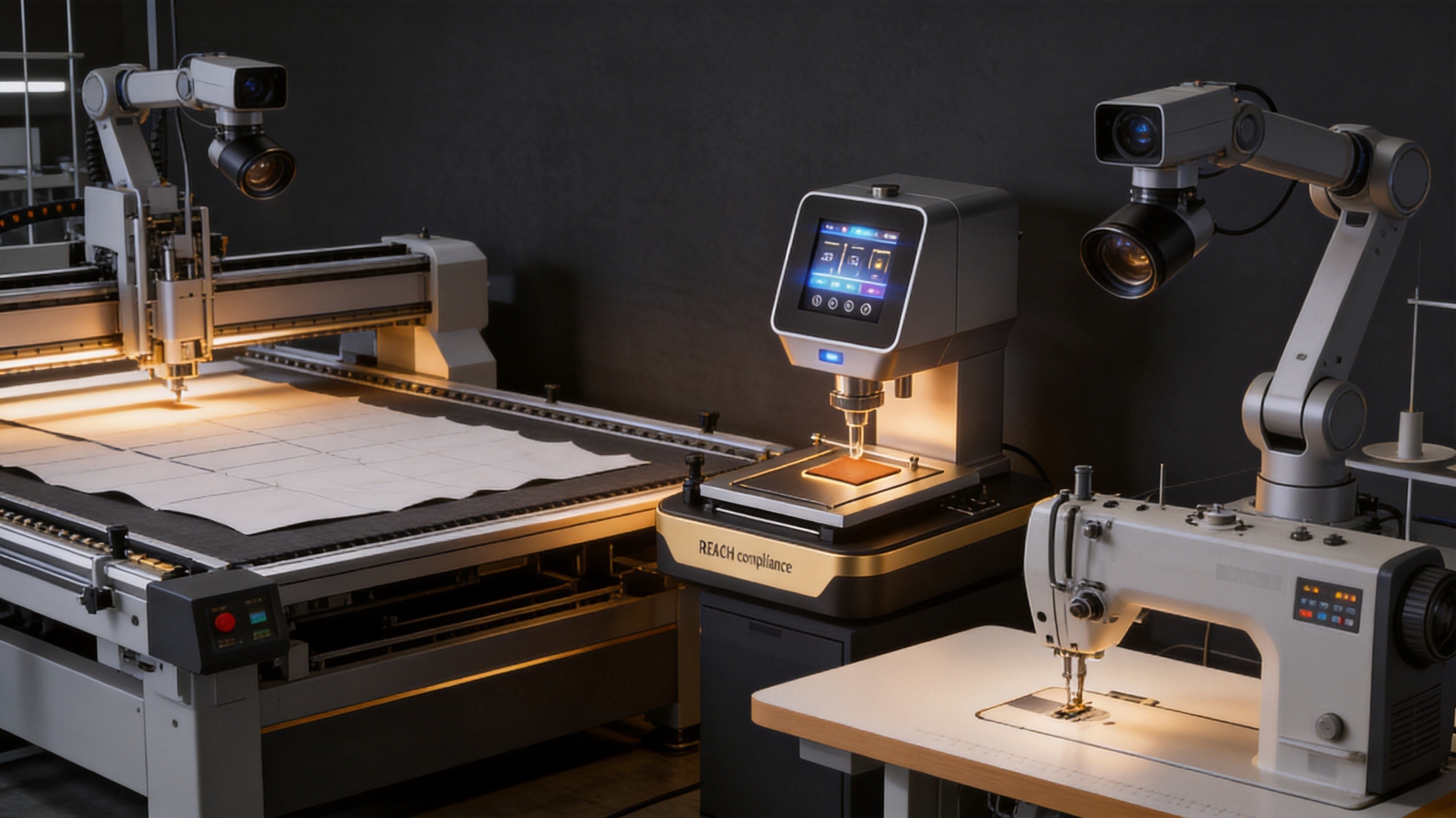
- Cutting: Cut fabric panels according to patterns using manual or CNC cutting machines.
- Sewing and Assembly: Assemble bag components including main body, lining, zipper, and internal pockets.
- Hardware Attachment: Attach zipper pulls, metal feet, brand tags, and decorative hardware.
- Quality Inspection: Check stitching quality, zipper function, printing accuracy, dimensional accuracy, and overall appearance.
- Packaging: Pack according to specifications with poly bags, hang tags, or retail boxes.
Typical Production Timeline
| Phase | Duration | Key Activities |
|---|---|---|
| Design and Sampling | 14-21 days | Design finalization, material sourcing, sample creation |
| Sample Approval | 5-7 days | Review, feedback, revision samples if needed |
| Material Preparation | 7-14 days | Fabric dyeing, printing, hardware ordering |
| Mass Production | 20-35 days | Cutting, sewing, assembly, QC |
| Final QC and Packing | 3-5 days | Final inspection, packaging, labeling |
| Total Timeline | 49-82 days | From design start to shipment readiness |
Quality Control Standards
Implementing rigorous quality control protects your brand reputation and reduces returns. Key inspection points for cosmetic bags include specific functional and aesthetic criteria.
Critical Quality Checkpoints
- Zipper function: Must open and close smoothly through 100+ cycles without catching or separating.
- Stitch quality: No skipped stitches, loose threads, or uneven tension. Minimum 8-10 stitches per inch.
- Print quality: Colors match approved proofs, registration is accurate, no bleeding or smudging.
- Dimensional accuracy: All dimensions within ±5mm of specification.
- Material quality: No color variation between panels, no fabric defects, correct material weight and texture.
- Hardware integrity: Zippers, pulls, snaps, and decorative elements securely attached and functional.
- Interior finish: Lining properly attached, no raw edges exposed, pockets functional.
Packaging Strategies
Packaging presentation significantly affects perceived value and retail readiness. The right packaging transforms a manufactured product into a brand experience.
Packaging Options by Market Segment
- Budget/Promotional: Clear poly bag with branded header card ($0.20-$0.50/unit)
- Mid-Range: Branded cotton dust bag or printed tissue wrap ($0.50-$1.50/unit)
- Premium: Custom printed box with tissue paper and brand sticker ($1.50-$4.00/unit)
- Luxury: Magnetic closure box with ribbon, branded dust bag, and care card ($3.00-$8.00/unit)
Market Trends Shaping Cosmetic Bag Design
Several trends are reshaping consumer expectations and creating opportunities for innovative brands in the cosmetic bag category.
Sustainability and Eco-Friendly Materials
Consumers increasingly expect sustainable products, even in the accessories category. Recycled polyester (from plastic bottles), organic cotton, and plant-based leather alternatives are gaining traction. Brands that commit to verifiable sustainability claims command price premiums of 15-30% and build stronger customer loyalty.
Customization and Personalization
Monogrammed cosmetic bags, custom color combinations, and made-to-order options are growing in demand. Digital printing technology has made small-batch personalization economically viable, opening new business models for DTC brands.
Multi-Functional Designs
Consumers want products that serve multiple purposes. Cosmetic bags that double as tech organizers, travel essentials cases, or pencil cases increase utility and justify higher pricing. Convertible designs that adapt to different contents are particularly popular.
Hygiene-Focused Features
Post-pandemic hygiene consciousness has increased demand for antimicrobial linings, easy-clean surfaces, and separate compartments for clean versus used products. These features resonate particularly with health-conscious beauty consumers.
Working with Your Manufacturing Partner
A strong manufacturer relationship is the foundation of successful cosmetic bag production. The right partner brings expertise, efficiency, and quality assurance to your product development process.
Manufacturing Excellence: Junyuan Bags, established in 2004 in Quanzhou, Fujian, has been manufacturing custom cosmetic bags and pouches for over 20 years. Their 30,000 sqm facility with 300+ skilled workers handles everything from simple printed pouches to complex multi-compartment cosmetic organizers. With MOQ starting at 200 pieces per style, they serve emerging brands through established retailers. Reach them at service@junyuanbags.com or WhatsApp: +86 17750020688.
Key Questions to Ask Your Manufacturer
- What is your experience with cosmetic bag production specifically?
- Can you provide material swatches and sample options before I commit?
- What printing and branding techniques do you offer in-house?
- What is your quality control process and AQL standard?
- Do you have in-house design support to help refine my specifications?
- What is your typical production timeline for orders of 500-2,000 pieces?
- Can you assist with compliance testing for my target markets?