The handbag manufacturing industry stands at a transformative inflection point. Technologies that seemed futuristic just five years ago — AI-driven design, automated quality inspection, digital product passports — are entering commercial production today. Sustainability has moved from marketing language to regulatory requirement. And consumer expectations for personalization, transparency, and speed are reshaping how brands design, produce, and deliver handbags.
For brands and retailers in the handbag space, understanding these shifts is not optional — it is essential for competitive survival. The factories, brands, and retailers that adapt to these changes will capture disproportionate market share. Those that do not will find themselves unable to compete on cost, speed, or consumer relevance. This comprehensive guide explores the key trends shaping the future of handbag manufacturing through 2030 and beyond.
The Global Handbag Market in 2026
Before examining specific trends, understanding the market context helps frame their significance. The global handbag market continues to grow, but its composition and competitive dynamics are shifting rapidly.
Market Size and Growth Projections
The global handbag market was valued at approximately $75 billion in 2024 and is projected to reach $95-100 billion by 2030, growing at 5-6% annually. However, this aggregate growth masks significant segment-level changes that will reshape competitive dynamics.
| Market Segment | 2024 Value | 2030 Projected | CAGR | Key Change Driver |
|---|---|---|---|---|
| Luxury Handbags | $28 billion | $36 billion | 4.3% | Aspirational consumers, emerging markets |
| Mid-Market / Premium | $22 billion | $30 billion | 5.2% | DTC brands, quality-conscious consumers |
| Fashion/Value | $18 billion | $21 billion | 2.6% | Fast fashion saturation, sustainability pushback |
| Sustainable/Eco | $4 billion | $10 billion | 16.5% | Consumer demand, regulation, material innovation |
| Smart/Connected Bags | $0.5 billion | $3 billion | 35.0% | Technology integration, functionality demand |
| Personalized/Custom | $2.5 billion | $6 billion | 15.7% | Personalization demand, on-demand manufacturing |
The Sustainability Imperative
Sustainability has moved from a marketing differentiator to a regulatory requirement and consumer expectation. This fundamental shift is reshaping every aspect of handbag manufacturing, from material sourcing to production processes to end-of-life considerations.
Next-Generation Materials
The material innovation landscape for handbags is experiencing unprecedented activity. Traditional leather alternatives and bio-based materials are reaching commercial viability at an accelerating pace.
Plant-Based Leather Alternatives
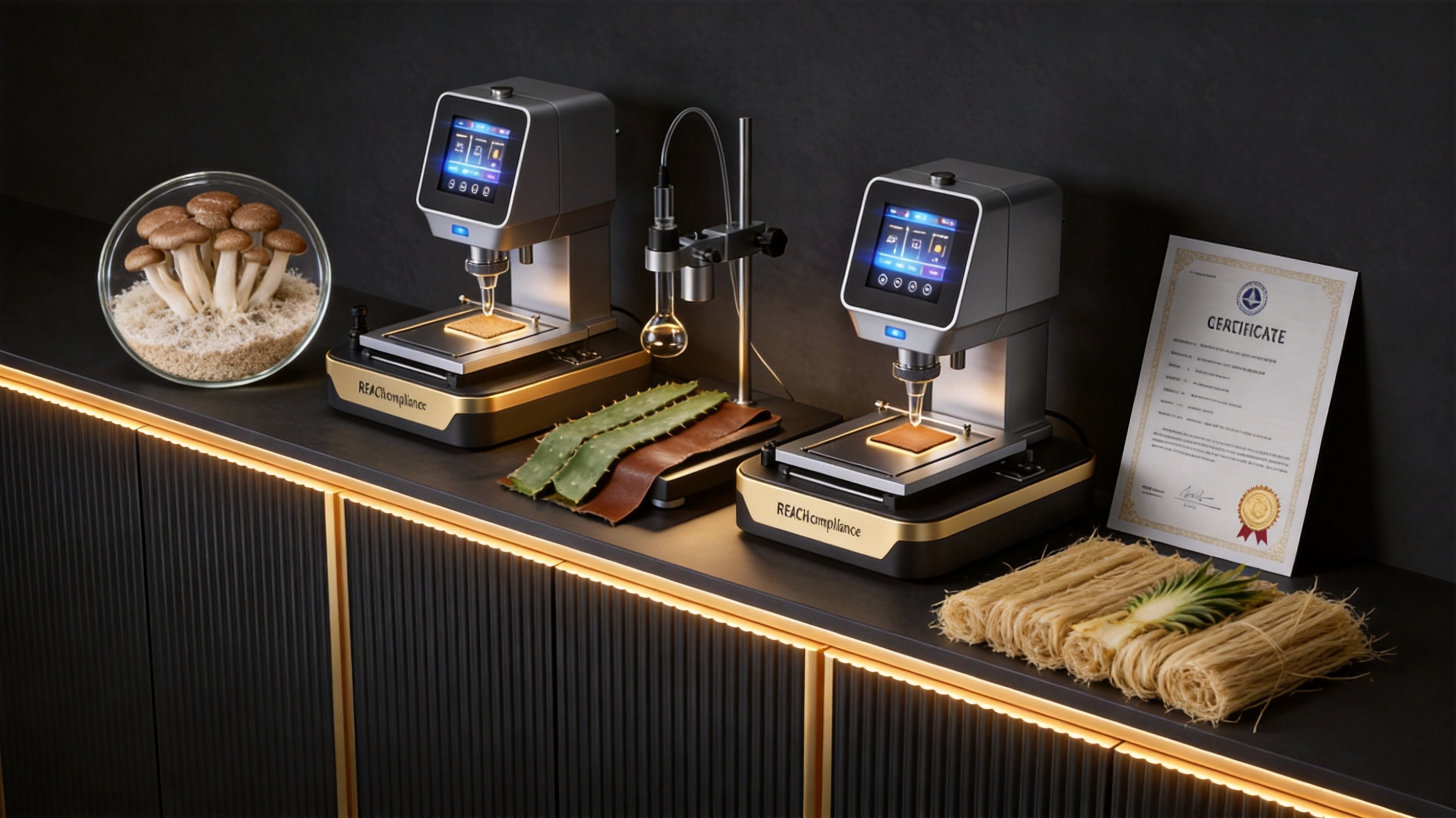
The plant-based leather market has moved beyond novelty into serious commercial application. Several materials are now production-ready for handbag manufacturing:
- Cactus leather (Desserto): Made from nopal cactus in Mexico. Soft hand-feel, good durability, partially bio-based. Used by Fossil, Karl Lagerfeld, and Fendi. Cost: 2-3x traditional leather.
- Mushroom leather (Mylo/Reishi): Grown from mycelium (mushroom root structure). Biodegradable, scalable production. Used by Stella McCartney, Hermès, and Lululemon. Cost: 3-5x traditional leather.
- Apple leather: Made from apple pomace (juice industry waste). Good grain texture, partially bio-based. Used by various European brands. Cost: 1.5-2.5x traditional leather.
- Grape leather (Vegea): Made from wine industry grape waste. Luxury positioning, excellent texture. Used by H&M Conscious and luxury brands. Cost: 2-4x traditional leather.
- Pineapple leather (Piñatex): Made from pineapple leaf fibers. Textured, sustainable story. Used by Hugo Boss and Paul Smith. Cost: 1.5-2x traditional leather.
Recycled and Circular Materials
Beyond bio-based alternatives, recycled materials are gaining significant traction. Recycled leather (made from leather fiber waste), recycled nylon (from ocean plastic or textile waste), and recycled polyester are becoming mainstream material choices. Brands using these materials can point to verifiable waste diversion metrics that resonate with environmentally conscious consumers.
| Material Type | Source | Commercial Readiness | Cost vs. Traditional | Key Advantage |
|---|---|---|---|---|
| Cactus Leather | Nopal cactus | Production-ready | 200-300% | Soft hand-feel, scalable |
| Mushroom Leather | Mycelium | Scaling production | 300-500% | Biodegradable, luxury quality |
| Apple Leather | Apple pomace waste | Production-ready | 150-250% | Waste valorization, good texture |
| Grape Leather | Wine grape waste | Production-ready | 200-400% | Luxury positioning, wine industry waste |
| Recycled Leather | Leather fiber waste | Widely available | 60-80% | Cost-effective, circular |
| Recycled Nylon | Ocean plastic/textile waste | Widely available | 120-150% | Performance, sustainability story |
Regulatory Pressure Driving Change
Governments worldwide are implementing regulations that force manufacturers to address sustainability. The EU's proposed Ecodesign for Sustainable Products Regulation (ESPR) will require Digital Product Passports for textiles and leather goods, providing consumers with transparent information about materials, chemicals, carbon footprint, and recyclability.
AI and Technology in Manufacturing
Artificial intelligence and advanced technology are transforming every stage of handbag manufacturing, from initial design concept through final quality inspection.
AI-Powered Design
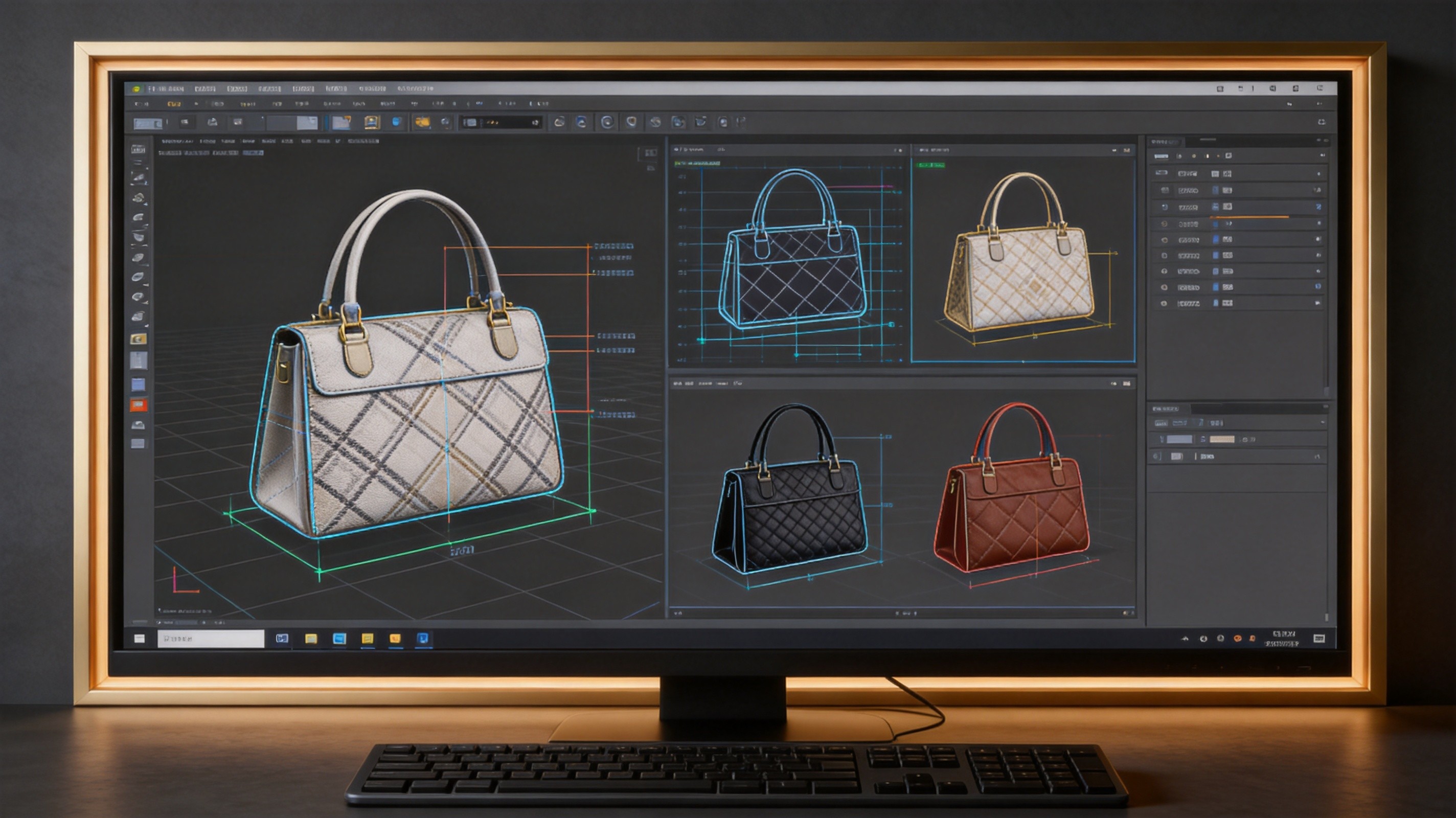
Generative AI tools are revolutionizing the design process. Designers can now input parameters (target market, price point, material preferences, seasonal trends) and receive hundreds of design variations in minutes. While AI does not replace human creativity, it dramatically accelerates the ideation phase and helps identify commercially viable designs that human designers might overlook.
AI Applications in Handbag Manufacturing
- Trend forecasting: AI analyzes social media, runway shows, search data, and retail sales to predict upcoming trends 6-12 months ahead
- Pattern optimization: AI algorithms optimize cutting patterns to reduce material waste by 15-25% compared to manual layout
- Quality inspection: Computer vision systems detect defects (stitching errors, color variations, surface flaws) with 99%+ accuracy
- Demand forecasting: Machine learning models predict sales volumes by SKU, optimizing production planning and inventory management
- Supply chain optimization: AI identifies optimal sourcing decisions based on cost, lead time, sustainability criteria, and risk factors
Smart Factory Automation
Handbag manufacturing has traditionally been labor-intensive, but automation is increasingly handling repetitive, precision-critical tasks while human artisans focus on complex assembly and finishing work.
Current Automation Technologies
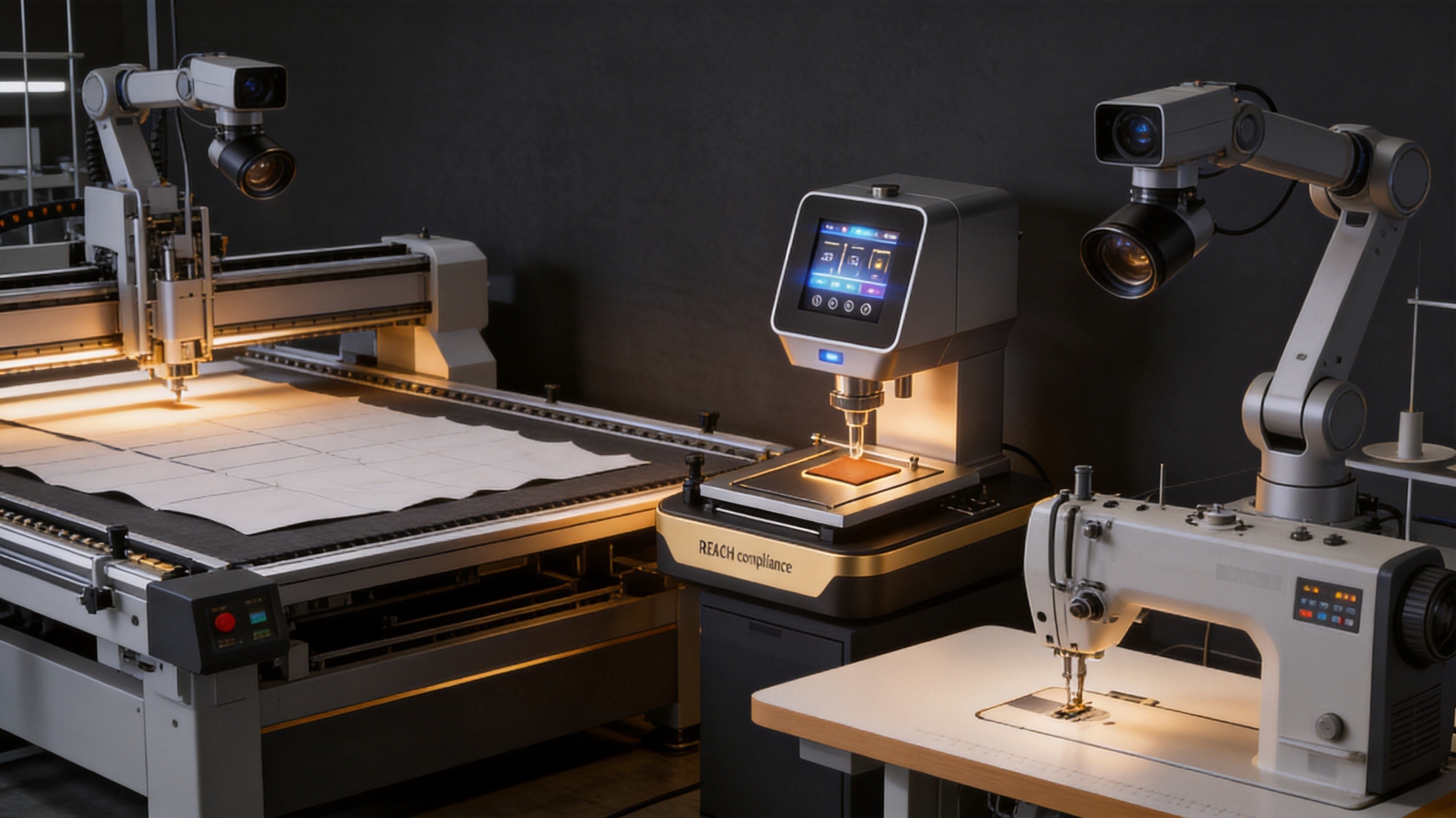
- Automated cutting: CNC cutting machines and laser cutters achieve precision impossible with manual cutting, reducing material waste
- Robotic stitching: Automated sewing machines handle straight-stitch operations with consistent tension and speed
- Automated edge finishing: Machines apply consistent edge paint or burnish to leather goods
- Digital printing: High-resolution digital printers apply custom designs directly to fabric and leather
- IoT monitoring: Sensors on machines track production data in real-time for efficiency optimization
3D Printing in Handbag Manufacturing
3D printing (additive manufacturing) is creating new possibilities for handbag design and production that traditional methods cannot achieve. While still limited in volume, 3D printing is rapidly moving from prototyping tool to production technology.
Current Applications
- Rapid prototyping: 3D-printed prototypes reduce sample lead times from 2 weeks to 1-2 days
- Custom hardware: 3D printing produces unique clasps, buckles, and decorative elements impossible with traditional casting
- Structural components: Rigid frames, geometric forms, and architectural bag structures
- Personalization: On-demand custom monograms, decorative elements, and made-to-measure components
Projected Impact by 2030
Industry analysts project that 3D printing will handle 5-10% of handbag component production by 2030, with the highest adoption in luxury/custom segments and hardware production. The technology's economics improve as materials advance and production speeds increase.
Supply Chain Transformation
The handbag supply chain is undergoing fundamental restructuring driven by geopolitical, economic, and consumer demand factors.
Nearshoring and Regionalization
The trend toward nearshoring — moving manufacturing closer to consumer markets — is reshaping the global handbag production map. This shift is driven by supply chain risk mitigation, faster response to trends, reduced shipping emissions, and trade agreement advantages.
| Consumer Market | Traditional Source | Nearshore Alternative | Shipping Time Savings | Cost Impact |
|---|---|---|---|---|
| United States | China (30-45 days) | Mexico, Central America (7-14 days) | 60-70% faster | +15-25% per unit |
| European Union | China (25-40 days) | Turkey, Eastern Europe, Portugal (7-15 days) | 55-65% faster | +10-20% per unit |
| United Kingdom | China (25-40 days) | Turkey, Italy, Portugal (7-14 days) | 55-65% faster | +10-20% per unit |
Supply Chain Digitization
Digital supply chain management tools are replacing manual processes, providing real-time visibility into production status, material flows, and shipment tracking. Brands increasingly demand digital integration with their manufacturing partners, requiring portals for order tracking, documentation management, and communication.
Digital Product Passports
The EU's Digital Product Passport initiative will require products to carry digital records accessible via QR code or NFC chip, containing information about materials, manufacturing location, chemical composition, carbon footprint, care instructions, and recycling guidance. This represents a fundamental shift in transparency requirements.
On-Demand Manufacturing
The traditional model of forecasting demand, producing inventory, and hoping products sell is being challenged by on-demand manufacturing — making products only after receiving confirmed customer orders.
The On-Demand Model
On-demand manufacturing eliminates the inventory risk that plagues fashion brands. Instead of ordering 1,000 units of a new design and hoping 700 sell, brands produce based on actual orders. The model works best for:
- Personalized products: Custom monograms, color combinations, and made-to-measure sizing
- Test-and-repeat: Launch new designs with small quantities, then scale winners
- Limited editions: Produce exact quantities for time-limited or event-specific collections
- Niche markets: Serve specific customer segments without the inventory risk of broad distribution
On-Demand Growth Projections
On-demand manufacturing currently represents approximately 2% of the handbag market but is growing at 30-40% annually. By 2030, it is projected to reach 10-15% of market volume, driven by DTC brands, sustainability requirements, and consumer demand for personalization.
Changing Consumer Behavior
Consumer expectations are evolving rapidly, creating both challenges and opportunities for handbag brands and manufacturers.
The Personalization Imperative
Consumers increasingly expect products tailored to their individual preferences. Monogramming, custom color selection, interchangeable components, and made-to-order options are moving from luxury exclusives to mainstream expectations. Brands offering personalization report 25-40% higher customer lifetime values and significantly lower return rates.
Transparency and Authenticity
Modern consumers — particularly Gen Z and Millennial buyers — demand transparency about where products come from, how they are made, and what materials they contain. Brands that provide verifiable supply chain information build stronger trust and loyalty. This expectation is driving the Digital Product Passport trend and factory transparency initiatives.
Quality Over Quantity
The "buy less, buy better" movement is gaining momentum. Consumers are shifting from frequent purchases of low-quality items toward less frequent purchases of higher-quality, longer-lasting products. This trend benefits brands emphasizing craftsmanship, material quality, and durability — and it benefits factories capable of producing at the highest quality levels.
What This Means for Manufacturing Partners
These converging trends create specific requirements for handbag factories. The manufacturers that thrive in this new landscape will be those that adapt their capabilities to meet evolving brand needs.
Capabilities Brands Will Require from Factories
- Small-batch capability: Ability to produce runs of 100-200 pieces efficiently, not just large runs of 1,000+
- Quick turnaround: Sampling in days, not weeks; production in 3-4 weeks, not 8-10
- Material flexibility: Willingness and capability to work with new sustainable materials
- Digital integration: Online portals for order tracking, documentation, and communication
- Compliance readiness: Up-to-date testing for REACH, CPSIA, Prop 65, and emerging regulations
- Personalization capability: Equipment and processes for on-demand customization
- Transparency: Willingness to share supply chain information and factory conditions
Future-Ready Manufacturing: Junyuan Bags is investing heavily in the technologies and capabilities that define the future of handbag manufacturing. Their 30,000 sqm Quanzhou facility integrates CNC cutting for precision and efficiency, digital printing for on-demand customization, and automated quality inspection systems. With 20+ years of experience, they are adapting to work with plant-based leathers, recycled materials, and on-demand production models. MOQ starts at 200 pieces for standard orders, with smaller quantities available for personalization projects. Contact: service@junyuanbags.com, WhatsApp: +86 17750020688.
The Role of Traditional Craftsmanship
Despite the surge in technology, traditional craftsmanship remains irreplaceable in handbag manufacturing. The human hands that cut leather, stitch seams, and finish edges bring an element of quality and character that machines cannot replicate. The future of handbag manufacturing is not a choice between technology and craft — it is the integration of both.
Where Human Craftsmanship Remains Essential
- Complex assembly requiring judgment and adaptability
- Luxury finishing where perfection is the standard
- Leather selection and matching for natural material consistency
- Quality assessment that requires subjective aesthetic judgment
- Custom and bespoke work requiring individualized attention
Predictions for 2026-2030
Based on current trajectories, several key developments are likely to reshape the handbag manufacturing industry over the next five years.
Near-Term (2026-2027)
- AI-assisted design becomes standard tool for mid-size and larger brands
- Digital Product Passport pilot programs launch in the EU
- Plant-based leathers reach 8-10% of luxury accessories market
- Automated quality inspection deployed in 50%+ of large factories
- On-demand manufacturing reaches 5% of market volume
Mid-Term (2028-2030)
- Digital Product Passports become mandatory for EU market access
- Sustainable materials reach 15-20% of total market share
- Nearshoring captures 20-25% of US- and EU-bound production
- 3D printing handles 5-10% of component production
- On-demand manufacturing reaches 10-15% of market
- Smart/connected bags become a meaningful product category
Long-Term (2030+)
- Fully circular production models become industry standard in premium segments
- AI handles 80%+ of routine design variation work
- Regional manufacturing networks replace centralized global production
- Consumer-facing supply chain transparency is universal, not differentiating

Preparing Your Brand for the Future
The brands that thrive in this evolving landscape will be those that begin adapting now, even as the full implications of these trends are still unfolding.
Action Steps for Brands
- Audit your current factory relationships: Evaluate whether your manufacturing partner is investing in the technologies and capabilities needed for the future.
- Begin material diversification: Start testing sustainable and next-generation materials in your product development process.
- Build smaller, more frequent production cycles: Move toward a test-and-repeat model that reduces inventory risk.
- Invest in digital supply chain tools: Implement tracking, documentation, and communication platforms.
- Prepare for Digital Product Passports: Begin collecting the data that will be required for EU market access.
- Develop personalization capabilities: Even simple monogramming or color options differentiate your brand and increase margins.