Table of Contents
- Understanding the Two Most Popular Wallet Styles
- Bi-Fold Wallet: Construction and Design Principles
- Tri-Fold Wallet: Construction and Design Principles
- Pattern Making Differences Between the Two Styles
- Leather Cutting and Preparation Variations
- Stitching Complexity Comparison
- Card Slot Engineering: Bi-Fold vs Tri-Fold
- Bill Compartment Design Differences
- Hardware and Closure Mechanisms
- Leather Yield and Material Efficiency
- Production Time and Labor Cost Comparison
- Consumer Preferences: Who Buys Which Style
- Market Share Data by Wallet Folding Style
- Pricing Strategy for Each Style
- Which Style Should Your Brand Prioritize
- FAQ — Bi-Fold vs Tri-Fold Wallet Manufacturing
The bi-fold and tri-fold wallets represent the two dominant folding styles in the global wallet market, together accounting for over 50 percent of all wallet sales. For brands entering the wallet manufacturing space or expanding their existing leather goods lines, understanding the manufacturing differences between these two styles is essential for making informed decisions about product development, cost planning, and collection strategy. While they may appear similar to consumers, the construction approaches, material requirements, and production economics differ in ways that significantly affect your bottom line.
This guide provides a comprehensive manufacturing comparison of bi-fold and tri-fold wallets, covering every aspect from pattern making and leather cutting to stitching complexity, card slot engineering, production costs, and market positioning. Whether you are deciding which style to launch first, planning to expand from one to both, or optimizing your existing production processes, this analysis gives you the data needed for confident decision-making. Our OEM manufacturing services include both bi-fold and tri-fold production with full customization capabilities.

Bi-fold and tri-fold wallets share DNA but differ significantly in manufacturing approach and market positioning
Understanding the Two Most Popular Wallet Styles
Before diving into manufacturing specifics, it is essential to establish clear definitions of each style. A bi-fold wallet folds once in half along its width, creating two panels. When open, it presents a left side and a right side, each typically containing card slots, with a full-width bill compartment running along the fold. A tri-fold wallet folds twice, creating three panels that stack on top of each other. The most common tri-fold configuration folds the left and right panels inward over the center panel, creating a compact square shape when closed.
Both styles serve the same fundamental function: securely organizing cards, cash, and identification in a portable format. The differences lie in their approach to balancing storage capacity, physical dimensions, manufacturing complexity, and user experience. These differences have direct implications for brands planning their product lines, as they affect everything from material sourcing to pricing strategy and target demographic selection.
Bi-Fold Wallet: Construction and Design Principles
The bi-fold wallet follows an elegantly simple construction principle: two panels connected by a central fold, with card slots and compartments distributed across the interior faces. This simplicity is the foundation of both its manufacturing efficiency and its enduring market popularity.
A standard bi-fold wallet consists of five primary components: the outer shell (a single piece of leather forming the exterior and fold), the inner panel (which provides the interior surface and structure), card slot layers (typically two to four layers creating eight to twelve slots), the bill divider (a panel separating the bill compartment), and edge finishing materials. The assembly sequence involves preparing each component through cutting, skiving, and edge work, then joining them through a series of stitching operations that progress from interior to exterior.
The bi-fold's construction advantage is its minimal component count and straightforward assembly sequence. The single central fold requires one precise scoring and folding operation, and the symmetrical design means left and right halves are mirror images that share the same pattern pieces. This symmetry reduces pattern-making complexity and material waste, contributing to the bi-fold's favorable manufacturing economics. For brands exploring wallet design, understanding how to design a custom leather wallet starts with mastering the bi-fold's fundamentals.

The bi-fold wallet's simple two-panel construction delivers manufacturing efficiency and universal consumer appeal
Tri-Fold Wallet: Construction and Design Principles
The tri-fold wallet adds a third panel to the bi-fold's basic architecture, creating a more complex but more space-efficient design. When closed, the tri-fold's three-panel structure creates a wallet that is approximately two-thirds the width of a bi-fold but slightly thicker, making it ideal for pocket carry or small handbag placement.
Construction involves seven or more primary components: the outer shell with two fold lines, the center panel, two outer panels that fold inward, multiple card slot layers distributed across all three panels, a central bill compartment, and in many designs a zippered coin pocket in the center panel. The assembly sequence is more complex, requiring precise alignment of three panels rather than two, and the dual fold points demand careful attention to leather thickness and flexibility at each fold.
The tri-fold's complexity is concentrated in two areas: the fold construction and the card slot distribution. Each fold point must be precisely scored, skived, and conditioned to fold cleanly without cracking or creating excessive bulk. Card slots are distributed across all three panels, requiring careful planning to ensure balanced capacity and consistent access regardless of which panel the slots occupy.
Pattern Making Differences Between the Two Styles
Pattern making is the foundation of wallet manufacturing, and the differences between bi-fold and tri-fold patterns directly affect material consumption, production complexity, and the precision required from the pattern maker.
| Pattern Element | Bi-Fold | Tri-Fold | Difference |
|---|---|---|---|
| Number of Pattern Pieces | 8-12 | 12-18 | +40-50% for tri-fold |
| Fold Lines | 1 | 2 | +100% for tri-fold |
| Card Slot Layers | 2-4 | 3-6 | +50% for tri-fold |
| Pattern Development Time | 4-6 hours | 6-10 hours | +50-67% for tri-fold |
| Pattern Complexity Level | Moderate | High | +1 level for tri-fold |
| Tolerance Requirement | +/- 0.5mm | +/- 0.3mm | Tighter for tri-fold |
The tri-fold's additional panel and fold line require the pattern maker to solve more complex alignment challenges. The two fold lines must be precisely parallel and evenly spaced, or the wallet will fold unevenly and appear asymmetrical. Card slot positions must account for the additional fold, ensuring that slots on panels that fold over each other align correctly and do not create uneven thickness when the wallet is closed. These challenges require experienced pattern makers and typically add 50 to 67 percent to the pattern development time.
Leather Cutting and Preparation Variations
The cutting process for bi-fold and tri-fold wallets differs primarily in the number of pieces, the layout efficiency on the leather hide, and the preparation steps required before assembly.
Bi-fold wallets typically require 8 to 12 cut pieces from the leather, arranged on a hide with approximately 70 to 78 percent material utilization efficiency. The relatively simple shapes allow efficient nesting that minimizes waste. Tri-fold wallets require 12 to 18 cut pieces, and while the additional smaller pieces can fit into gaps left by larger pieces, the overall utilization efficiency drops slightly to 65 to 72 percent due to the greater number of unique shapes that cannot nest as efficiently.
Both styles require skiving at fold points to reduce leather thickness and enable clean folding without bulk. The bi-fold's single fold requires one skiving operation, while the tri-fold's two folds require two. Additionally, tri-fold wallets often require skiving at the panel edges where three layers overlap when closed, adding another skiving step that bi-folds do not need. These additional preparation steps contribute to the tri-fold's longer production time and slightly higher labor cost.
Stitching Complexity Comparison
Stitching is where the manufacturing complexity difference between bi-fold and tri-fold wallets becomes most apparent. Each card slot, panel edge, and structural seam requires precise stitching, and the tri-fold's additional panel and slots translate directly to more stitching operations.
A standard bi-fold wallet with eight card slots requires approximately 35 to 45 separate stitching operations, including slot edges, panel assembly, bill compartment, and perimeter finishing. A comparable tri-fold wallet with ten card slots distributed across three panels requires 55 to 70 stitching operations, representing a 50 to 60 percent increase. Each additional stitch line adds time, requires thread changes or repositioning, and introduces another potential quality control checkpoint.

Tri-fold wallets require 50-60% more stitching operations due to additional panels and card slots
The stitching quality requirements are identical for both styles: consistent stitch-per-inch count (typically 7 to 8 SPI for leather wallets), even tension, clean back-side appearance, and proper thread locking at start and end points. The tri-fold's additional stitching does not change the quality standard but does increase the probability of encountering a defect simply because there are more operations where a defect could occur. This statistical reality is factored into quality control planning and reject rate allowances.
Card Slot Engineering: Bi-Fold vs Tri-Fold
Card slot design is one of the most technically demanding aspects of wallet manufacturing, requiring precise calculation of leather thickness, fold allowance, and tension to create slots that hold cards securely while allowing easy insertion and removal.
In bi-fold wallets, card slots are typically arranged in two groups of four to six on the left and right interior panels. The slots are created by stitching layered leather pieces that form individual pockets, with each successive slot behind the previous one adding cumulative thickness. The bi-fold's two-panel design means the card slot thickness is distributed across both panels evenly when closed, creating balanced bulk.
In tri-fold wallets, card slots are distributed across all three panels, typically with two to four slots on each outer panel and additional slots on the center panel faces. The engineering challenge is ensuring that the cumulative thickness from stacked card layers does not make one panel significantly thicker than others, which would cause uneven folding. This requires careful calculation of layer quantities and strategic distribution across panels, adding design complexity beyond the bi-fold's straightforward bilateral arrangement.
Bill Compartment Design Differences
The bill compartment serves the same function in both styles, but the design approach differs based on the panel configuration. In bi-fold wallets, the bill compartment runs the full width of the wallet along the central fold, creating a single long pocket that accommodates folded bills. This simple, proven design is highly efficient in both manufacturing and daily use.
Tri-fold wallets present two bill compartment options: a single compartment spanning one or two panels, or divided compartments across multiple panels. The single-compartment approach is simpler to manufacture but limits the usable bill space to the width of one panel. Divided compartments offer more total space but require additional stitching and create complexity in ensuring bills do not get caught at the fold points when the wallet is closed. Most premium tri-fold wallets use a single full-width compartment on the center panel for simplicity and reliability.
Hardware and Closure Mechanisms
Both bi-fold and tri-fold wallets use similar hardware options, but the tri-fold's additional panel creates opportunities and requirements for additional hardware elements.
| Hardware Element | Bi-Fold | Tri-Fold |
|---|---|---|
| Snap Button | Optional | Recommended (secures closed state) |
| Logo Plate | Exterior face | Exterior face or center panel |
| Zipper (coin pocket) | Optional | Common in center panel |
| ID Window Frame | Optional | Common |
| Pen Loop | Rare | Sometimes included |
| Average Hardware Cost | $0.30-$1.50 | $0.80-$3.00 |
The tri-fold's tendency to include more hardware components reflects its positioning as a higher-capacity, more feature-rich product. The snap button, while optional on bi-folds, is strongly recommended on tri-folds to keep the wallet securely closed when the three-panel structure creates natural spring tension. The zippered coin pocket, while available in both styles, appears in approximately 60 percent of tri-fold designs compared to only 25 percent of bi-folds. These hardware additions increase both material cost and assembly time.
Leather Yield and Material Efficiency
Material efficiency directly impacts manufacturing costs, and the differences between bi-fold and tri-fold patterns affect how much usable product comes from each hide of leather.
A standard bi-fold wallet requires approximately 1.5 to 2.0 square feet of leather per unit, depending on size and the number of interior layers. A comparable tri-fold wallet requires 2.0 to 2.8 square feet per unit, reflecting the additional panel and card layers. The tri-fold's approximately 30 to 40 percent higher material consumption per unit is a significant cost factor when working with premium full-grain leather priced at $8 to $18 per square foot.
However, material utilization efficiency tells a more nuanced story. The bi-fold's larger, simpler pattern pieces nest efficiently on the hide, achieving 70 to 78 percent utilization. The tri-fold's additional smaller pieces can fill gaps between larger pieces, achieving 65 to 72 percent utilization. When calculating actual cost per unit, the combination of higher per-unit consumption and slightly lower utilization efficiency means the tri-fold's material cost is approximately 35 to 45 percent higher than the bi-fold's for equivalent leather quality.

Material utilization efficiency differs between styles, affecting per-unit leather cost
Production Time and Labor Cost Comparison
The cumulative effect of additional pattern pieces, cutting operations, stitching lines, and assembly steps translates to measurably longer production time for tri-fold wallets. This time difference is the primary driver of the cost gap between the two styles.
| Production Phase | Bi-Fold Time | Tri-Fold Time | Labor Cost Difference |
|---|---|---|---|
| Pattern Making | 4-6 hrs | 6-10 hrs | +50-67% |
| Cutting and Skiving | 15-20 min | 20-30 min | +33-50% |
| Card Slot Assembly | 12-18 min | 18-28 min | +50-56% |
| Main Stitching | 10-15 min | 15-22 min | +50-47% |
| Edge Finishing | 5-8 min | 7-12 min | +40-50% |
| Quality Inspection | 3-5 min | 5-8 min | +67-60% |
| Total Production Time | 45-67 min | 66-110 min | +47-64% |
At an average skilled worker rate of $0.15 to $0.25 per minute in Chinese manufacturing centers like Quanzhou, the labor cost difference translates to approximately $0.80 to $1.50 more per tri-fold unit. Combined with the higher material cost, the total manufacturing cost premium for tri-fold wallets is typically 15 to 25 percent above equivalent bi-fold designs. This cost difference is readily absorbed by the market, as tri-fold wallets command corresponding retail price premiums of 10 to 20 percent.
Consumer Preferences: Who Buys Which Style
Understanding who buys each style helps brands make informed decisions about which to prioritize in their product lines and how to position each for maximum appeal.
Bi-fold wallet buyers skew male (approximately 70 percent of bi-fold purchases are by men), value simplicity and pocket comfort, and prioritize slim profiles over maximum storage. They tend to be repeat purchasers who replace their wallet every 2 to 4 years and show strong loyalty to brands and styles they have used before. Tri-fold buyers skew more balanced between genders but lean female (approximately 55 percent women), value organization and maximum capacity, and are more willing to accept a slightly larger form factor for additional functionality.
Age also influences preference. Younger consumers (under 30) increasingly prefer card holders and minimalist designs, reducing the addressable market for both folding styles. Consumers aged 30 to 55 represent the core bi-fold and tri-fold buyer demographic. Consumers over 55 show the strongest preference for traditional styles, with tri-fold wallets particularly popular among those who value organization features like coin pockets and ID windows.
Market Share Data by Wallet Folding Style
The market share data clearly shows bi-fold dominance, but the tri-fold maintains a meaningful position that justifies its inclusion in most brand collections.
Bi-fold wallets hold 38 to 40 percent of the global wallet market, making them the single largest wallet style category. Tri-fold wallets command 12 to 15 percent, placing them third behind card holders (18-22 percent) but ahead of zip-around, long wallets, and other styles. The bi-fold's share has remained remarkably stable over the past decade, while the tri-fold has experienced a gradual decline of approximately 1 to 2 percent per year as minimalist alternatives gain share. Despite this decline, the tri-fold's absolute market value continues to grow due to overall market expansion, making it a commercially viable style for brands that serve the right demographic.

Market share data confirms bi-fold dominance while tri-fold maintains a meaningful niche
Pricing Strategy for Each Style
Strategic pricing for bi-fold and tri-fold wallets must account for their different cost structures while positioning each style appropriately within your brand's price architecture. The bi-fold's lower cost allows competitive pricing at entry and mid-range levels, while the tri-fold's additional features and cost justify premium positioning.
For a brand offering both styles, the bi-fold typically serves as the core product at the brand's median price point, while the tri-fold is positioned 10 to 20 percent higher to reflect its additional capacity, features, and manufacturing investment. This pricing architecture creates natural upsell pathways: a customer who enters through the bi-fold may upgrade to the tri-fold for additional functionality, or may use the bi-fold as daily carry while purchasing the tri-fold as a gift. For a complete guide to wallet price positioning, see our wallet types buying guide.
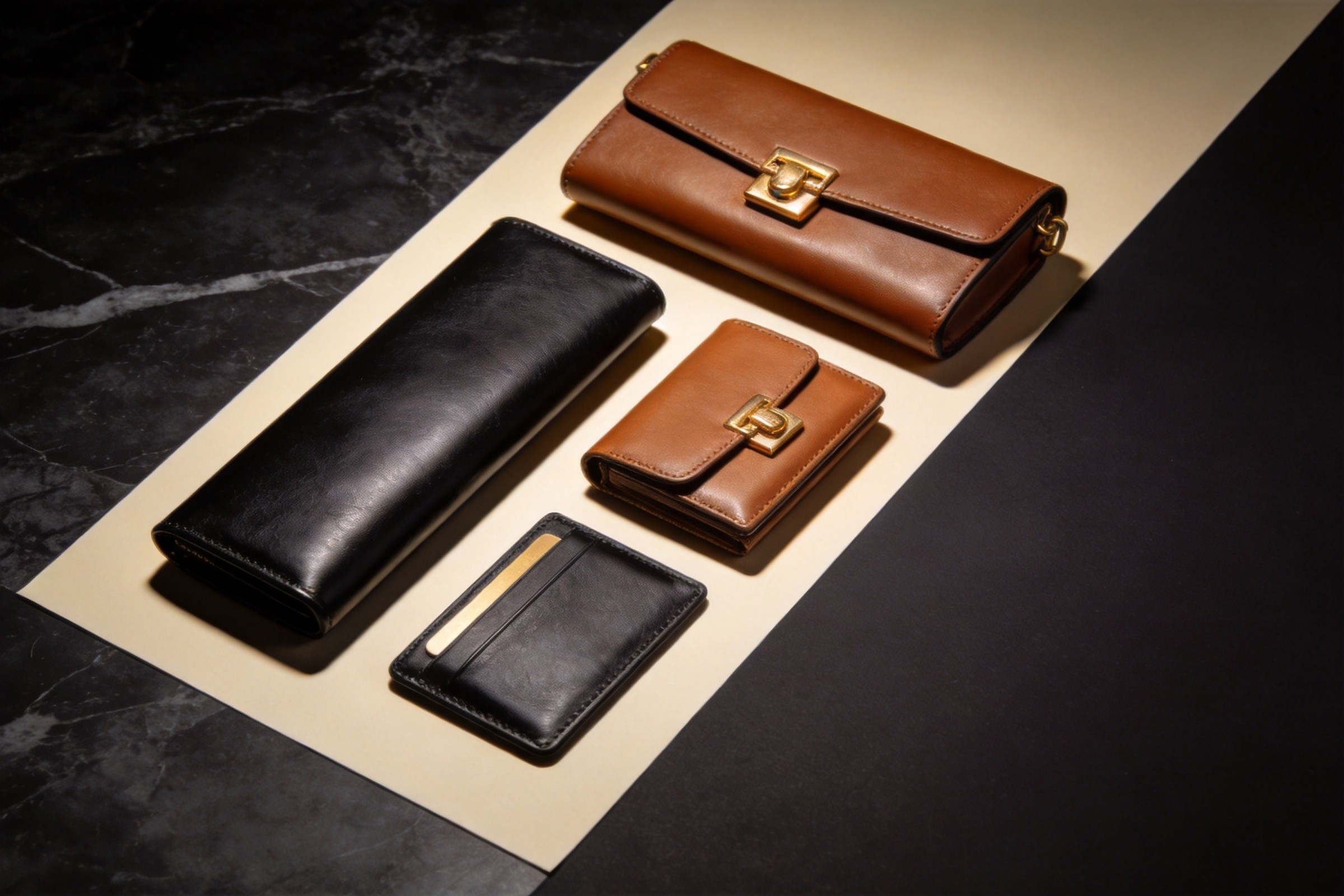
Which Style Should Your Brand Prioritize
For new brands entering the wallet market, the answer is almost universally bi-fold. The reasoning combines manufacturing practicality with market strategy: lower production costs reduce initial investment risk, simpler construction means fewer quality issues during early production, broader market appeal provides the largest addressable customer base, and the design's forgiving nature accommodates the learning curve inherent in new manufacturing relationships.
Once the bi-fold is established and generating consistent revenue, adding a tri-fold style leverages existing material sourcing, hardware inventory, and factory relationships to expand the collection at minimal incremental investment. The tri-fold's higher price point and additional features create a natural premium tier in your product architecture, attracting customers who seek maximum organization and are willing to pay more for it.
Recommended Launch Sequence
Phase 1: Launch with bi-fold wallet in 2-3 colors. Phase 2: Add card holder for minimalist segment coverage. Phase 3: Introduce tri-fold wallet for premium tier and organization-focused customers. Phase 4: Expand to zip-around and specialty styles based on market feedback. This phased approach minimizes risk while building toward a comprehensive wallet collection.
For brands that already produce bi-fold wallets and are considering adding tri-fold styles, the transition is straightforward. The material, hardware, and production infrastructure overlap significantly. The primary additional investment is in pattern development for the tri-fold's more complex design and training operators on the additional assembly steps. Most experienced wallet factories can add tri-fold production within a single sampling cycle.
Junyuan Bags manufactures both bi-fold and tri-fold wallets with equal expertise, sharing materials and components across styles for maximum efficiency. With 200-piece MOQs and 20+ years of wallet manufacturing experience, our production team can help you build a wallet collection that covers both styles with optimal economics. Contact us to discuss your collection strategy.
Manufacture Bi-Fold and Tri-Fold Wallets with Confidence
Junyuan Bags produces both wallet styles with shared materials, optimized efficiency, and consistent premium quality. 200-piece MOQ, full customization, 20+ years experience.
WhatsApp: +86 17750020688 | Email: service@junyuanbags.com
Factory: 30,000 sqm, 300+ workers, Quanzhou, China
Frequently Asked Questions
Which wallet style is more popular: bi-fold or tri-fold?
Bi-fold wallets are significantly more popular, commanding 38-40% market share versus 12-15% for tri-folds. Bi-fold dominance is strongest among men (65%+ share) while tri-folds perform relatively better among women (18-20% share). The bi-fold's universal appeal, pocket-friendly dimensions, and simple operation make it the safest choice for brands.
What is the manufacturing cost difference between the two styles?
Tri-fold wallets cost 15-25% more to manufacture than equivalent bi-fold wallets. The premium comes from additional material (+35-45%), more stitching operations (+50-60%), additional assembly time (+47-64%), and slightly higher hardware costs. For a mid-range bi-fold at $10-12, the equivalent tri-fold costs $12-15.
Is tri-fold manufacturing more complex?
Yes, moderately more complex. The additional fold panel requires more precise pattern alignment, the additional card layers create more stitching operations, and dual fold points require careful leather preparation. However, for experienced wallet factories, these differences are manageable and do not represent a significant barrier.
Should a new brand start with bi-fold or tri-fold?
New brands should start with bi-fold wallets for lower cost, simpler production, broader market appeal, and more forgiving manufacturing tolerances. Once established, adding tri-fold styles leverages existing infrastructure to expand the collection efficiently with minimal incremental investment.
Can bi-fold and tri-fold wallets share materials and components?
Yes, extensively. Both styles share the same leather sources, thread, adhesives, edge finishing materials, and most hardware components. Only the pattern pieces and material quantity per unit differ. This component sharing enables efficient production of both styles from a single material order.
How do consumer demographics differ between the two styles?
Bi-fold buyers are approximately 70% male, prioritize slim profiles and simplicity. Tri-fold buyers are approximately 55% female, prioritize organization and maximum capacity. Both styles appeal to the 30-55 age demographic, with tri-folds skewing slightly older among buyers who value traditional features like coin pockets and ID windows.
Limitations and Scope of This Guide
This guide covers manufacturing differences between bi-fold and tri-fold wallet styles, including construction, materials, and production considerations. It is based on our experience as a handbag manufacturer in Quanzhou, China, serving brands worldwide since 2004. Key limitations to keep in mind:
- Design specifications and dimensions are representative examples. Actual measurements vary based on your brand's design requirements and target market preferences.
- Cost comparisons are based on standard materials and construction methods. Custom materials, exotic leathers, or specialized hardware will affect pricing differently for each style.
- Market preference data reflects general consumer trends. Regional preferences may vary—tri-folds tend to be more popular in certain Asian markets while bi-folds dominate in Western markets.
For advice tailored to your specific situation, contact our team directly.