Table of Contents
- Cost Overview: What to Expect
- Design and Development Costs
- Sampling Costs and Timeline
- Material Costs by Type
- Production Costs Breakdown
- Branding and Labeling Costs
- Packaging Costs
- Shipping and Logistics Costs
- Hidden Costs Most Brands Overlook
- Budget Tiers: Starter to Premium
- Strategies to Reduce Costs
- ROI Analysis: When Do You Break Even?
- Payment Schedule and Cash Flow
- Complete Budget Template
- Frequently Asked Questions
Starting a private label purse line requires less capital than most aspiring brand owners assume — but costs add up in ways that catch unprepared entrepreneurs off guard. This guide provides a comprehensive, line-by-line breakdown of every cost you will encounter, from initial design development through to receiving your first shipment.
Based on 20+ years of helping brands launch their handbag collections, we have compiled realistic cost ranges for three budget tiers: startup ($3,000-$10,000), growth ($10,000-$30,000), and premium ($30,000-$80,000+). Each figure reflects actual market rates in 2025, not optimistic estimates.
Understanding cost structure helps you budget accurately and avoid cash flow surprises
Cost Overview: What to Expect
Before examining each cost category in detail, here is the complete picture. Total startup costs vary dramatically based on your manufacturing model (private label, ODM, or OEM), product complexity, material choices, and order volume.
| Cost Category | Budget Launch | Growth Launch | Premium Launch |
|---|---|---|---|
| Design Development | $0 – $500 | $1,000 – $5,000 | $5,000 – $15,000 |
| Sampling | $100 – $400 | $400 – $1,500 | $1,500 – $5,000 |
| First Production Run | $2,000 – $4,000 | $5,000 – $15,000 | $15,000 – $40,000 |
| Branding and Labels | $200 – $500 | $500 – $2,000 | $2,000 – $5,000 |
| Packaging | $200 – $500 | $500 – $2,000 | $2,000 – $6,000 |
| Shipping and Logistics | $300 – $800 | $800 – $3,000 | $3,000 – $8,000 |
| Marketing Reserve | $500 – $1,000 | $2,000 – $5,000 | $5,000 – $20,000 |
| TOTAL | $3,300 – $7,700 | $10,200 – $33,500 | $33,500 – $99,000 |
Design and Development Costs
Design costs depend entirely on your manufacturing model. Private label using existing factory designs costs nothing for design. OEM with fully original designs requires professional design work.
Freelance Designer Rates
A handbag-specific freelance designer typically charges $500-$2,500 per design, including technical sketches, material specifications, and a basic tech pack. Experienced designers with luxury brand backgrounds charge $2,000-$5,000 per design. For a launch collection of 5-8 styles, budget $2,500-$15,000 for design development.
Tech Pack Development
If your designer does not include tech pack creation, specialized tech pack developers charge $150-$500 per style. A production-ready tech pack includes: flat sketches with measurements, bill of materials, colorways, hardware specifications, stitching details, and finishing instructions.
Pattern Making
Pattern makers charge $100-$300 per style for initial patterns. Complex structured bags with multiple compartments may cost $300-$600. Pattern making is typically included in OEM sampling packages offered by full-service factories.
Cost-Saving Option
Many factories, including Purse Private Label, offer in-house design services for ODM and OEM projects. Using the factory's design team eliminates freelance design costs and ensures designs are optimized for manufacturing from the start. This approach works particularly well when combined with our OEM/ODM services.
Sampling Costs and Timeline
Sampling represents your quality insurance. Every dollar spent on sampling prevents potentially thousands of dollars in defective bulk production. Never skip this step to save money.
Sample Cost Structure
| Sample Type | Cost Range | Purpose |
|---|---|---|
| Proto Sample (first prototype) | $80 – $200 | Validate design concept and proportions |
| Fitting Sample | $100 – $250 | Test size, strap drop, and carrying comfort |
| Pre-Production Sample | $100 – $300 | Final approval before bulk production begins |
| Shipment Sample | $50 – $100 | Reference piece pulled from bulk production |
Sample Revision Costs
Most factories include 1-2 sample revisions in the initial sample cost. Additional revision rounds typically cost 50-75% of the original sample fee. Budget for 2-3 revision cycles per style to reach final approval. Total sampling investment for a 5-style collection typically ranges from $500-$2,000.
Sample Refund Policies
Many manufacturers refund sample costs against your first bulk order. Purse Private Label applies sample costs as credits toward production orders, effectively making sampling free for committed buyers. Always confirm refund policies before commissioning samples.
Sample development typically involves 2-3 revision rounds before final approval
Material Costs by Type
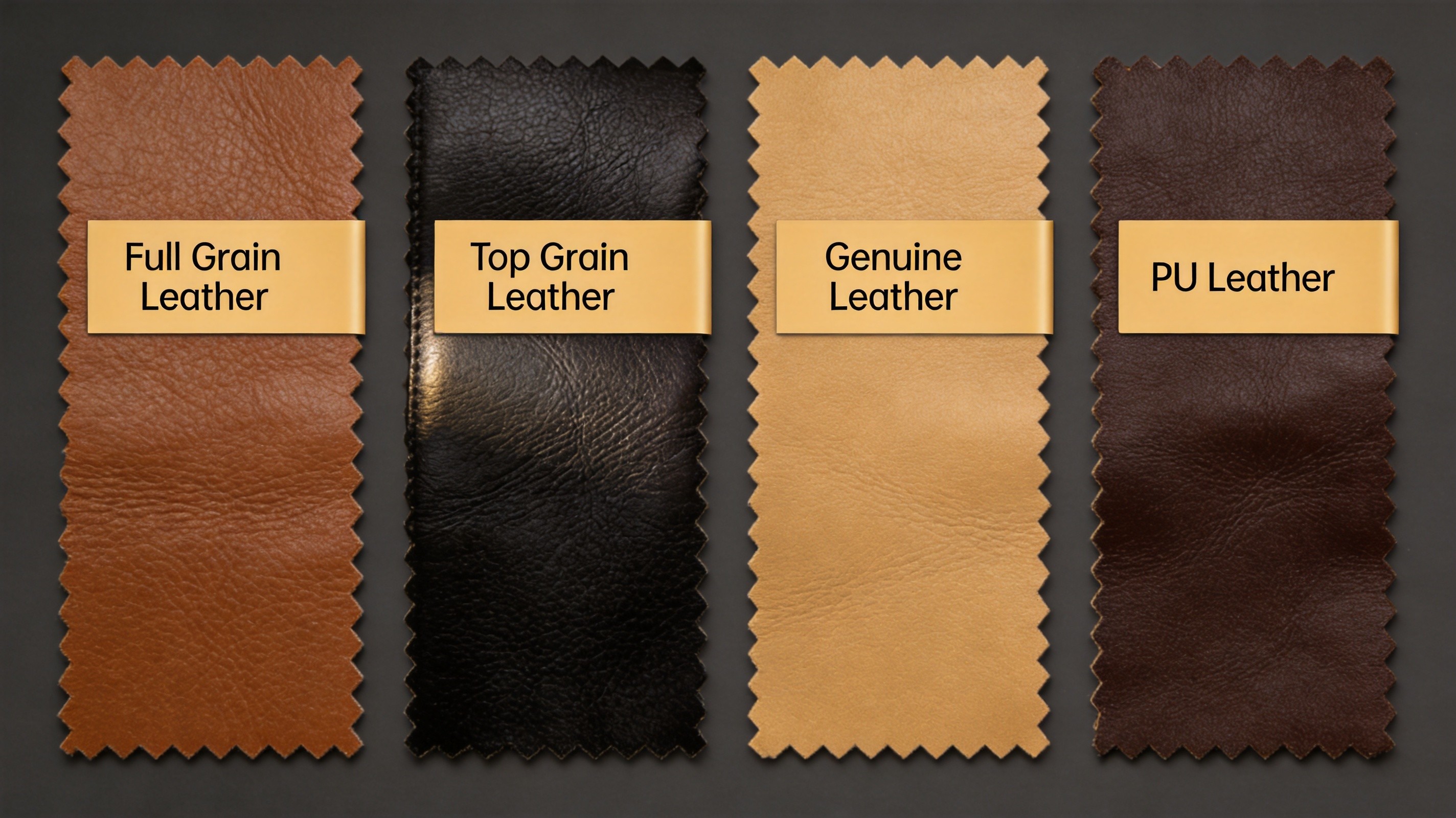
Material selection represents the single largest variable in your per-unit production cost. The same bag design can cost $8 to produce in PU or $35 in full-grain leather — a 4x cost difference driven entirely by material choice.
| Material | Cost per Meter/Yard | Cost per Bag (approx) | Quality Tier |
|---|---|---|---|
| Basic PU Leather | $3 – $8 | $2 – $5 | Entry level |
| Premium PU / Microfiber | $8 – $18 | $5 – $10 | Mid-range |
| Split Leather (Genuine) | $15 – $30 | $10 – $20 | Mid-range |
| Top-Grain Leather | $30 – $60 | $20 – $40 | Premium |
| Full-Grain Leather | $50 – $120 | $35 – $80 | Luxury |
| Vegan Leather (Plant-based) | $10 – $25 | $7 – $15 | Mid-Premium |
| Canvas / Fabric | $2 – $8 | $1 – $4 | Entry-Mid |
Hardware Costs
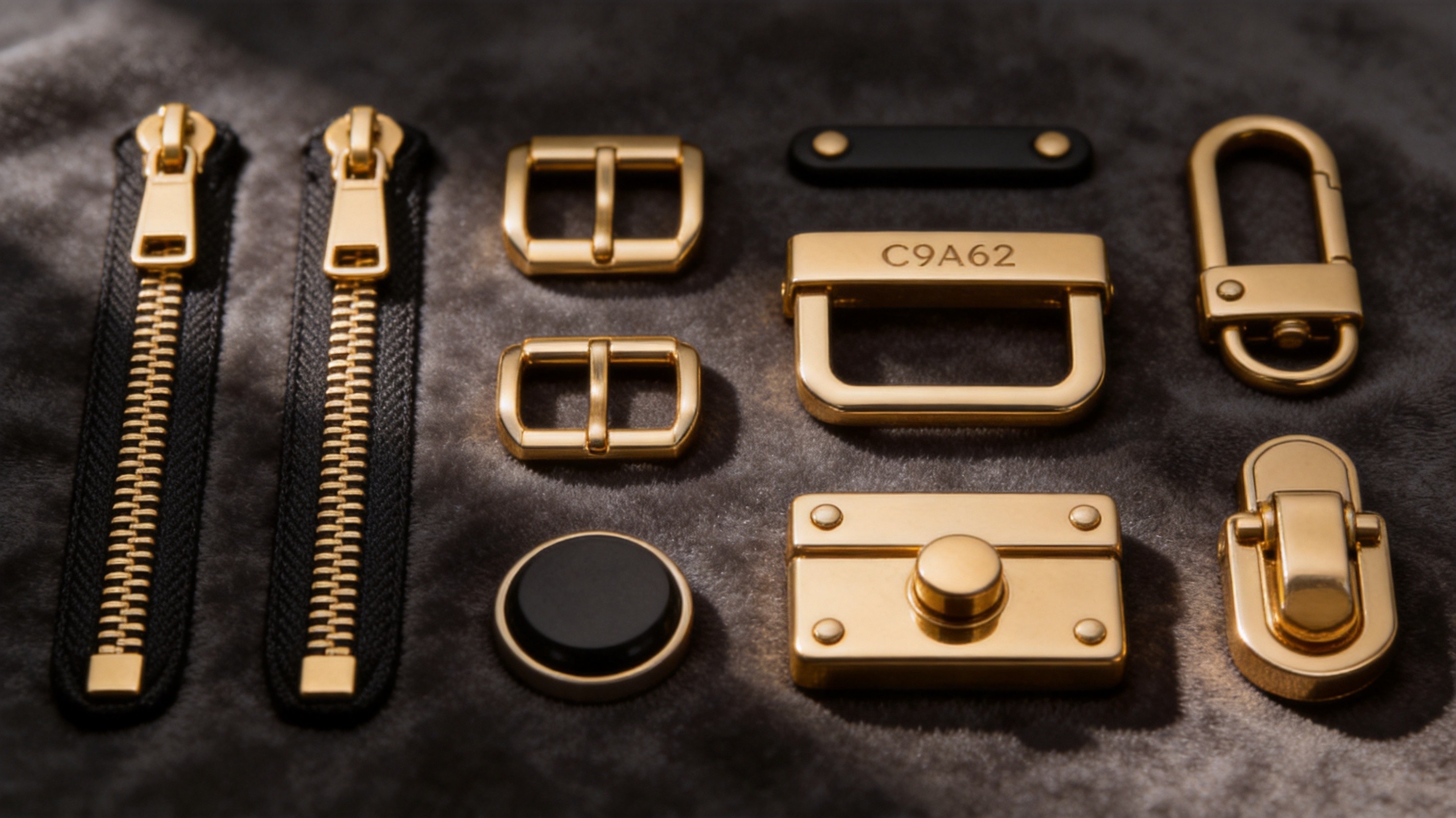
Hardware costs vary from $0.50-$5.00 per piece for standard components (zippers, clasps, D-rings, feet) to $10-$30+ per piece for custom-designed hardware with specific finishes. Zinc alloy hardware costs more than steel but offers superior finishing options and durability. Custom hardware molds cost $300-$1,500 per design — amortized across your production run.
Lining and Internal Materials
Quality lining ranges from $1-$4 per bag. Polyester linings cost $1-$2, cotton $2-$3, and branded jacquard linings $3-$6. Internal structure materials — interfacing, foam padding, base boards — add $0.50-$2.00 per bag depending on structural complexity.
Production Costs Breakdown
Beyond materials, production costs include labor, factory overhead, quality control, and profit margin. Understanding these components helps you evaluate whether a quoted price is reasonable.
Labor Cost Components
Skilled bag-making labor in China costs $3-$12 per bag depending on complexity. A simple tote requires 2-3 hours of sewing at $3-$5 in labor. A structured handbag with multiple compartments, piping, and custom hardware assembly requires 5-8 hours at $8-$12 in labor. Complex designs with hand-stitching or intricate detailing can reach $15-$25 in labor costs.
Factory Overhead Allocation
Factory overhead — rent, equipment depreciation, utilities, management, quality control systems — typically adds 15-25% to the direct production cost. Larger factories with higher efficiency spread overhead across more units, reducing the per-unit overhead allocation.
Quality Control Costs
Internal QC costs are typically built into the unit price. Third-party pre-shipment inspection costs $200-$350 per man-day. One inspector can examine 200-500 bags per day depending on inspection depth. For a 200-piece order, third-party inspection adds approximately $1-$2 per unit — worthwhile insurance for your first production run.
Production costs vary significantly based on bag complexity and material choices
Branding and Labeling Costs
Branding transforms a generic bag into your branded product. Multiple branding touchpoints exist, each with different cost implications and visual impact.
Branding Methods Compared
| Method | Cost per Unit | Best For | MOQ |
|---|---|---|---|
| Debossed Logo (leather) | $0.30 – $0.80 | Luxury, subtle branding | 200 pcs |
| Hot Foil Stamping | $0.20 – $0.60 | Gold/silver logos on leather or PU | 200 pcs |
| Embroidered Logo | $0.50 – $1.50 | Casual, sporty, or fabric bags | 200 pcs |
| Metal Logo Plate | $0.80 – $3.00 | Premium, high-visibility branding | 200 pcs |
| Printed Logo | $0.15 – $0.50 | Canvas, fabric, or large-area designs | 200 pcs |
| Custom Zipper Pulls | $0.30 – $1.00 | Brand detail on hardware | 500 pcs |
Label and Tag Costs
Interior fabric labels cost $0.05-$0.15 each. Hang tags cost $0.10-$0.30 each. Care instruction labels cost $0.03-$0.08 each. For a 200-piece order, total label and tag costs range from $40-$100. These small costs add professional polish to your product presentation.
Packaging Costs
Packaging protects your product during shipping and creates the first physical impression when customers receive their purchase. Never underestimate its impact on perceived brand value.
Packaging Components
- Dust bag: $0.30-$1.00 each (cotton or non-woven fabric)
- Inner stuffing/shaping: $0.10-$0.30 each (kraft paper or bubble wrap)
- Poly bag: $0.05-$0.15 each (clear protective bag)
- Gift box: $1.00-$4.00 each (rigid box with logo printing)
- Outer shipping carton: $0.50-$2.00 each (corrugated carton)
- Thank you card/insert: $0.05-$0.20 each
Packaging Budget by Tier
Basic packaging (poly bag + dust bag + carton) costs $0.80-$1.50 per unit. Standard packaging (gift box + dust bag + insert + carton) costs $2.50-$5.00 per unit. Premium packaging (custom rigid box with magnetic closure, branded tissue, authenticity card) costs $5.00-$12.00 per unit.
Quality packaging elevates perceived brand value and reduces damage during transit
Shipping and Logistics Costs
Shipping costs from China to your destination country depend on volume, shipping method, and destination. These costs frequently surprise first-time importers who focus exclusively on production costs.
Shipping Method Comparison
| Method | Cost per CBM | Transit Time | Best For |
|---|---|---|---|
| Sea Freight (LCL) | $50 – $150 | 25 – 40 days | Orders under 10 CBM |
| Sea Freight (FCL 20ft) | $1,500 – $3,500 | 20 – 35 days | Orders filling a 20ft container |
| Air Freight | $4 – $8 per kg | 5 – 10 days | Urgent orders, high-value goods |
| Express (DHL/FedEx) | $6 – $12 per kg | 3 – 7 days | Samples, small urgent orders |
| Rail Freight | $3 – $6 per kg | 15 – 25 days | Europe-bound shipments |
Additional Logistics Costs
Beyond freight charges, budget for customs clearance ($100-$300), import duties (varies by country, typically 5-20% of goods value), insurance (0.3-0.5% of goods value), and local delivery from port to warehouse ($100-$500 depending on distance).
Hidden Costs Most Brands Overlook
Experienced brand owners budget for costs that first-timers typically discover only after they arise. Factor these into your financial plan from the start.
Common Hidden Costs
- Sample shipping: $30-$80 per sample shipment via express courier
- Bank transfer fees: $25-$50 per international wire transfer
- Product photography: $200-$1,000 per collection for professional photos
- Barcodes (UPC/EAN): $30 per unique product for GS1 barcodes
- Product liability insurance: $500-$2,000 annually depending on coverage
- Quality issues reserve: Budget 3-5% of order value for potential defect replacements
- Reorder shipping: Second and subsequent orders incur full shipping costs again
Recommended Reserve
Always maintain a 15-20% cost reserve above your calculated budget. This reserve covers unexpected sample revisions, material price fluctuations, exchange rate changes, expedited shipping if production runs behind schedule, and quality issues requiring partial rework.
Budget Tiers: Starter to Premium
Starter Budget ($3,000 – $10,000)
Best suited for: market testing, first-time brand owners, e-commerce sellers. Uses private label or ODM models with 2-4 styles, 200 pieces per style. Basic branding (debossed logo), standard packaging (dust bag + carton), sea freight LCL shipping. Sell through Amazon, Shopify, or local markets.
Growth Budget ($10,000 – $30,000)
Best suited for: established e-commerce brands, boutique owners expanding product lines. Uses OEM or enhanced ODM models with 5-8 styles, 300-500 pieces per style. Custom branding (metal logo plates), standard-to-premium packaging (gift boxes), sea freight FCL or air freight options. Sell through multi-channel retail and wholesale.
Premium Budget ($30,000 – $80,000+)
Best suited for: established brands launching new lines, luxury-positioned brands. Full OEM with proprietary designs, 8-15 styles, 500-2,000 pieces per style. Premium materials (top-grain or full-grain leather), custom hardware, luxury packaging, professional photography, comprehensive marketing launch. Sell through premium retail, department stores, and DTC channels.
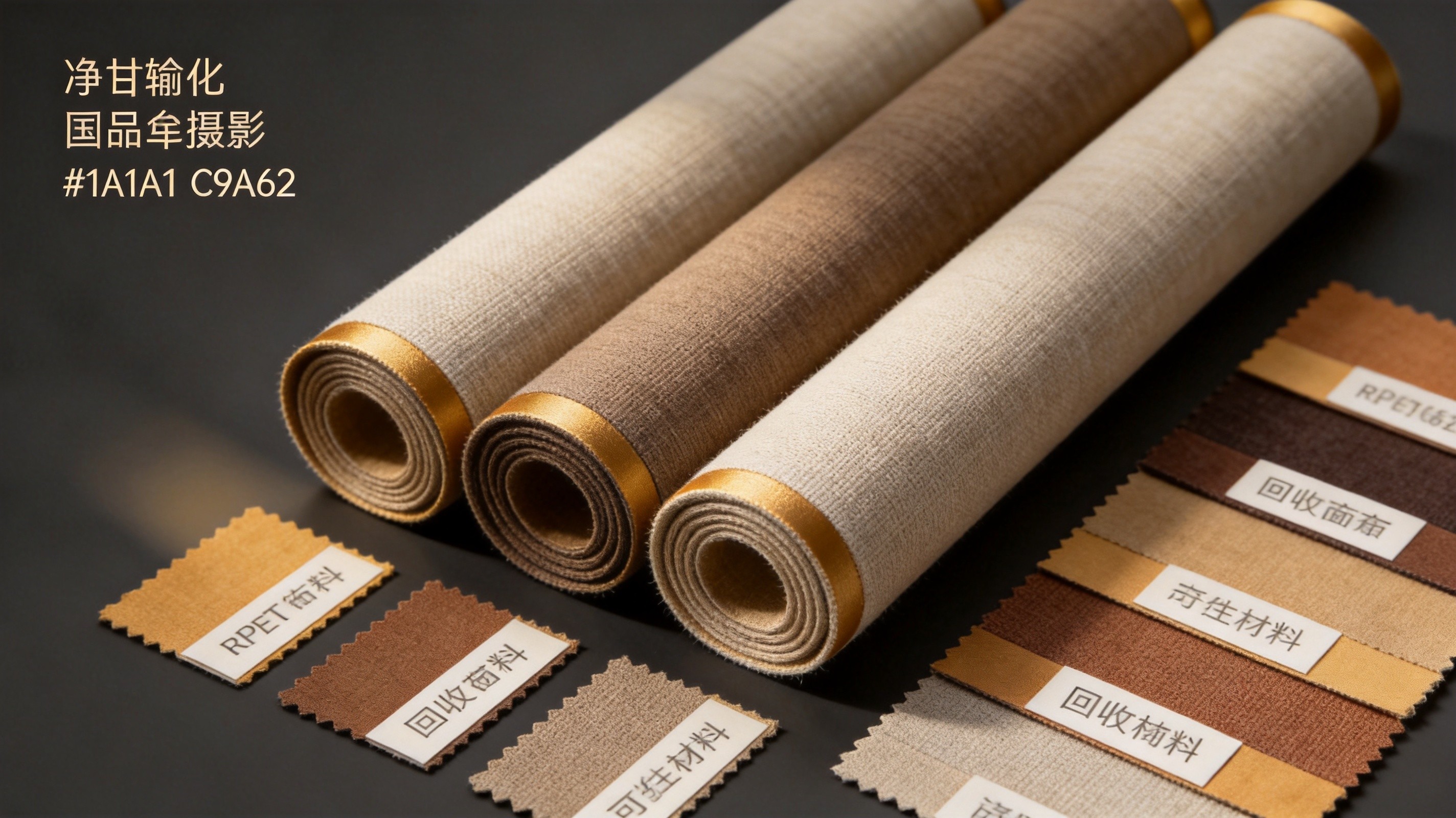
Choose your launch budget tier based on brand positioning and market strategy
Strategies to Reduce Costs
Material Optimization
Use premium materials for high-visibility areas (exterior, handles, trim) and cost-effective materials for low-visibility areas (lining, internal pockets, bottom reinforcement). This approach maintains perceived quality while reducing material costs by 15-25%.
Design Simplification
Each additional compartment, zipper, and hardware piece adds cost. Analyze whether every design element justifies its cost addition. A clean, simple design using quality materials often outperforms a complex design using mediocre materials.
Volume Efficiency
Unit costs decrease as order quantities increase. If you plan to reorder a successful style, consolidating orders (e.g., ordering 600 pieces instead of two runs of 300) reduces per-unit costs through material purchasing efficiency and reduced setup time allocation.
Shared Production Runs
If your styles share materials, colors, or hardware, the factory can purchase in larger quantities and optimize cutting patterns. Designing your collection around shared components reduces material waste and purchasing costs.
ROI Analysis: When Do You Break Even?
Understanding your break-even point helps you set realistic revenue expectations and pricing strategy.
Break-Even Calculation Example
Consider a mid-range private label crossbody bag: total landed cost $12 per unit (production $8, branding $1, packaging $1, shipping $2). Retail price: $65. Gross margin per unit: $53. If total launch costs are $5,000, you need to sell approximately 95 units to break even on your initial investment. At $65 per unit, that represents $6,175 in revenue.
Margin Benchmarks by Channel
| Sales Channel | Typical Markup | Gross Margin | Notes |
|---|---|---|---|
| Direct-to-Consumer (own website) | 4x – 6x cost | 75% – 83% | Highest margin, requires marketing investment |
| Amazon FBA | 3x – 4x cost | 50% – 65% | After Amazon fees (15-30%) |
| Wholesale | 2x – 2.5x cost | 50% – 60% | Lower margin, higher volume |
| Retail (consignment) | 2x – 3x cost | 40% – 55% | After retailer margin (40-60%) |
Payment Schedule and Cash Flow
Understanding payment timing helps you manage cash flow effectively. Standard manufacturing payment terms follow a structured schedule that protects both buyer and seller.
Standard Payment Terms
- Sample payment: 100% upfront (refundable against bulk order)
- Production deposit: 30% upon order confirmation
- Production balance: 70% upon completion, before shipment (or against copy of bill of lading)
- Shipping payment: Paid to freight forwarder upon arrival at destination port
Cash Flow Timeline
From initial deposit to receiving inventory, expect 45-75 days. During this period, your capital is committed but generating no revenue. Plan your cash flow to cover ongoing business expenses (marketing, platform fees, operating costs) during this production window.
Complete Budget Template
Use this template as a starting framework for your own budget planning. Adjust quantities and costs based on your specific requirements and manufacturer quotations.
| Budget Item | Qty/Units | Unit Cost | Total |
|---|---|---|---|
| Design and Development | |||
| Tech pack creation | 5 styles | $200 | $1,000 |
| Pattern making | 5 styles | $150 | $750 |
| Sampling | |||
| Sample production (2 rounds each) | 10 samples | $120 | $1,200 |
| Sample shipping | 2 shipments | $50 | $100 |
| Production | |||
| Bulk production | 1,000 bags | $10 | $10,000 |
| Branding application | 1,000 bags | $0.80 | $800 |
| Labels and tags | 1,000 sets | $0.25 | $250 |
| Quality inspection (third-party) | 2 days | $300 | $600 |
| Packaging | |||
| Dust bags | 1,000 pcs | $0.50 | $500 |
| Gift boxes | 1,000 pcs | $2.00 | $2,000 |
| Shipping cartons | 20 cartons | $1.50 | $30 |
| Logistics | |||
| Sea freight (LCL/FCL) | — | — | $1,800 |
| Customs clearance | — | — | $200 |
| Import duties (est. 12%) | — | — | $1,200 |
| Local delivery | — | — | $200 |
| ESTIMATED TOTAL | $20,630 | ||
This budget produces 1,000 branded, packaged handbags at an average landed cost of approximately $20.63 per unit. At a retail price of $79-$120, each bag generates $58-$99 in gross profit, achieving break-even after selling approximately 200-350 units.
Ready to get specific pricing for your project? Request a detailed quote from Purse Private Label with your design specifications, material preferences, and target order quantities. Our team provides transparent, line-item quotations within 24 hours. Explore our product range for design inspiration and our solutions page for manufacturing options tailored to different brand stages.
Ready to Launch Your Private Label Collection?
Get a free consultation and sample quote within 24 hours. MOQ from 200 pcs.
📧 service@junyuanbags.com | 📱 +86 17750020688 | MOQ: 200 pcs/style
Frequently Asked Questions
How much money do I need to start a private label purse brand?
A minimal private label purse launch starts around $3,000-$5,000 for private label using existing designs, $7,000-$15,000 for ODM with customization, and $15,000-$50,000+ for OEM with fully original designs. Budget should include sampling, first production run, branding, packaging, shipping, and a marketing reserve.
What is the most expensive part of starting a purse line?
For OEM manufacturing, design development and sampling represent the largest upfront investment ($3,000-$15,000). For private label, the first production run typically represents the largest cost. Across all models, shipping and logistics can surprise new brand owners with costs ranging from $500-$3,000+ depending on volume and method.
Can I start a purse brand with $5,000?
Yes, with $5,000 you can launch a private label collection using existing factory designs with your branding applied. This budget covers sampling ($200-$400), first production run of 200 pieces ($2,000-$3,000), branding and packaging ($500-$800), and basic shipping ($300-$600). You would need to allocate remaining funds to marketing.
Limitations and Scope of This Guide
This guide covers complete cost breakdown for starting a private label purse line, including manufacturing, branding, marketing, and operational expenses. It is based on our experience as a handbag manufacturer in Quanzhou, China, serving brands worldwide since 2004. Key limitations to keep in mind:
- Cost estimates are based on 2026 pricing for manufacturing in China. Costs differ significantly for production in Europe, India, or other regions.
- This guide focuses on a lean startup approach (5-10 styles, 200-500 units per style). Larger launches or luxury positioning will require substantially more capital.
- Revenue projections and margin estimates are illustrative. Actual results depend on brand positioning, marketing effectiveness, pricing strategy, and market conditions.
For advice tailored to your specific situation, contact our team directly.