Table of Contents
- The Growing Demand for Custom Branded Wallets
- Understanding Wallet Anatomy: Every Component Explained
- Choosing the Right Leather Type for Your Wallet
- Full-Grain vs Top-Grain vs Genuine Leather for Wallets
- Wallet Dimensions: Standard Sizes and Ergonomics
- Interior Layout: Card Slots, Bill Compartments, and Coin Pockets
- Hardware Selection: Logos, Zippers, and Snap Buttons
- Branding Methods: Embossing, Debossing, Foil Stamping, and Laser
- Stitching Patterns and Edge Finishing Techniques
- Lining Materials: What Goes Inside Matters
- Creating Your Tech Pack for Wallet Production
- Sample Development: Timeline and Costs
- Color Options and Dyeing Techniques for Leather Wallets
- Packaging and Presentation for Premium Wallet Brands
- Working with a Factory to Bring Your Wallet Design to Life
- FAQ — Custom Leather Wallet Design
Designing a custom leather wallet for your brand is one of the most rewarding product development projects in the accessories industry. Unlike handbags, which require complex pattern engineering and significant material investment, wallets distill the essence of leather craftsmanship into a compact, achievable product that customers evaluate with extraordinary scrutiny. Every stitch, edge, and card slot is visible and tactile, making wallet design a pure test of your brand's commitment to quality.
The custom leather wallet market offers compelling economics for brands at every stage. Global demand for personalized leather goods continues to grow at 6.2 percent annually, with wallets representing the highest-volume leather accessory category. Manufacturing costs are accessible, with quality leather wallets producible at $4 to $22 per unit depending on materials and complexity, while retail prices range from $35 to $200+ depending on brand positioning. This margin structure makes custom wallets an ideal product for new brands building their identity and established brands expanding their accessory lines.
This comprehensive guide walks you through every element of custom leather wallet design, from selecting the right leather and engineering the interior layout to choosing branding methods, creating production-ready tech packs, and managing the sampling process with your manufacturing partner. Whether you are designing your first wallet or refining an existing line, these insights will help you create products that command premium pricing and build lasting customer loyalty. For brands seeking manufacturing support, our custom design services cover every stage from concept to delivery.
Custom leather wallet design combines traditional craftsmanship with modern brand requirements
The Growing Demand for Custom Branded Wallets
The personalized leather goods market has experienced consistent growth driven by three converging trends: the rise of direct-to-consumer brands, consumer demand for unique products that cannot be found at mass retailers, and the increasing sophistication of small-batch manufacturing capabilities. Today's consumers, particularly millennials and Gen Z buyers, actively seek out brands that offer distinctive products with authentic craftsmanship stories.
Wallets occupy a special position in this market because they are simultaneously functional necessities and personal style statements. Unlike many accessories that are visible only in specific social contexts, a wallet is used dozens of times daily, often in front of others. When a customer pulls out a beautifully crafted wallet with distinctive branding, it generates word-of-mouth exposure that no amount of advertising can match. This organic visibility is why corporate gifting programs and promotional product companies represent a significant portion of custom wallet demand.
Market data shows that custom branded wallets in the $50 to $120 retail range experience the fastest growth, as consumers increasingly trade up from generic alternatives to branded products that reflect their personal identity. Brands that invest in quality leather, thoughtful design details, and distinctive branding elements capture customer loyalty that extends far beyond the initial wallet purchase, creating natural expansion pathways into card holders, bags, and other leather accessories. Discover how our brand solutions can help you build a complete leather goods ecosystem starting with wallets.
Understanding Wallet Anatomy: Every Component Explained
Before designing your custom wallet, you must understand every component that goes into its construction. A leather wallet is not simply a folded piece of leather. It is a precisely engineered assembly of multiple components, each contributing to the final product's function, durability, and aesthetic quality.
| Component | Purpose | Material Options | Quality Indicators |
|---|---|---|---|
| Outer Shell | Primary structure and visual identity | Full-grain, top-grain, PU leather | Grain consistency, thickness uniformity |
| Inner Lining | Protects contents, adds structure | Suede, microfiber, cotton twill, leather | Smooth finish, durability, color fastness |
| Card Slots | Secure card storage | Leather layers, stitched pockets | Tight initial fit, clean edges, even spacing |
| Bill Compartment | Currency storage | Full-width divider panel | Smooth insertion, no sharp edges |
| Edge Paint / Burnish | Seals and finishes raw edges | Edge paint, beeswax, burnishing | Even application, no cracking, smooth feel |
| Hardware | Branding, closure, function | Zinc alloy, brass, stainless steel | Weight, finish quality, logo precision |
| Interfacing / Stabilizer | Adds body and structure | Fusible interfacing, leather board | Appropriate stiffness, no delamination |
Each component represents a decision point in your design process. The outer shell material defines your brand's quality tier. The lining material affects both functionality and the customer's first impression when opening the wallet. Card slot construction determines how cards fit and how easily they can be accessed. And edge finishing, often overlooked by novice designers, is one of the most visible quality indicators that experienced customers examine first.
Choosing the Right Leather Type for Your Wallet
Leather selection is the single most consequential material decision in wallet design. The type of leather you choose determines your product's tactile quality, visual appeal, durability characteristics, aging behavior, and the price point you can command in the market. Understanding leather types and their implications for wallet manufacturing is essential for making informed design decisions.
The leather used in wallet manufacturing falls into several primary categories, each with distinct characteristics and cost implications. Full-grain leather, which uses the outermost layer of the hide including all natural grain patterns, represents the premium tier. Top-grain leather, sanded and refinished for uniformity, occupies the mid-range. Genuine leather, a term that technically refers to any real leather but in market usage indicates split leather with an artificial grain applied, serves the value segment. Understanding these distinctions helps you position your brand accurately and avoid quality surprises during production.
Leather selection defines your wallet's quality tier, tactile experience, and price positioning
Full-Grain vs Top-Grain vs Genuine Leather for Wallets
The debate between full-grain, top-grain, and genuine leather is fundamental to wallet design. Each type offers different advantages depending on your brand positioning, target price point, and customer expectations.
| Property | Full-Grain | Top-Grain | Genuine Leather |
|---|---|---|---|
| Source Layer | Outermost hide layer | Top layer, sanded | Split layers, refinished |
| Thickness | 1.0 - 1.4mm | 0.8 - 1.2mm | 0.6 - 1.0mm |
| Durability | Exceptional (10+ years) | Very Good (5-8 years) | Moderate (2-4 years) |
| Patina Development | Rich, character-building | Limited | Minimal |
| Cost per sqft | $8 - $18 | $5 - $10 | $2 - $5 |
| Best For | Luxury brands, heritage positioning | Premium brands, consistent quality | Accessible brands, promotional items |
| Wallet Retail Range | $80 - $200+ | $45 - $120 | $25 - $55 |
For brands launching a premium wallet line, full-grain vegetable-tanned leather from reputable tanneries delivers the best combination of quality, story, and customer satisfaction. The vegetable tanning process uses natural tannins from tree bark, producing leather that is environmentally friendly and develops a beautiful patina that becomes more attractive with age. This aging story is powerful marketing content that differentiates premium brands from mass-market competitors. For brands exploring related leather categories, our guide on wallet types for brands covers how different wallet styles pair with different leather grades.
Wallet Dimensions: Standard Sizes and Ergonomics
Wallet dimensions must balance three competing priorities: maximizing storage capacity, maintaining a comfortable pocket profile, and accommodating standard-sized cards and currency. Getting these proportions right is essential for customer satisfaction and repeat purchases.
The global standard credit card size (ISO 7810 ID-1) measures 85.6mm x 53.98mm (3.375 x 2.125 inches). All wallet card slots must accommodate this dimension with enough clearance for easy insertion and removal, typically adding 2-3mm to each dimension. Bill compartments must accommodate the largest target currency, which for international brands means designing for bills up to 160mm (6.3 inches) in length, such as US dollar bills or Euro notes.
Standard wallet dimensions by type: Bi-fold wallets measure approximately 115 x 90mm (4.5 x 3.5 inches) when closed. Card holders typically measure 100 x 75mm (4 x 3 inches). Long wallets range from 190 x 100mm (7.5 x 4 inches). Tri-fold wallets measure approximately 105 x 85mm (4.1 x 3.3 inches). These dimensions have evolved over decades of use and represent the sweet spot where function meets comfort. Deviating significantly from these standards risks creating products that feel awkward or fail to accommodate everyday essentials.
Interior Layout: Card Slots, Bill Compartments, and Coin Pockets
The interior layout is where wallet design reveals its true character. While the exterior material and branding attract the initial purchase, the interior organization determines daily satisfaction and long-term loyalty. A poorly designed interior frustrates users every time they reach for a card or bill, while a well-designed layout feels intuitive and effortless.
Card slots are the most critical interior element. The standard approach uses layered leather panels stitched to create individual slots. Each slot must be tight enough to hold cards securely without them falling out, yet loose enough for easy one-handed access. Achieving this balance requires precise pattern design and consistent stitching. Premium wallets often feature a mix of standard slots and quick-access slots, with the outermost position designed for the most frequently used card.
Interior layout engineering determines daily user satisfaction and long-term brand loyalty
Bill compartments should be full-width and divided to separate different currency types or receipts. For the women's market, a zippered coin pocket is often expected, adding functionality that justifies a slightly larger form factor. For men's wallets, the trend is toward eliminating coin storage entirely in favor of a slimmer profile. The decision should align with your target demographic's expectations and the wallet type you are designing.
Hardware Selection: Logos, Zippers, and Snap Buttons
Hardware serves both functional and branding purposes in wallet design. The quality of your hardware communicates your brand's attention to detail and directly affects the customer's perception of overall product quality. A beautiful leather wallet with cheap, lightweight hardware will always feel inferior to a simpler design with substantial, well-finished metal components.
The primary hardware options for wallets include zipper pulls and tracks (for zip-around styles), snap buttons and closures, metal logo plates, D-rings and attachment points (for wristlets), and decorative rivets or corner protectors. The most common material is zinc alloy, which offers excellent detail reproduction for logos and a substantial weight that communicates quality. Brass provides a warmer, more traditional aesthetic that pairs beautifully with vegetable-tanned leather. Stainless steel offers modern, corrosion-resistant durability for active lifestyle products.
Custom hardware is one of the most effective branding tools in wallet design. A custom-cast zipper pull with your logo, a branded metal plate on the exterior, or a custom snap button with your mark creates a distinctive identity element that competitors cannot easily replicate. Custom hardware molds typically cost $200 to $500 per design and require MOQs of 500 to 1,000 pieces per design. For new brands, starting with stock hardware in your chosen finish (gold, silver, gunmetal, antique brass) keeps initial investment manageable while you build volume.
Branding Methods: Embossing, Debossing, Foil Stamping, and Laser
Brand visibility on a leather wallet must be carefully calibrated. Too much branding makes the product feel like a billboard. Too little wastes the organic marketing opportunity that comes from a product used dozens of times daily in social settings. The right branding method and placement communicates premium quality while maintaining the understated elegance that luxury accessories demand.
| Method | Visual Effect | Cost | Best Application | Durability |
|---|---|---|---|---|
| Debossing | Sunken impression, subtle | $50-$200 for die | Premium brands, understated logos | Permanent |
| Embossing | Raised impression, visible | $50-$200 for die | Traditional brands, larger logos | Permanent |
| Hot Foil Stamping | Metallic colored impression | $100-$300 for die + foil | Luxury positioning, gift items | Very Good |
| Laser Engraving | Burned precision mark | No die cost | Modern brands, personalization | Permanent |
| Silk Screen | Printed color logo | $50-$150 for screen | Bold branding, multiple colors | Moderate |
| Metal Plate | Attached 3D hardware logo | $1-$3 per plate | Premium luxury, heritage brands | Permanent |
Debossing is the most popular choice for premium wallet brands. The process uses a custom brass or copper die pressed into the leather under heat and pressure, creating a permanent sunken impression. On vegetable-tanned leather, the contrast between the compressed debossed area and the surrounding natural surface creates an elegant effect that deepens characterfully as the leather ages. For detailed branding method comparisons and manufacturing considerations, consult with our design team to determine the best approach for your brand.
Choosing the right branding method balances visibility with premium aesthetic
Stitching Patterns and Edge Finishing Techniques
Stitching and edge finishing are the hallmarks of quality leather craftsmanship. These details separate premium wallets from mass-produced alternatives and are among the first elements that knowledgeable buyers examine when evaluating quality.
Wallet stitching typically uses one of three approaches: machine stitching with a single-needle lockstitch, machine stitching with a double-needle for parallel rows, or hand stitching using a saddle stitch technique. Machine stitching is the standard for production wallets, offering consistency and efficiency. Hand saddle stitching, while significantly more time-consuming, creates a distinctive appearance that signals artisan quality and commands premium pricing. Each stitch hole is individually punched, and two needles pass through in opposite directions, creating a stitch that will not unravel even if individual stitches break.
Edge finishing is equally critical. Raw leather edges must be sealed and polished to prevent moisture absorption, fraying, and visual degradation. The two primary methods are edge painting and edge burnishing. Edge paint provides a clean, colored finish that can match or contrast with the leather. Multiple thin coats, sanded between applications, produce the smoothest result. Edge burnishing uses friction, water, and sometimes beeswax to compress and polish the leather fibers into a smooth, glossy finish. Burnished edges are possible only with vegetable-tanned and full-grain leathers, making them a subtle indicator of material quality.
Lining Materials: What Goes Inside Matters
The lining material is the first thing a customer notices when opening a wallet, and it affects the product's functionality throughout its lifespan. A quality lining protects the leather structure, provides a smooth surface for card insertion and removal, and communicates attention to detail that extends to every visible and hidden component.
The most common wallet lining options include pigskin suede, which offers a luxurious soft feel and excellent grip that helps cards stay in their slots. Microfiber suede provides a similar aesthetic at lower cost with improved consistency and stain resistance. Cotton twill delivers a casual, durable option often used in heritage and workwear-inspired brands. Leather lining (using thinner split leather) provides the ultimate premium feel but adds significant material cost and weight. Nappa leather lining is found in the most expensive wallets, creating an all-leather construction that appeals to luxury buyers.
Lining Selection Guide
For premium wallets ($80+): Pigskin suede or Nappa leather lining. For mid-range ($40-80): Microfiber suede for best balance of quality and cost. For accessible brands ($25-45): Cotton twill or polyester satin. Always match lining color to the interior brand aesthetic, with contrast linings creating memorable unboxing moments.
Creating Your Tech Pack for Wallet Production
A tech pack (technical package) is the complete specification document that communicates your wallet design to the factory. It is the blueprint for production, and its quality directly affects the accuracy of samples and bulk output. A professional tech pack eliminates ambiguity, reduces sampling iterations, and prevents costly misunderstandings between your brand and your manufacturing partner.
A comprehensive wallet tech pack includes the following elements: technical drawings showing all views (front, back, open flat, closed, cross-section), precise dimensions for every component, material specifications with reference samples or swatch numbers, color standards using Pantone references, stitching specifications including stitch-per-inch count and thread type, edge finishing instructions, hardware specifications with reference images and dimensions, interior layout with card slot measurements, branding placement with precise positioning from reference edges, packaging requirements, and quality standards with acceptable tolerances.
Many new brands underestimate the importance of a detailed tech pack, assuming the factory can interpret rough sketches or reference images. This assumption leads to multiple sampling rounds, frustration, and delayed timelines. Investing time in a comprehensive tech pack upfront saves weeks of back-and-forth communication and produces more accurate first samples. Our production team provides tech pack templates and guidance to help new brands communicate their designs effectively.
Sample Development: Timeline and Costs
The sampling process transforms your tech pack into a physical product you can evaluate, refine, and ultimately approve for bulk production. Understanding the timeline and cost structure helps you plan your launch schedule and budget accurately.
| Phase | Duration | Cost Range | Deliverable |
|---|---|---|---|
| Tech Pack Review | 3-5 days | Included | Feasibility feedback, suggestions |
| Pattern Making | 5-7 days | $50-$150 | Production-ready patterns |
| Material Sourcing | 3-10 days | At cost | Leather and hardware samples |
| First Sample | 7-10 days | $100-$300 | Physical sample for review |
| Revisions (2nd sample) | 7-10 days | $50-$150 | Revised sample |
| Pre-production sample | 7-10 days | $50-$150 | Final approval sample |
| Total (typical) | 30-50 days | $250-$750 | Production-ready design |
Most brands complete the sampling process in two to three iterations. The first sample tests the overall design, proportions, and construction approach. Subsequent samples refine details like card slot tension, edge finishing quality, and hardware alignment. The pre-production sample, made with actual production materials and processes, serves as the final quality benchmark against which bulk output is measured.
Color Options and Dyeing Techniques for Leather Wallets
Color selection for leather wallets extends far beyond choosing a Pantone number. The dyeing method, leather type, and finish all affect how color appears and ages, and these variables must be considered holistically during the design process.
The primary leather dyeing methods for wallets include drum dyeing, where the leather is immersed in a rotating drum of dye solution, producing deep, uniform color that penetrates the full thickness. Casein finish dyeing applies color to the surface, offering more shade consistency but potentially less depth. Aniline dyeing uses transparent dyes that allow the natural grain to show through beautifully, though with less color uniformity. Suede dyeing creates rich, textured color with a soft nap finish that is particularly popular for wallet linings and interior panels.
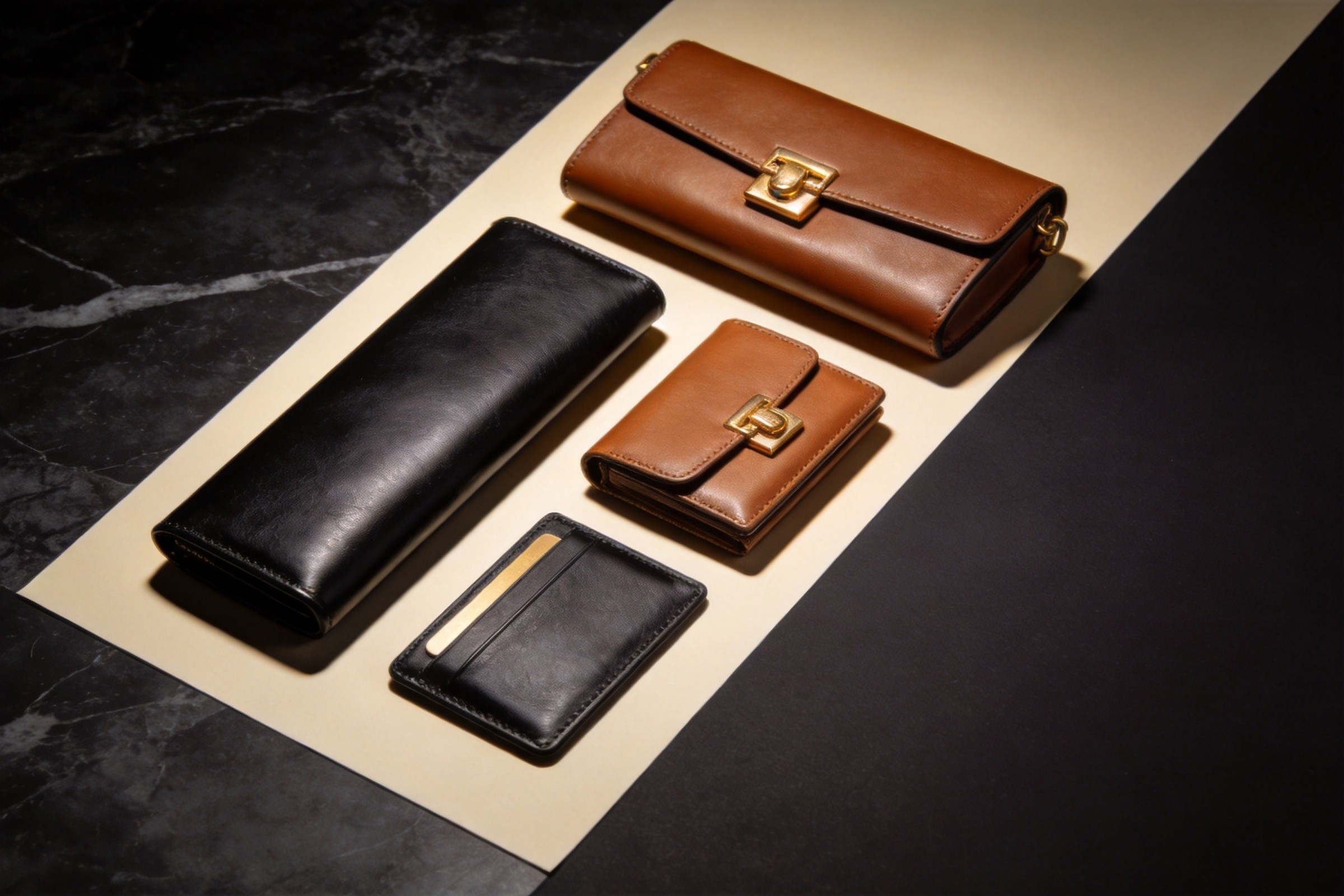
For wallet brands, the most commercially successful color strategy starts with a core palette of black, dark brown, tan/cognac, and navy, which collectively represent 60 to 70 percent of wallet sales. Supplementary seasonal colors like forest green, burgundy, and slate grey add variety and trend relevance. Limited-edition colors in vibrant hues create social media buzz and collector appeal. When selecting colors for your initial launch, prioritize the core palette and add one or two distinctive shades that differentiate your brand from competitors.
A strategic color palette balances commercial essentials with distinctive seasonal shades
Packaging and Presentation for Premium Wallet Brands
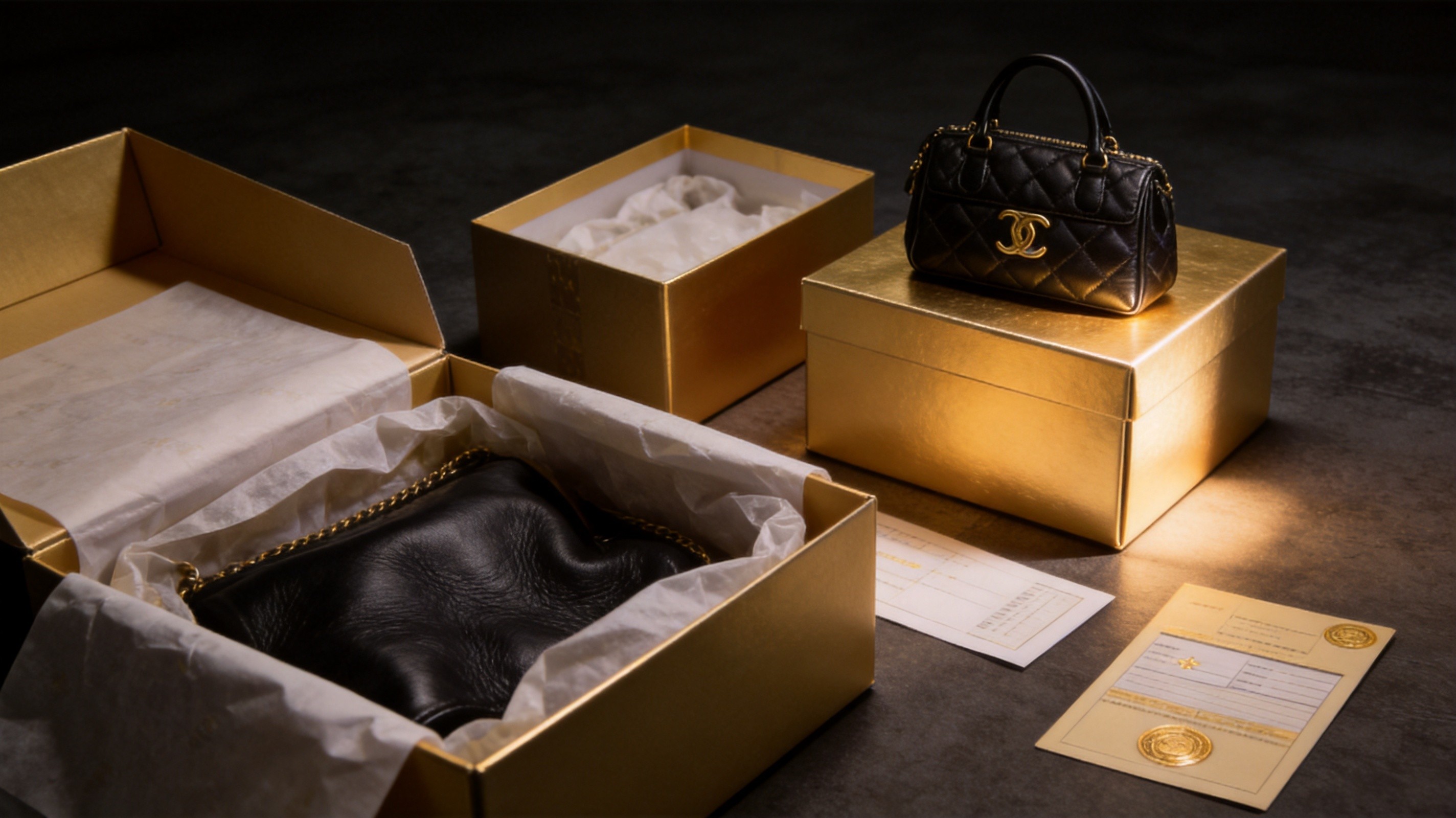
Packaging is the bridge between manufacturing and the customer's unboxing experience. For premium wallet brands, packaging must communicate quality, protect the product during shipping, and create a memorable first impression that justifies the price point and encourages social sharing.
The standard premium wallet packaging hierarchy includes a dust bag or protective pouch as the primary product enclosure, a rigid box or folder as the secondary packaging, a branded outer shipping carton for e-commerce fulfillment, and supporting materials including care cards, authenticity certificates, and brand story inserts. For the luxury tier, consider adding a cotton storage bag, a leather care kit sample, or a personalized note to elevate the experience further.
Packaging costs typically range from $2 to $8 per unit for mid-range brands and $8 to $20 for premium brands. While this represents a small fraction of the retail price, the impact on perceived value is disproportionate. A $65 wallet in a quality rigid box with a dust bag feels like a $120 product. The same wallet in a poly bag feels like a $35 product. The difference in packaging cost is less than $3, but the difference in customer perception and review scores is substantial.
Working with a Factory to Bring Your Wallet Design to Life
The relationship between your brand and your manufacturing partner is the most important factor in your wallet's success. A good factory contributes expertise, catches design problems early, suggests improvements based on production experience, and delivers consistent quality at scale. A poor factory creates frustration, wastes time and money, and damages your brand reputation through inconsistent output.
When evaluating wallet manufacturing partners, prioritize these factors: experience with leather goods (not just fabric bags), willingness to produce samples before committing to bulk, transparent communication about capabilities and limitations, quality control processes and defect tolerance standards, MOQ flexibility for new brands, and willingness to invest in custom tooling for branding elements. Factories like Junyuan Bags, established in 2004 with over 20 years of experience and a 30,000 square meter facility in Quanzhou, China, offer the infrastructure and expertise to support wallet brands from initial sampling through volume production.
Partnering with an experienced factory ensures consistent quality from sample to bulk production
The best factory relationships are built on clear communication, mutual respect, and shared commitment to quality. Provide detailed tech packs, respond promptly to factory questions, visit the facility when possible, and treat your factory as a partner rather than a vendor. This approach yields better samples, faster turnaround, priority scheduling during peak seasons, and the kind of collaborative problem-solving that produces truly exceptional products.
For brands ready to begin their custom wallet journey, our team offers comprehensive support from initial design consultation through production delivery. With a 200-piece MOQ per style, full customization of materials, hardware, and branding, and a dedicated sampling team, we make the process accessible and efficient for brands at every stage. Explore our product catalog for wallet design inspiration, or contact us directly to discuss your project.
Start Designing Your Custom Leather Wallet
Junyuan Bags transforms your wallet vision into premium reality. 20+ years of leather craftsmanship, 200-piece MOQ, full customization from materials to packaging.
WhatsApp: +86 17750020688 | Email: service@junyuanbags.com
Factory: 30,000 sqm, 300+ workers, Quanzhou, China
Frequently Asked Questions
How much does it cost to design a custom leather wallet?
Total design-to-launch costs range from $500 to $3,000, including tech pack development, sample iterations (2-3 rounds), custom hardware tooling, and initial production setup. Per-unit manufacturing costs range from $4 to $22 depending on leather type, complexity, and order quantity. Many costs are credited against bulk orders with established manufacturing partners.
How long does the wallet sampling process take?
From design approval to first sample delivery takes 30-45 days. Most brands complete 2-3 sampling iterations, bringing the total timeline to 60-90 days for a production-ready design. Rush sampling is available for an additional fee, reducing the timeline to 45-60 days total.
What is the best leather type for premium wallets?
Full-grain vegetable-tanned leather is the premium choice, offering superior durability, natural beauty, and rich patina development. Italian calfskin and European veg-tanned leathers from established tanneries deliver the highest quality. Top-grain leather provides excellent quality at 20-30 percent lower cost for mid-range premium positioning.
What is the MOQ for custom wallet manufacturing?
Standard MOQ is 200-300 pieces per style per color. Junyuan Bags offers 200-piece MOQs with full customization. Some factories accept 100-piece trial orders at a 15-25 percent cost premium. Unit costs decrease significantly at 500+ pieces, making reorder economics increasingly favorable.
What is the difference between embossing and debossing?
Embossing raises the logo above the leather surface, creating a visible three-dimensional effect. Debossing presses the logo into the surface, creating a subtle sunken impression. Debossing is preferred for premium wallets due to its understated elegance and beautiful aging characteristics. Both require custom dies costing $50-$200.
Can I customize the interior layout of my wallet?
Absolutely. Interior layout is fully customizable, including the number and size of card slots, bill compartment configuration, coin pocket placement, ID window inclusion, and gusset design. Share your requirements in the tech pack, and the factory will engineer the pattern to accommodate your specifications. Testing with physical prototypes during sampling ensures the layout functions as intended.
Limitations and Scope of This Guide
This guide covers designing a custom leather wallet for your brand, including style selection, material choices, interior layout, branding, and manufacturing process. It is based on our experience as a handbag manufacturer in Quanzhou, China, serving brands worldwide since 2004. Key limitations to keep in mind:
- Design recommendations focus on men's and women's fashion wallets. Specialty wallets (travel, RFID-blocking, minimalist card cases) have additional design considerations.
- Leather recommendations are based on commonly available options from our tannery partners. Exotic or specialty leathers have different properties and costs.
- Interior layout suggestions reflect popular configurations. Custom compartment designs for specific use cases (passport holders, checkbook covers) require individual development.
For advice tailored to your specific situation, contact our team directly.