Table of Contents
- Why Quality Consistency Is the Biggest Challenge in Bulk Orders
- Common Quality Variations in Handbag Manufacturing
- Setting Clear Quality Standards in Your Purchase Order
- Creating Detailed Tech Packs and Specification Sheets
- The Role of Pre-Production Samples in Quality Assurance
- In-Line Inspection: Catching Issues During Production
- Final Random Inspection: AQL Standards Explained
- Third-Party Inspection Services: When and How to Use Them
- Building a Quality Scorecard for Your Suppliers
- Photographic Documentation and Approval Processes
- Packaging Quality: Often Overlooked but Critical
- Handling Quality Disputes and Rejection Procedures
- Root Cause Analysis: Preventing Recurring Issues
- Technology Tools for Quality Tracking and Management
- Building a Culture of Quality with Manufacturing Partners
- FAQ — Handbag Quality Control
Quality consistency is the single greatest challenge in bulk handbag manufacturing. When a factory produces 500 pieces of the same style, variations inevitably occur between the first bag off the line and the five-hundredth. Materials behave differently across production runs, workers have slightly different techniques, and machines require calibration adjustments. The difference between receiving a batch of consistently excellent handbags and receiving a batch with 5 to 10 percent defect rates lies entirely in the quality control systems you implement before, during, and after production.
This comprehensive guide provides the complete quality control framework for bulk handbag orders, from writing effective tech packs to conducting AQL-based inspections, from building supplier scorecards to managing quality disputes. Every section delivers actionable frameworks that protect your brand reputation and customer satisfaction. For context on sourcing partners with strong quality systems, our manufacturing services at Junyuan Bags demonstrate how established factories implement quality control across 300+ workers and a 30,000 square meter facility.
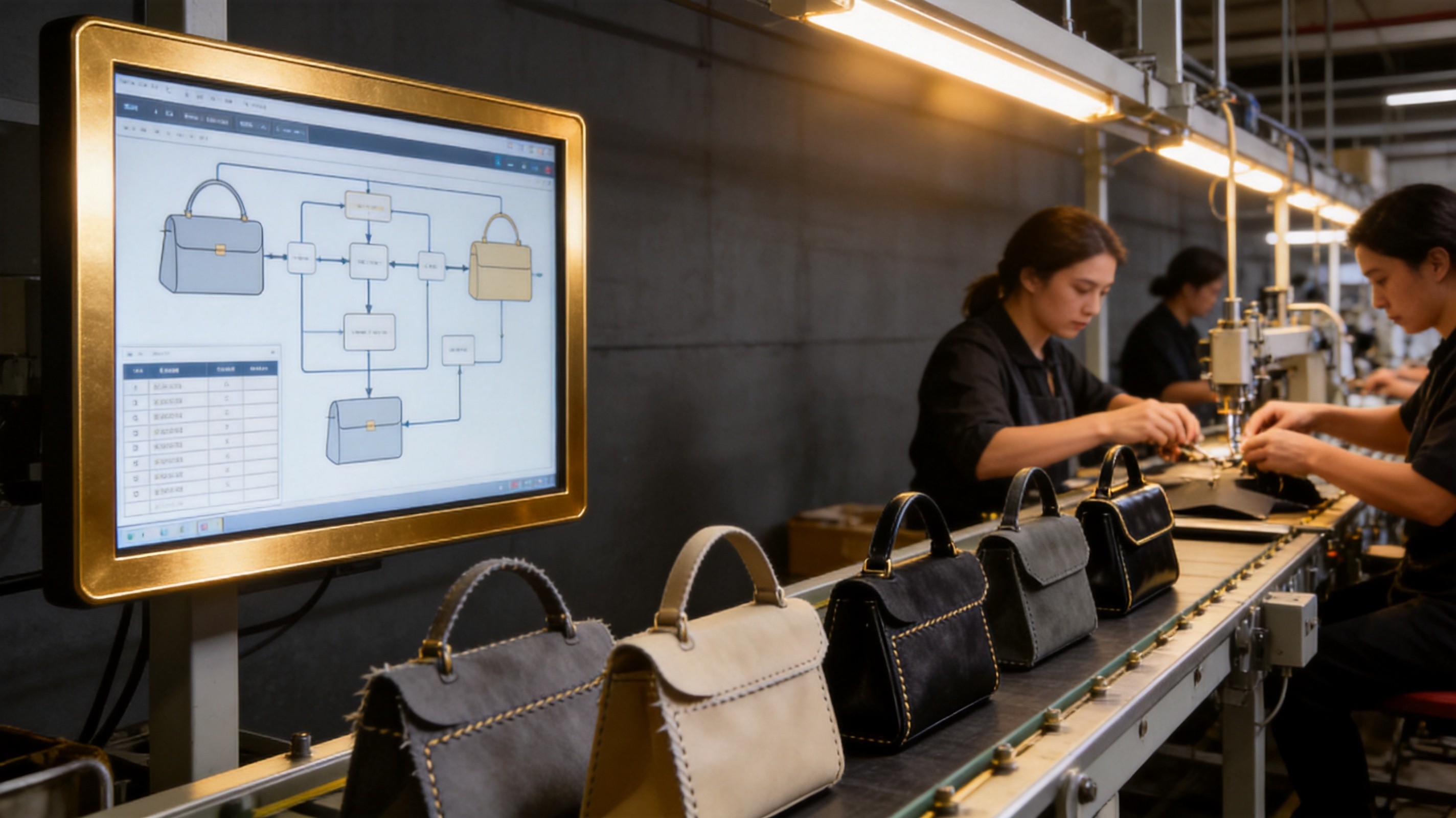
Systematic quality control at multiple stages prevents defects from reaching your customers
Why Quality Consistency Is the Biggest Challenge in Bulk Orders
Handbag manufacturing involves dozens of individual operations: cutting, skiving, stitching, edge painting, hardware attachment, lining installation, and finishing. Each operation introduces the possibility of variation. When these operations are repeated hundreds or thousands of times, even small per-unit variations accumulate into batches with inconsistent quality.
The challenge is amplified by factors common in manufacturing environments: multiple workers on the same style (each with slightly different technique), machine wear and calibration drift over long production runs, material batch variations (different leather hides have different characteristics), environmental factors (humidity affecting material behavior), and production pressure to meet delivery deadlines. Understanding these sources of variation is the first step in implementing controls that minimize their impact. For sourcing strategies that prioritize quality, see our guide on sourcing handbags from Chinese factories.
Common Quality Variations in Handbag Manufacturing
Knowing what defects to look for enables you to set appropriate standards and inspection criteria. The most common quality variations in handbag manufacturing fall into specific categories:
| Defect Category | Common Issues | Severity | Detection Method |
|---|---|---|---|
| Stitching | Uneven tension, skipped stitches, loose threads | Major | Visual inspection, pull test |
| Material | Color variation, grain inconsistency, surface marks | Major | Compare to approved sample |
| Dimensions | Size deviation beyond tolerance | Major | Measure against tech pack |
| Hardware | Scratched, loose, misaligned, poor function | Major-Critical | Visual + function test |
| Edge Finishing | Uneven paint, exposed raw edges, cracking | Minor-Major | Visual and tactile inspection |
| Structure | Bag doesn't stand, collapsed shape, uneven sides | Major | Functional assessment |
| Lining | Wrinkled, loose, incorrect material, visible glue | Minor | Interior visual inspection |
| Labeling | Misaligned, wrong position, misspelled, crooked | Minor-Major | Visual inspection |
Setting Clear Quality Standards in Your Purchase Order
Quality standards must be explicitly defined in your purchase order before production begins. Vague quality expectations lead to inconsistent results. Your PO should reference specific standards, approved samples, and acceptable tolerance levels for every critical dimension and quality attribute.
Include in every purchase order: reference to the approved pre-production sample as the quality benchmark, dimensional tolerance table specifying acceptable deviation for each measurement (typically plus or minus 3mm for most dimensions), material specifications with Pantone color references and grade requirements, stitch density requirements (minimum and maximum stitches per inch), hardware function requirements (zipper pull force, clasp engagement strength), acceptable defect categories with AQL levels, and clear consequences for quality failures including rejection, rework, and credit procedures.
Creating Detailed Tech Packs and Specification Sheets
The tech pack is your primary quality control document. It communicates every specification the factory must follow, serving as the reference standard against which all production is measured. A comprehensive tech pack eliminates ambiguity and prevents the factory from making assumptions that may not match your expectations.
A complete handbag tech pack includes technical drawings from five views (front, back, left side, right side, top), exact dimensions in millimeters for every measurement point, a bill of materials listing every component with specifications, hardware specifications including type, finish, dimensions, and performance requirements, construction details covering stitch type, density, seam allowance, and edge finishing, labeling placement diagrams showing exact positions for interior labels, exterior logos, and care tags, packaging instructions, and an approved sample reference with photos from multiple angles. The more detailed your tech pack, the less room for interpretation, and the more consistent your results. Our product development team can assist with tech pack creation and refinement.

Comprehensive tech packs eliminate ambiguity and serve as the quality benchmark for all production
The Role of Pre-Production Samples in Quality Assurance
Pre-production samples are the most critical quality checkpoint in the entire manufacturing process. They represent the factory's interpretation of your tech pack, produced with the actual materials and construction methods planned for bulk production. Approving the pre-production sample establishes the quality benchmark that all production units must match.
When evaluating pre-production samples, check every specification against your tech pack: dimensions within tolerance, material matches approved swatches, color matches Pantone reference, hardware matches specifications, stitching quality and density, edge finishing quality, interior construction, labeling placement and accuracy, and overall appearance and hand feel. Document any deviations with photos and written notes. Do not approve bulk production until the pre-production sample meets all specifications. A single approval at this stage prevents hundreds or thousands of defective units.
In-Line Inspection: Catching Issues During Production
In-line inspection occurs when production is 20 to 30 percent complete. This timing is critical: it is early enough that corrective action can still be taken before the entire batch is affected, but late enough that the production process is established and representative of ongoing quality.
During in-line inspection, examine 10 to 15 percent of completed units for the defect categories identified in your quality standards. Check whether the factory is following approved construction methods, whether workers are maintaining consistent quality, and whether any systemic issues have emerged. Common findings during in-line inspection include stitch density drifting below specification, edge painting quality declining as the day progresses, material cutting variations across different sections of leather hides, and hardware attachment alignment shifting. Catching these issues at 20 to 30 percent completion allows the factory to recalibrate and correct before the remaining 70 percent of production is completed.
Final Random Inspection: AQL Standards Explained
Final random inspection using AQL (Acceptable Quality Level) sampling is the last line of defense before shipment. This statistical approach inspects a representative sample of the completed batch and determines whether the batch meets quality standards based on the number of defects found.
| Batch Size | Sample Size (AQL 2.5) | Accept (Major) | Reject (Major) | Accept (Minor) | Reject (Minor) |
|---|---|---|---|---|---|
| 91-150 | 20 | 1 | 2 | 3 | 4 |
| 151-280 | 32 | 2 | 3 | 5 | 6 |
| 281-500 | 50 | 3 | 4 | 7 | 8 |
| 501-1,200 | 80 | 5 | 6 | 10 | 11 |
| 1,201-3,200 | 125 | 7 | 8 | 14 | 15 |
| 3,201-10,000 | 200 | 10 | 11 | 21 | 22 |
Critical defects (safety hazards, functional failures) must be zero. Any critical defect in the sample results in batch rejection regardless of sample size. Major defects (visible quality issues affecting salability) follow the AQL acceptance numbers in the table above. Minor defects (slight imperfections that do not affect function or salability) have higher tolerance thresholds. The inspection must be conducted on randomly selected units from throughout the batch, not just from the top of packed cartons.
Third-Party Inspection Services: When and How to Use Them
Third-party inspection services provide independent, professional quality verification that removes bias from the inspection process. They are essential for buyers who cannot send their own quality team to the factory and for high-value orders where the cost of receiving defective inventory would be significant.
Major third-party inspection companies include SGS, Bureau Veritas (BV), QIMA (formerly AsiaInspection), and Intertek. Standard inspection costs range from $200 to $350 per person-day. A final random inspection for a typical batch of 500 to 3,000 handbags requires one inspector for one full day. For ongoing quality programs, negotiate volume discounts that reduce per-inspection costs by 10 to 20 percent. The inspection cost represents less than 1 percent of typical order value while providing critical quality assurance that protects your brand reputation.
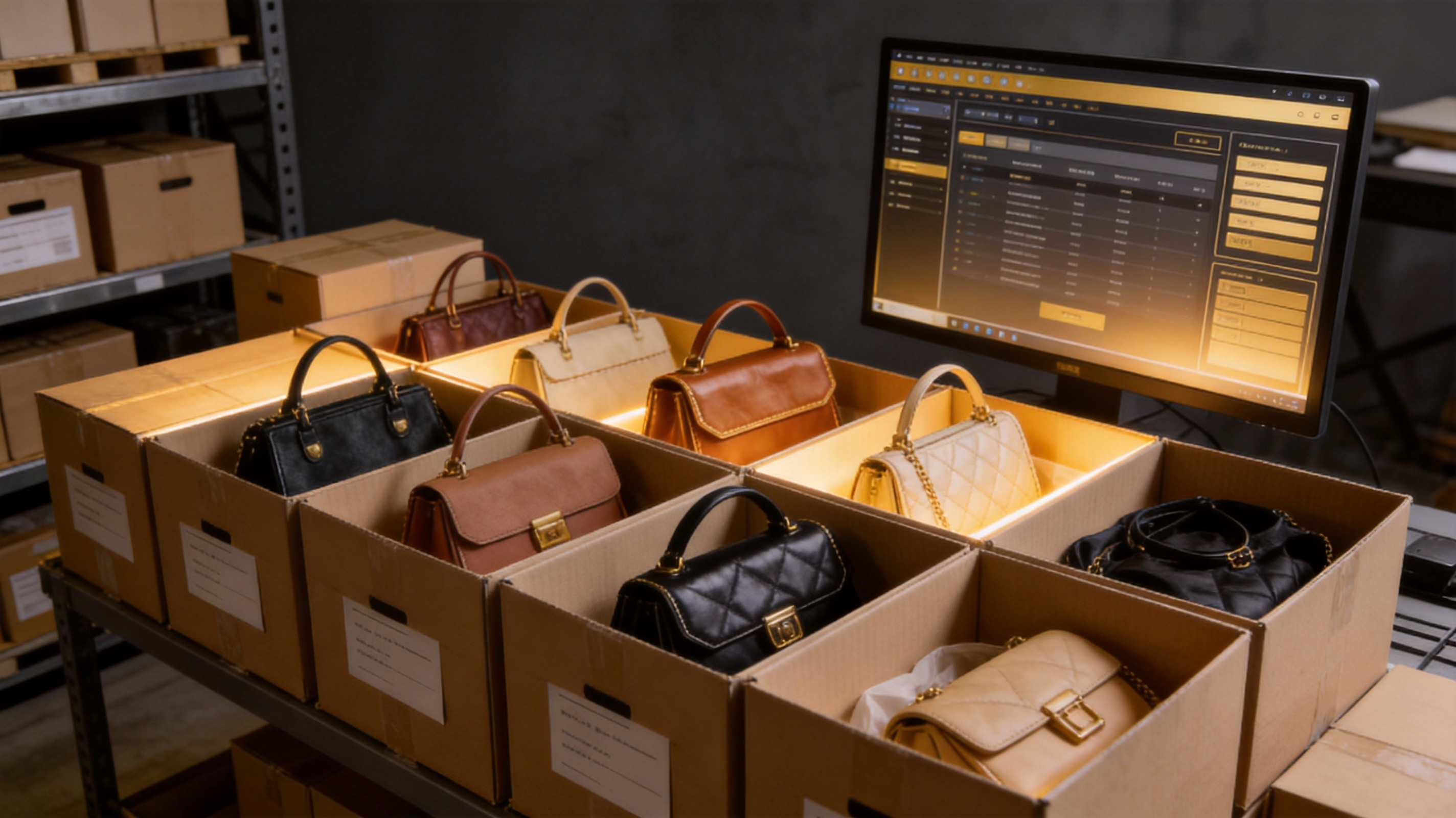
Third-party inspection services provide independent verification that protects your investment
Building a Quality Scorecard for Your Suppliers
A supplier quality scorecard tracks performance over time, providing data-driven insights for sourcing decisions and improvement conversations. Scoring suppliers systematically prevents emotional decision-making and ensures accountability.
| Metric | Weight | Target | Measurement |
|---|---|---|---|
| Defect Rate (AQL Pass Rate) | 30% | 95%+ pass on first inspection | Per shipment inspection results |
| On-Time Delivery | 25% | 90%+ on-time or early | Actual vs promised ship dates |
| Sample Quality | 15% | First sample approval rate 80%+ | Number of revision rounds needed |
| Communication Responsiveness | 15% | Response within 24 hours | Average response time tracking |
| Corrective Action Effectiveness | 15% | Issues resolved within 7 days | Repeat defect rate after correction |
Photographic Documentation and Approval Processes
Photographic documentation creates an objective quality record that supports dispute resolution, enables remote quality verification, and builds institutional knowledge about your products. Every production stage should be documented with clear, well-lit photographs.
Require the factory to provide photographic documentation at each quality milestone: incoming materials verification, production setup confirmation, in-line progress at 30 and 60 percent completion, final finished products before packing, and packed cartons with labeling. Photos should include overall product shots, detail close-ups of construction quality, hardware and labeling verification, and measurement verification with calipers visible. Review photos before authorizing shipment. This remote verification process catches many issues before products leave the factory, saving significant time and cost compared to discovering problems after arrival.
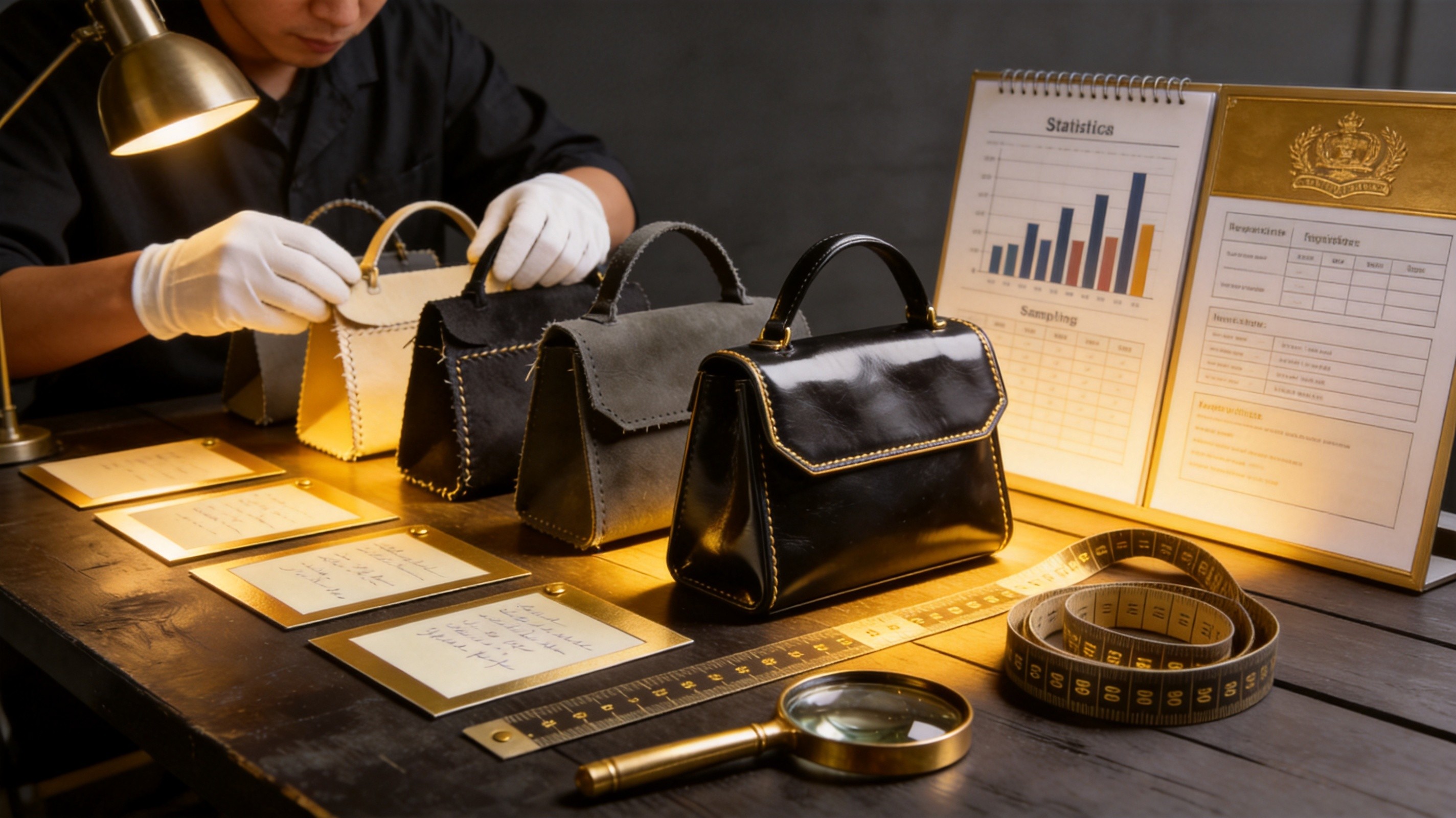
Packaging quality affects customer first impressions and product protection during transit
Packaging Quality: Often Overlooked but Critical
Packaging quality directly affects customer first impressions, product protection during shipping, and your brand perception. Yet packaging is often the most neglected aspect of quality control in handbag manufacturing.
- Dust bags: Should be correctly branded, properly sized, made from specified material, with clean stitching
- Carton quality: Must be strong enough to protect contents, correctly labeled, with proper packing density
- Stuffing: Bags should be properly stuffed with tissue or forms to maintain shape during transit
- Hang tags and labels: Correct information, proper attachment, no damage or misprints
- Moisture protection: Silica gel packets, plastic wrapping to prevent mold and moisture damage
- Shipping marks: Clear carton labeling with style, quantity, destination, and handling instructions
Handling Quality Disputes and Rejection Procedures
When quality issues are discovered, a clear dispute resolution process protects both buyer and supplier interests. Pre-negotiated procedures prevent emotional escalation and ensure fair outcomes.
Include quality dispute procedures in your purchase order: defect classification criteria (critical, major, minor), documentation requirements (photos, quantities, measurement evidence), response timeline (factory must acknowledge within 48 hours, provide corrective action plan within 7 days), resolution options by severity (full replacement for critical defects, partial credit or replacement for major defects, acceptance with discount for minor defects), and cost allocation for rework or return shipping. Having these procedures agreed in advance prevents disputes from becoming relationship-damaging conflicts.
Root Cause Analysis: Preventing Recurring Issues
When quality issues recur across multiple orders, addressing the symptom without understanding the root cause guarantees the problem will continue. Root cause analysis systematically identifies why defects occur so they can be prevented permanently.
Use the 5 Whys method: ask "why" five times to drill down from the visible defect to its underlying cause. For example, if stitching is inconsistent: Why? Because the worker's technique varies. Why? Because the worker was not trained on this specific construction method. Why? Because the factory assigned a new worker without notifying the buyer. Why? Because there is no change notification procedure. Why? Because the quality agreement does not require change notification. The root cause is a procedural gap, not a worker skill issue. Fixing the procedure prevents the issue from recurring regardless of worker assignments.

Data-driven quality scorecards enable objective supplier evaluation and continuous improvement
Technology Tools for Quality Tracking and Management
Modern technology tools streamline quality tracking, documentation, and communication. Implementing the right tools improves efficiency and creates data that supports better sourcing decisions over time.
Quality management tools include cloud-based inspection report platforms (QIMA One, Inspectorio) that centralize inspection data across suppliers and orders, photo documentation apps with standardized templates for consistent evidence collection, measurement and testing equipment (digital calipers, pull force gauges, colorimeters) for objective quality assessment, ERP systems that track quality metrics as part of overall supplier performance, and communication platforms (WeChat, Slack) that enable real-time quality issue resolution during production. Investing in quality management technology pays dividends through faster issue resolution, better data for decision-making, and reduced quality costs over time.

Building a culture of quality with manufacturing partners prevents defects before they occur
Building a Culture of Quality with Manufacturing Partners
The most effective quality control is not inspection-based but culture-based. When your factory partner shares your commitment to quality, they invest proactively in prevention rather than relying on inspection to catch problems after they occur.
Build a quality culture through clear communication about quality expectations and their business impact, recognition and reward for consistent quality performance, joint quality improvement projects that address systemic issues, factory visits that demonstrate your personal commitment to quality, transparent sharing of customer feedback including both positive and negative comments, and long-term partnership commitment that gives the factory confidence to invest in quality improvement. Factories that view quality as a shared value rather than an imposed requirement produce consistently better results. Our quality-focused approach at Junyuan Bags reflects this philosophy, with 20+ years of continuous quality improvement across our 300+ worker facility.
Quality You Can Trust, Order After Order
Junyuan Bags maintains rigorous quality control across every production stage. ISO-certified processes, 20+ years of experience, and 300+ trained workers ensure consistent quality for every bulk order.
WhatsApp: +86 17750020688 | Email: service@junyuanbags.com
MOQ: 200 pcs/style | Factory: 30,000 sqm, Quanzhou, China
Frequently Asked Questions
What is AQL and how is it used in handbag inspection?
AQL (Acceptable Quality Level) is a statistical sampling standard. For handbags, AQL 2.5 is standard. For 1,000 bags, inspect 80 random units. The batch passes if major defects are 5 or fewer and critical defects are zero. This statistical approach ensures thorough verification without inspecting every unit.
How do you write an effective tech pack?
Include technical drawings from 5 views with exact dimensions, bill of materials with specifications and Pantone references, hardware specs, construction details (stitch type, density, edge finishing), labeling placement diagrams, packaging instructions, and measurement tolerance table. Reference approved samples with photos from multiple angles.
How frequently should inspections be conducted?
Three critical stages: pre-production inspection (verify materials and setup), in-line inspection (20-30% production completion to catch systemic issues), and final random inspection (100% complete, AQL sampling). For first orders or new factories, add inspections at 50% and 70% completion.
What to do when orders arrive with defects?
Document all defects with photos and severity classification, notify the factory immediately with complete documentation, request corrective action plan with root cause analysis, and negotiate resolution based on severity: full replacement for critical defects, partial credit for major defects, acceptance with discount for minor defects.
How much do third-party inspections cost?
Typically $200-$350 per person-day. A standard final random inspection for 1,000-3,000 handbags requires one inspector for one day. Major companies include SGS, Bureau Veritas, QIMA, and Intertek. Volume discounts of 10-20% available for ongoing programs. Inspection cost is less than 1% of order value.
Limitations and Scope of This Guide
This guide covers ensuring consistent quality across bulk handbag orders, including production controls, inspection methods, and supplier management strategies. It is based on our experience as a handbag manufacturer in Quanzhou, China, serving brands worldwide since 2004. Key limitations to keep in mind:
- Quality control methods described assume a professional factory with established QC systems. Factories without formal quality management require more hands-on buyer oversight.
- Inspection frequency and sampling plans are recommendations, not universal standards. Your specific risk tolerance, order value, and product complexity should guide your approach.
- Color and material consistency standards are based on mid-to-premium market expectations. Budget products inherently accept wider variation ranges.
For advice tailored to your specific situation, contact our team directly.