Table of Contents
- Why Listing Optimization Impacts Handbag Sales
- Keyword Research for Handbag Products
- Title Optimization Formula and Best Practices
- Bullet Points — Features That Drive Purchases
- Product Description and A+ Content Strategy
- Product Photography for Handbags
- Video Content and Demonstration
- Backend Keywords and Search Terms
- Pricing Strategy and Competitive Positioning
- Review Generation Strategies
- Handling Negative Reviews
- PPC Advertising for Handbag Listings
- Seasonal Optimization Strategies
- Monitoring Conversion Rate and Key Metrics
- Continuous Improvement Through A/B Testing
- FAQ — Optimizing Amazon Handbag Listings
An optimized Amazon listing is the difference between a handbag that sells consistently and one that languishes on page five of search results. Listing optimization combines keyword strategy, compelling content, professional photography, and data-driven testing to maximize the percentage of visitors who click "Add to Cart." For private label handbag sellers, conversion rate optimization directly determines whether your FBA investment generates profit or becomes stranded inventory.
This guide provides a complete framework for optimizing handbag listings on Amazon, covering every element from keyword research to A+ Content design, from photography standards to PPC campaign structure. Each section includes actionable frameworks you can implement immediately. For sellers whose products are ready to list, our manufacturing services ensure the product quality that supports high-converting, low-return listings.

Every element of your listing works together to convert browsers into buyers
Why Listing Optimization Directly Impacts Your Handbag Sales
Amazon's marketplace is intensely competitive for handbag sellers. The average handbag search returns thousands of results, and shoppers make purchase decisions in seconds based on what they see in search results and on product pages. A listing that fails to communicate value, build trust, and differentiate from competitors wastes every PPC dollar spent driving traffic to it.
Conversion rate optimization on Amazon works on two levels: improving the percentage of searchers who click your listing (driven by main image, title, price, and review rating) and improving the percentage of clickers who purchase (driven by secondary images, bullet points, A+ Content, reviews, and pricing). Both levels require attention and optimization to maximize sales velocity and organic ranking. For more on launching your brand, see our guide on launching a DTC handbag brand.
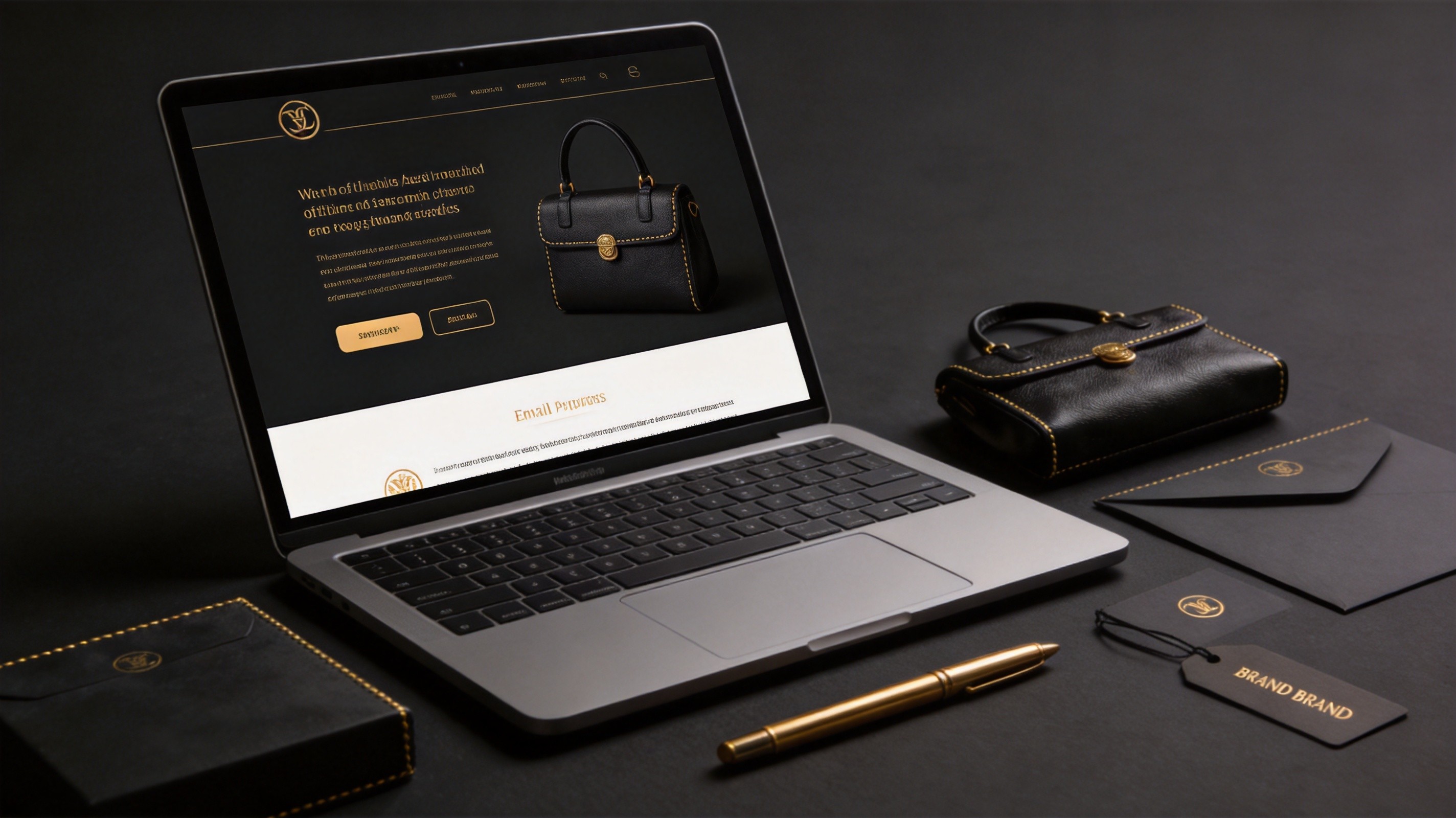
Standing out in Amazon search results requires both visibility and conversion optimization
Keyword Research for Handbag Products on Amazon
Effective keyword research forms the foundation of every optimized listing. Your keyword strategy determines which search terms trigger your listing's appearance and how relevant Amazon's algorithm considers your product for those terms.
Keyword Research Process
- Start with Amazon's autocomplete: type your core keyword and note all suggestions
- Use Brand Analytics search term reports to identify top-converting terms
- Analyze top 10 competitor listings for keyword patterns in titles and bullets
- Use third-party tools like Helium 10, Jungle Scout, or Viral Launch for volume data
- Identify long-tail keywords with lower competition but strong purchase intent
- Map keywords to listing elements: title for primary terms, bullets for secondary, backend for long-tail
Title Optimization — Formula and Best Practices
Your title is the single most important listing element for both search ranking and click-through rate. It must incorporate high-volume keywords while remaining readable and compelling for shoppers scanning search results.
| Title Element | Position | Purpose | Example |
|---|---|---|---|
| Brand Name | First | Brand recognition, Amazon requirement | BrandX |
| Key Feature | Second | Differentiation, keyword targeting | Waterproof |
| Product Type | Third | Core search term matching | Crossbody Bag |
| Material | Fourth | Quality signal, keyword | PU Leather |
| Use Case | Fifth | Intent matching | for Work Travel |
| Size/Color | Last | Variant identification | Medium, Black |
Optimized Title Formula
Brand + Key Feature + Product Type + Material + Use Case + Size/Color. Example: "Luxor Crossbody Bag for Women - Waterproof PU Leather Small Shoulder Purse with Adjustable Strap for Work Travel - Black"
Bullet Points — Highlighting Features That Drive Purchases
Bullet points are your primary opportunity to communicate value propositions after the title. Amazon allows five bullet points, each up to 500 characters. Use all five, with each bullet addressing a specific customer need or objection.
| Bullet Position | Focus Area | Content Strategy |
|---|---|---|
| Bullet 1 | Primary benefit / unique selling point | Lead with the #1 reason to buy |
| Bullet 2 | Material and quality | Describe materials, construction, durability |
| Bullet 3 | Functionality and features | Compartments, pockets, strap adjustment |
| Bullet 4 | Size and fit information | Dimensions, what fits inside, weight |
| Bullet 5 | Guarantee and brand promise | Warranty, customer service, brand values |
Each bullet should begin with a CAPITALIZED benefit phrase followed by detailed supporting text. This structure allows scanners to grasp key benefits while detailed text satisfies thorough readers. Learn more about effective product descriptions in our solutions guide.
Product Description and A+ Content Strategy
A+ Content transforms your product description from plain text into a rich visual experience with images, comparison charts, brand story modules, and formatted text blocks. For handbag listings, A+ Content increases conversion rates by 5 to 15 percent and reduces return rates by setting accurate expectations.
Recommended A+ Content Modules for Handbags
- Brand story module: Build trust with your brand origin and values
- Comparison chart: Show your product range to help buyers choose
- Lifestyle image banners: Show the bag in real-life scenarios
- Feature callout modules: Highlight construction details with close-up images
- Size and capacity guide: Visual representation of what fits inside

A+ Content modules communicate quality and build trust beyond plain text descriptions
Product Photography — Main Image and Lifestyle Shots
Photography is the single highest-impact investment for handbag listing optimization. Shoppers cannot touch the product, so your images must communicate quality, scale, material texture, and design details. Professional photography delivers the strongest ROI of any listing improvement you can make.
Seven-Image Strategy for Handbag Listings
- Main image: Pure white background, product filling 85% of frame, showing front three-quarter view
- Second image: Alternate angle showing back, side, or interior
- Third image: Lifestyle shot with model carrying the bag in context
- Fourth image: Detail close-up of material texture and hardware quality
- Fifth image: Interior shot showing compartment layout and pockets
- Sixth image: Scale reference with common objects or hand holding the bag
- Seventh image: Infographic with feature callouts and key specifications
For a comprehensive guide to handbag photography, see our detailed product photography tips article.

Professional photography with consistent lighting communicates quality and accuracy
Video Content — Demonstration and Detail Videos
Product videos increase conversion rates by 10 to 15 percent on average for handbag listings. Videos show movement, material drape, hardware function, and scale in ways that static images cannot. Amazon allows one product video per listing in addition to the seven image slots.
Create a 30 to 60-second video showing: the bag from all angles in a slow rotation, the bag being opened to reveal the interior layout, a hand interacting with hardware (zippers, clasps, adjustable straps), the bag being packed with typical daily items, a model carrying the bag in a lifestyle setting, and close-up details of material texture and stitching quality. This video content addresses the major purchase concerns handbag buyers have when shopping online.
Backend Keywords — Search Terms and Subject Matter
Backend keywords provide additional search term coverage without cluttering your visible listing content. Amazon allocates 250 bytes for search terms in the backend. Use this space for synonyms, alternative spellings, related terms, and long-tail keywords not included in your title or bullets.
Backend Keyword Best Practices
- Do not repeat keywords already in your title or bullets
- Include common misspellings of your product terms
- Add Spanish translations of key terms for US market
- Use all 250 bytes without keyword stuffing
- Separate keywords with spaces, not commas
- Do not include brand names (yours or competitors)
Pricing Strategy — Competitive Positioning and Psychology
Pricing directly affects conversion rate, sales velocity, and organic ranking. Price too high and conversion suffers; price too low and you signal inferior quality while compressing margins. The optimal price balances competitive positioning with profitability targets.
For handbag listings, prices ending in .99 or .97 outperform round numbers in conversion testing. Price anchoring through strikethrough pricing (showing a higher "list price" alongside your selling price) increases perceived value. Ensure your pricing covers all costs including PPC advertising while maintaining at least 25 percent net margin. For detailed pricing strategy, see our guide on pricing private label handbags.
Review Generation — Ethical Strategies for Handbag Sellers
Reviews are the strongest social proof on Amazon and directly influence both conversion rate and organic ranking. Building review volume ethically requires systematic processes and patience.
Review Building Strategies
- Amazon Vine: Enroll your product to receive reviews from trusted reviewers (requires Brand Registry)
- Request a Review button: Use Amazon's built-in feature 5 to 30 days after delivery
- Insert cards: Include a card encouraging honest reviews without offering incentives
- Product quality: The best review strategy is making a product customers genuinely love
- Follow-up emails: Use Amazon's Buyer-Seller messaging for post-purchase support
Handling Negative Reviews and Product Feedback
Negative reviews are inevitable, but how you respond to them matters. Analyze every negative review for actionable product improvement information. If the review mentions a specific defect or mismatch, update your product or listing content to address the issue. For reviews mentioning FBA fulfillment problems (damaged packaging, wrong item), file a fulfillment error claim with Amazon.
Never contact reviewers directly offering refunds in exchange for review changes, as this violates Amazon's policies and risks account suspension. Instead, focus on increasing positive review velocity to dilute the impact of negative reviews over time.
PPC Advertising for Handbag Listings
PPC advertising drives traffic to your listing during the critical launch phase and supplements organic traffic for established products. A well-structured PPC campaign targets keywords at different stages of buyer intent.
| Campaign Type | Purpose | Daily Budget | Expected ACoS | When to Use |
|---|---|---|---|---|
| Auto Campaign | Keyword discovery | $15 - $30 | 40-60% | Launch phase |
| Manual Broad | Expand keyword reach | $15 - $25 | 30-45% | Week 2 onwards |
| Manual Exact | Target proven keywords | $20 - $40 | 20-30% | After 30 days data |
| Sponsored Brands | Brand visibility | $15 - $25 | 25-35% | Brand Registry holders |
| Sponsored Display | Retargeting | $10 - $20 | 15-25% | Established listings |
Seasonal optimization of listing imagery and keywords captures holiday demand peaks
Seasonal Optimization — Holiday and Back-to-School
Handbag listings should be optimized seasonally to capture demand peaks. Update your main image and lifestyle shots to reflect seasonal styling. Adjust keywords to include seasonal terms like "Christmas gift for her" or "back to school bag." Increase PPC budgets 30 to 50 percent during peak periods. Consider creating seasonal variations or bundles that appeal to gift-giving occasions.
Monitoring Conversion Rate and Key Metrics

Regular monitoring of conversion metrics reveals optimization opportunities
Track these key metrics weekly to identify optimization opportunities: unit session percentage (conversion rate), total order percentage, BSR trend, keyword ranking positions, PPC ACoS and TACoS, return rate, and review velocity. Amazon's Business Reports dashboard provides session and conversion data. Brand Analytics offers competitive insights for Brand Registry holders.
A conversion rate above 15 percent for handbags indicates a well-optimized listing. Rates between 10 and 15 percent are average. Below 10 percent signals optimization opportunities. Focus on the element most likely causing the gap: main image for click-through issues, secondary images and bullets for conversion issues, pricing for competitiveness issues.
Continuous Improvement — A/B Testing Your Listings
Amazon's Manage Your Experiments tool allows Brand Registry holders to A/B test listing elements including main images, titles, A+ Content, and bullet points. Run tests for at least two weeks to gather statistically significant data. Test one variable at a time to isolate the impact of each change.
Start with high-impact tests: main image variations, title rewrites with different keyword emphasis, and A+ Content redesigns. Document your test results to build institutional knowledge about what resonates with your target buyers. Continuous testing and improvement differentiates top-performing sellers from those who set and forget their listings. Our team can help create products that support high-converting listings. Reach out on WhatsApp at +86 17750020688 or email service@junyuanbags.com.
Need Quality Handbags That Convert on Amazon?
Great listings need great products. Our 20+ years of manufacturing excellence ensures the quality that earns 5-star reviews and repeat purchases.
WhatsApp: +86 17750020688 | Email: service@junyuanbags.com
MOQ: 200 pcs/style | Factory: 30,000 sqm, Quanzhou, China
Frequently Asked Questions
What is the ideal title format for an Amazon handbag listing?
Follow this formula: Brand + Key Feature + Product Type + Material + Use Case + Size/Color. Keep titles 150 to 200 characters with the most important keywords in the first 80 characters for mobile visibility.
How many images should an optimized handbag listing have?
Use all 7 image slots: main white background shot, alternate angle, lifestyle with model, detail close-up, interior view, scale reference, and feature infographic. Add a product video for an additional 10-15% conversion boost.
How does A+ Content impact handbag conversion rates?
A+ Content typically increases conversion rates by 5 to 15 percent, especially for private label brands. Most effective modules include comparison charts, lifestyle imagery, and detailed construction close-ups.
What PPC budget should I allocate for a new handbag listing?
Plan $500 to $1,500 monthly for the first 90 days across automatic discovery campaigns, manual exact match campaigns, and sponsored brand ads. Expect 40-60% ACoS initially, declining to 20-30% after optimization.
How should I handle negative reviews on my handbag listing?
Address root causes by improving the product, respond professionally through Amazon's features, and increase positive review velocity through quality products and Amazon's Request a Review button. Never offer incentives for review changes.
Limitations and Scope of This Guide
This guide covers optimizing Amazon handbag listings for conversions, including photography, titles, bullet points, A+ Content, and keyword strategies. It is based on our experience as a handbag manufacturer in Quanzhou, China, serving brands worldwide since 2004. Key limitations to keep in mind:
- Amazon's algorithm (A9/A10) changes regularly. Optimization tactics that work today may need adjustment as the platform evolves.
- This guide focuses on the US Amazon marketplace. Optimization strategies for Amazon EU, UK, and other regional stores require localized keywords and compliance.
- Conversion rate improvements depend on your starting point, competitive landscape, and price positioning. Results described are typical ranges, not guarantees.
For advice tailored to your specific situation, contact our team directly.