Table of Contents
- Why Product Photography Makes or Breaks Handbag Sales
- Types of Handbag Product Photos You Need
- White Background Product Shots
- Lifestyle Photography — Bags in Context
- Detail Shots — Hardware, Stitching, Texture and Interior
- Scale and Size Photography
- Color Accuracy — True-to-Life Tones
- Equipment Needed for Handbag Photography
- DIY Photography Setup on a Budget
- Working with Professional Product Photographers
- Styling Tips — Filling, Positioning and Composing
- Model Shots — Carrying and Wearing the Bag
- Post-Production — Editing and Retouching Standards
- Video Content — 360 Views and Unboxing
- Optimizing Photos for Different Platforms
- FAQ — Handbag Product Photography
Product photography is the single highest-impact investment an e-commerce handbag brand can make. Unlike physical retail where customers touch, feel, and try bags before buying, online shoppers rely entirely on images to evaluate quality, assess size, judge material, and make purchase decisions. A poorly photographed handbag looks cheap regardless of its actual quality. A beautifully photographed handbag commands premium pricing and drives higher conversion rates.
This comprehensive guide covers every aspect of handbag product photography, from essential shot types and equipment recommendations to DIY setups and professional photographer collaboration. Whether you are launching your first product or refreshing an existing catalog, these techniques will help you create images that convert browsers into buyers. For brands preparing products for photography, our handbag collection features designs that photograph beautifully with premium materials and construction details worth showcasing.
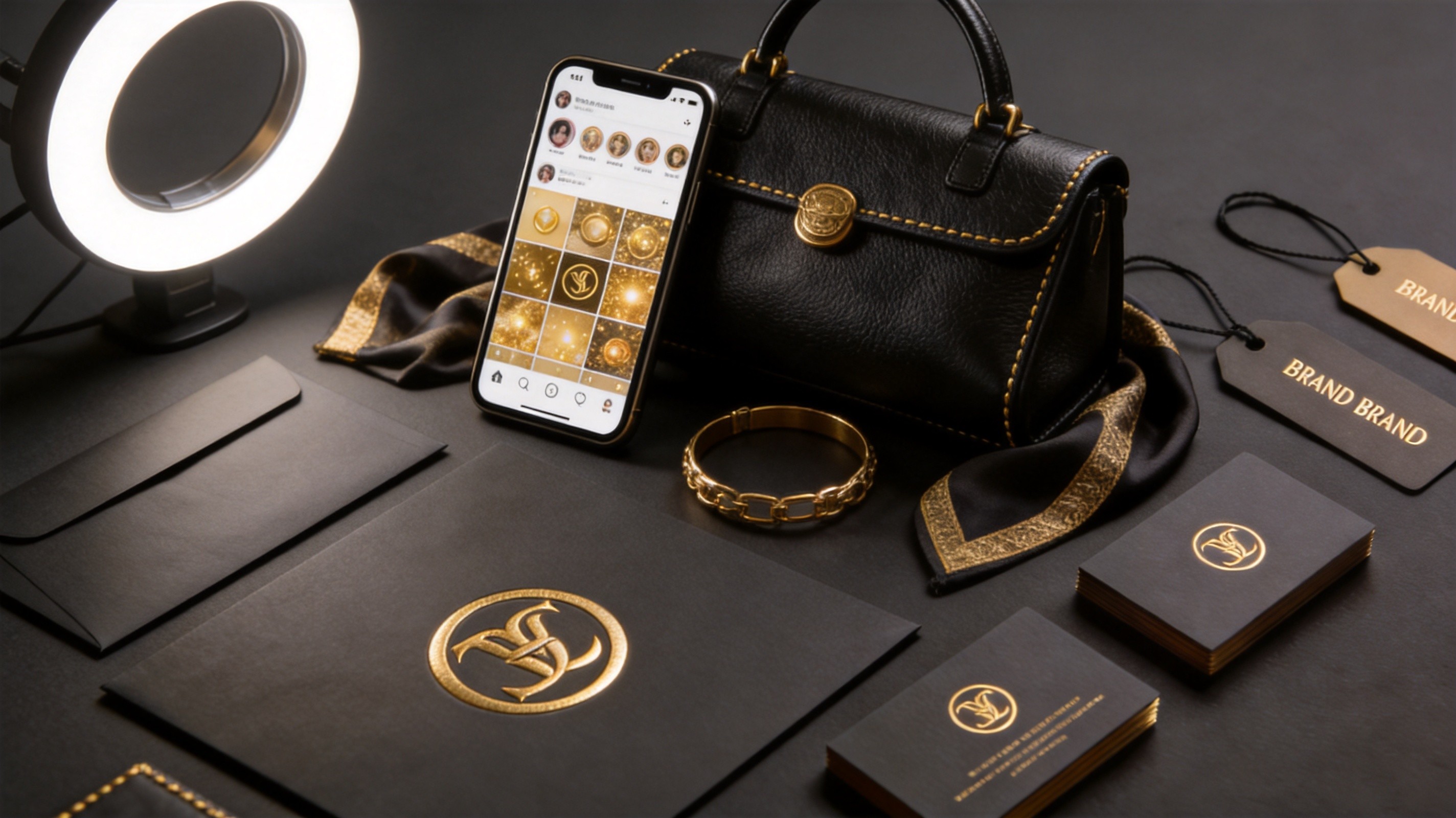
Professional photography transforms a quality handbag into an irresistible online purchase
Why Product Photography Makes or Breaks Handbag Sales
In e-commerce, photography is your storefront, your sales associate, and your product sample all at once. Research shows that 75 percent of online shoppers cite product photos as the primary factor in their purchase decision. For handbags specifically, the visual nature of the product means photography quality directly correlates with perceived quality and purchase willingness.
High-quality images reduce returns by setting accurate expectations about color, size, texture, and construction. They increase conversion rates by communicating value that justifies your pricing. They build brand perception by signaling professionalism and attention to detail. And they generate social media content that drives organic marketing. Every dollar invested in photography generates returns across multiple business dimensions. For context on how listing quality impacts sales, see our guide on Amazon listing optimization.
Types of Handbag Product Photos You Need
A complete handbag photography set includes multiple shot types, each serving a specific purpose in the customer's evaluation process. From clinical product shots that satisfy marketplace requirements to aspirational lifestyle images that build brand desire, every image type contributes to the overall conversion strategy.
| Shot Type | Purpose | Where Used | Quantity Needed |
|---|---|---|---|
| White background (catalog) | Product identification, marketplace requirement | Amazon main image, Shopify product page | 2-3 angles per product |
| Lifestyle | Context, aspiration, brand story | Secondary images, social media, ads | 3-5 per product |
| Detail close-up | Quality communication, trust building | Secondary images, A+ Content | 3-4 per product |
| Interior | Functionality, capacity visualization | Secondary images, product page | 1-2 per product |
| Scale/size reference | Size expectation management | Secondary images, size guide | 1-2 per product |
| Flat lay/styling | Aesthetic appeal, outfit coordination | Social media, lookbook, ads | 2-3 per product |
| Model carrying | Scale, style, aspiration | Lifestyle section, ads, social | 2-4 per product |
White Background Product Shots — Amazon and Catalog Requirements
White background images are the foundation of handbag product photography. Amazon requires the main image to be on pure white (RGB 255, 255, 255) with the product filling at least 85 percent of the frame. Even if you do not sell on Amazon, white background images are essential for your product catalog, wholesale presentations, and marketplace consistency.
White Background Photography Tips
- Use a seamless white paper or fabric backdrop curved to eliminate the horizon line
- Light the background separately from the product to achieve pure white
- Position the bag at a slight angle (three-quarter view) to show depth and dimension
- Stuff the bag with tissue to maintain natural shape without appearing overfilled
- Ensure all straps, handles, and hardware are arranged neatly and symmetrically
- Shoot from slightly above eye level for the most flattering perspective
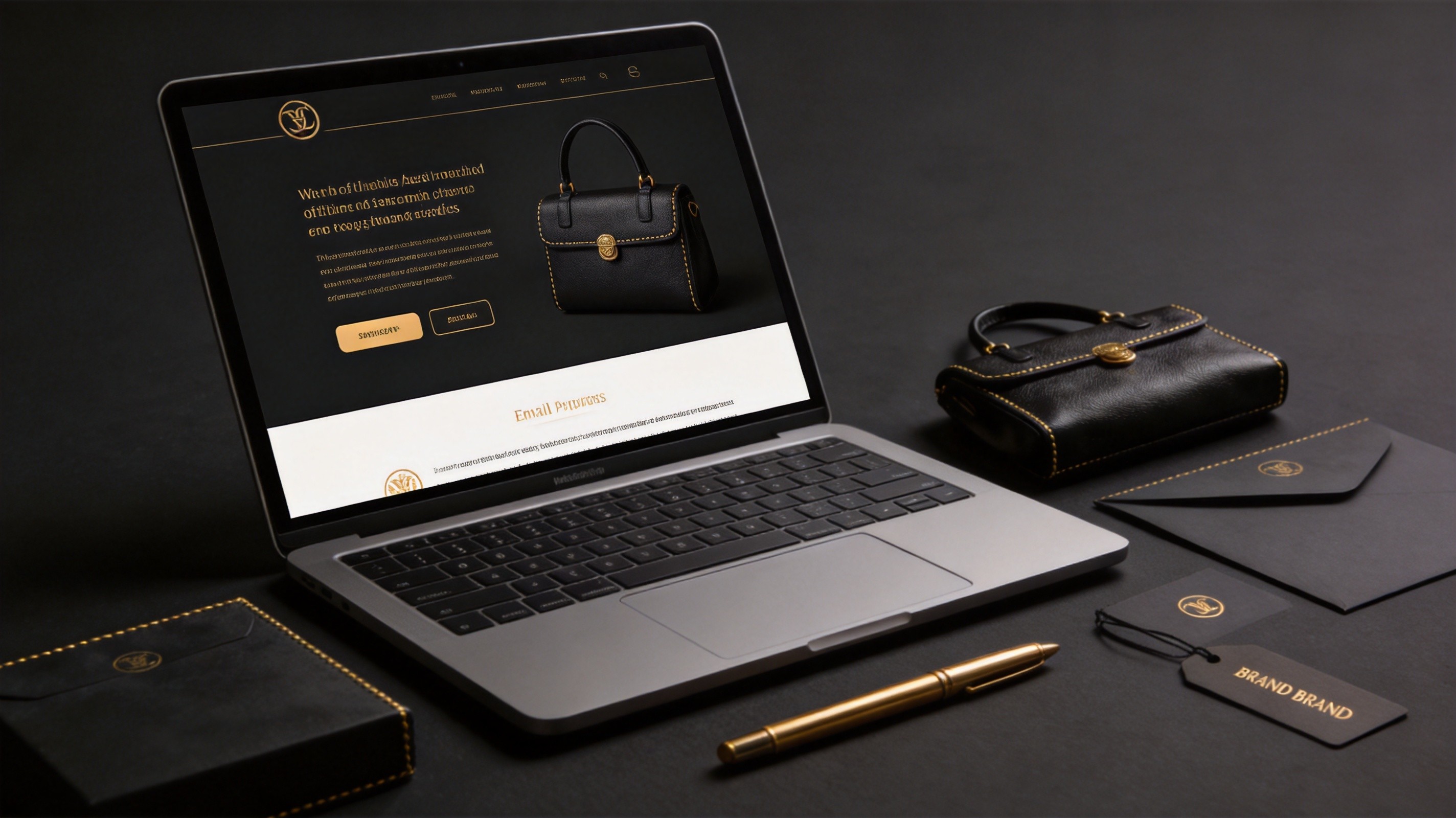
Clean white background shots are essential for marketplace listings and catalogs
Lifestyle Photography — Showing Bags in Context
Lifestyle photography places your handbag in real-world scenarios that help customers envision owning and using the product. These images build emotional connection and communicate brand personality in ways that white background shots cannot. Lifestyle images should show the bag in settings relevant to your target customer: a coffee shop, an office environment, a city street, or a travel scenario.
When shooting lifestyle images, ensure the bag remains the focal point while the context enhances rather than competes with the product. Use complementary colors in the environment that do not clash with the bag's color palette. Natural lighting through large windows creates warm, inviting lifestyle imagery. Include human elements when appropriate: a hand reaching for the bag strap, the bag sitting on a cafe table, or a model walking with the bag at their side.
Detail Shots — Hardware, Stitching, Texture and Interior
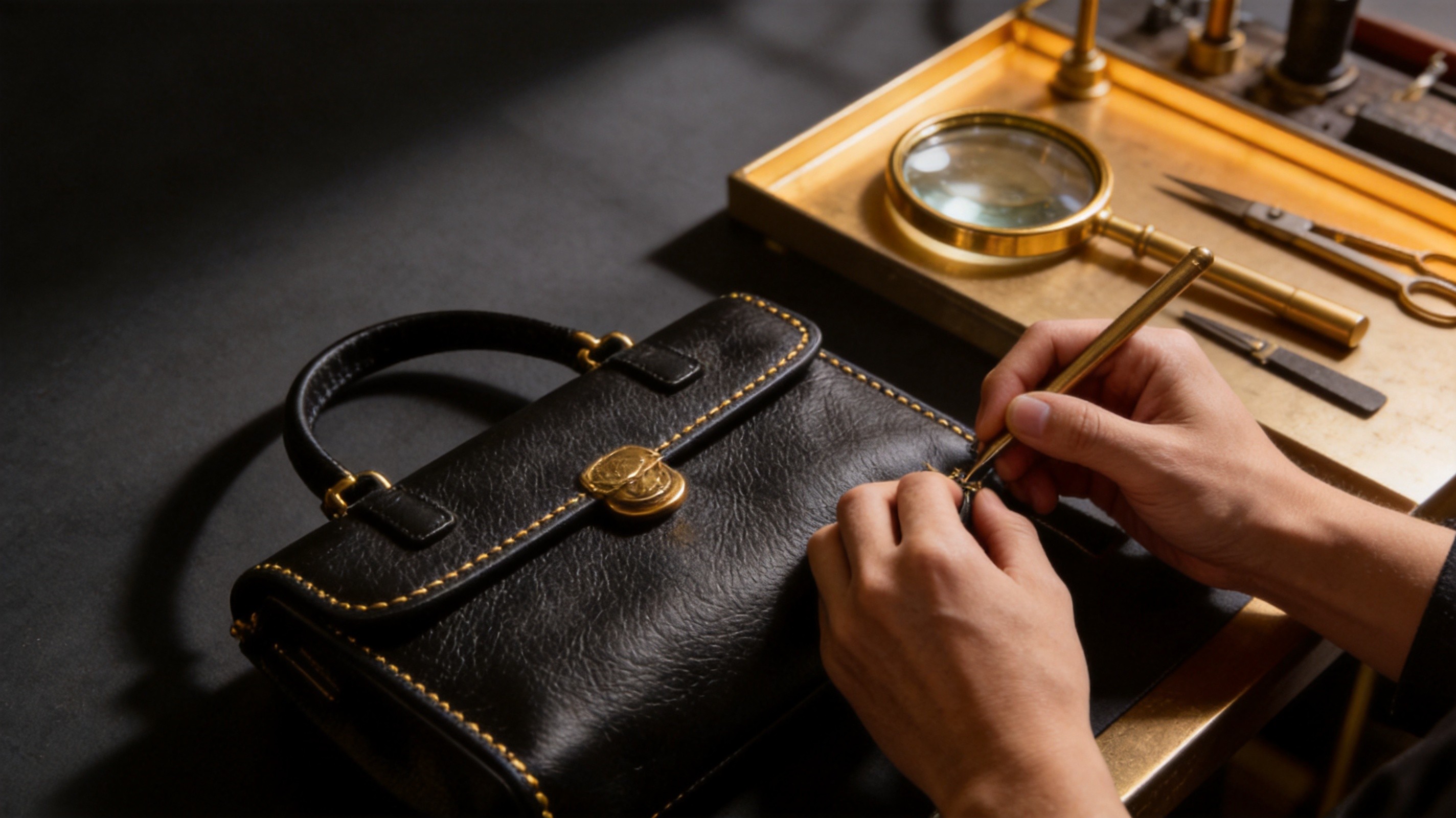
Detail close-ups communicate quality that full-bag shots cannot convey. They show the craftsmanship that justifies premium pricing and builds trust that the product meets expectations. Every handbag listing should include detail shots of: material texture showing grain or weave pattern, hardware close-up showing finish quality and branding, stitching details demonstrating construction quality, zipper and closure mechanisms showing smooth operation, and interior layout revealing pocket configuration and lining quality.
Use a macro lens or macro mode on your camera to capture fine details. Ensure lighting highlights texture without creating harsh shadows. For leather bags, shoot details at an angle that reveals the natural grain pattern. For fabric bags, show the weave density and print quality. These images address quality concerns before they become return reasons.
Scale and Size Photography — Helping Customers Visualize
Size-related returns account for 25 percent of all handbag returns online. Scale photography directly addresses this issue by providing visual context for dimensions that numbers alone cannot communicate. Include photos that show the bag next to common objects (a phone, a water bottle, a standard notebook), being held in a hand, being carried by a model of average height, and being packed with typical everyday items.
Scale reference images with common items help customers visualize size accurately
Color Accuracy — Getting True-to-Life Tones
Color inaccuracy is one of the most common complaints in handbag returns. A bag that appears warm brown in photos but arrives looking reddish brown generates immediate dissatisfaction. Achieving color accuracy requires systematic workflow from capture through editing.
Color Accuracy Workflow
- Shoot in RAW format for maximum color data retention
- Include a color checker card in your first shot of each lighting setup
- Set custom white balance using a gray card under your shooting lights
- Use consistent, daylight-balanced lighting (5000K to 5500K)
- Edit on a calibrated monitor with known color accuracy
- Compare final edited images to the physical product under natural light
- Create a reference guide showing the bag under different lighting conditions
Equipment Needed — Camera, Lighting and Props
The equipment you need depends on your budget, photography volume, and quality requirements. Here is a comparison of three setup tiers for handbag photography.
| Equipment | DIY/Budget | Mid-Range | Professional |
|---|---|---|---|
| Camera | Smartphone (free) | Mirrorless ($600-1,000) | Full-frame DSLR ($1,500-3,000) |
| Lens | Phone lens (built-in) | 50mm prime ($200-400) | 85mm f/1.8 ($400-700) |
| Lighting | Natural window light (free) | Softbox kit ($100-300) | Strobe system ($500-1,500) |
| Backdrop | White poster board ($10) | Seamless paper roll ($30-50) | Motored backdrop system ($300-500) |
| Tripod | Phone tripod ($20-30) | Standard tripod ($50-100) | Professional tripod ($150-300) |
| Total cost | $30-40 | $980-1,850 | $2,850-5,500 |
DIY Photography Setup on a Budget
You do not need expensive equipment to create acceptable handbag photos, especially for social media content and supplementary product images. A simple DIY setup using natural light produces results that work well for ongoing content needs after your initial professional shoot.
DIY Setup Instructions
Position a white poster board or foam core sheet against a wall, curving the bottom edge to create a seamless surface. Set up near a large window with indirect natural light (avoid direct sunlight which creates harsh shadows). Place the handbag on the white surface, stuffed with tissue paper for shape. Use a second white poster board opposite the window as a reflector to fill shadows on the bag's non-lit side. Shoot with your smartphone in portrait mode with the focus locked on the bag. Edit using free apps like Snapseed or Lightroom Mobile for basic color correction and cropping.
A simple DIY setup with natural light produces acceptable photos for social media and supplementary content
Working with Professional Product Photographers
For your initial product launch and hero products, professional photography delivers the highest ROI. Professional handbag photographers understand the specific challenges of bag photography: maintaining shape, showing depth, capturing material texture, and creating images that convert. Budget $500 to $2,000 per product for a complete set of 10 to 15 edited images including white background, lifestyle, and detail shots.
When hiring a photographer, review their portfolio for handbag or fashion accessory experience specifically. Product photographers who primarily shoot electronics or food may not understand the styling nuances specific to bags. Provide a shot list before the session, bring multiple products for batch shooting efficiency, and request both edited high-resolution files and web-optimized versions for different platform requirements.
Styling Tips — Filling, Positioning and Composing Handbags
How you prepare and position the handbag before shooting dramatically impacts the final image quality. A flat, empty bag looks deflated and unappealing. Proper stuffing and positioning create the structured, inviting appearance that drives purchases.
- Stuff with tissue paper, bubble wrap, or a soft cloth insert to achieve natural fullness without overfilling
- For structured bags, insert a cardboard form cut to the bag's interior shape
- Position handles and straps symmetrically unless an asymmetric arrangement looks more natural
- Clean all surfaces with a microfiber cloth to remove dust and fingerprints
- Position hardware to catch light attractively without creating hot spots
- Ensure brand logos and decorative elements face the camera
- Use invisible fishing line or double-sided tape to hold elements in position
Model Shots — Carrying and Wearing the Bag
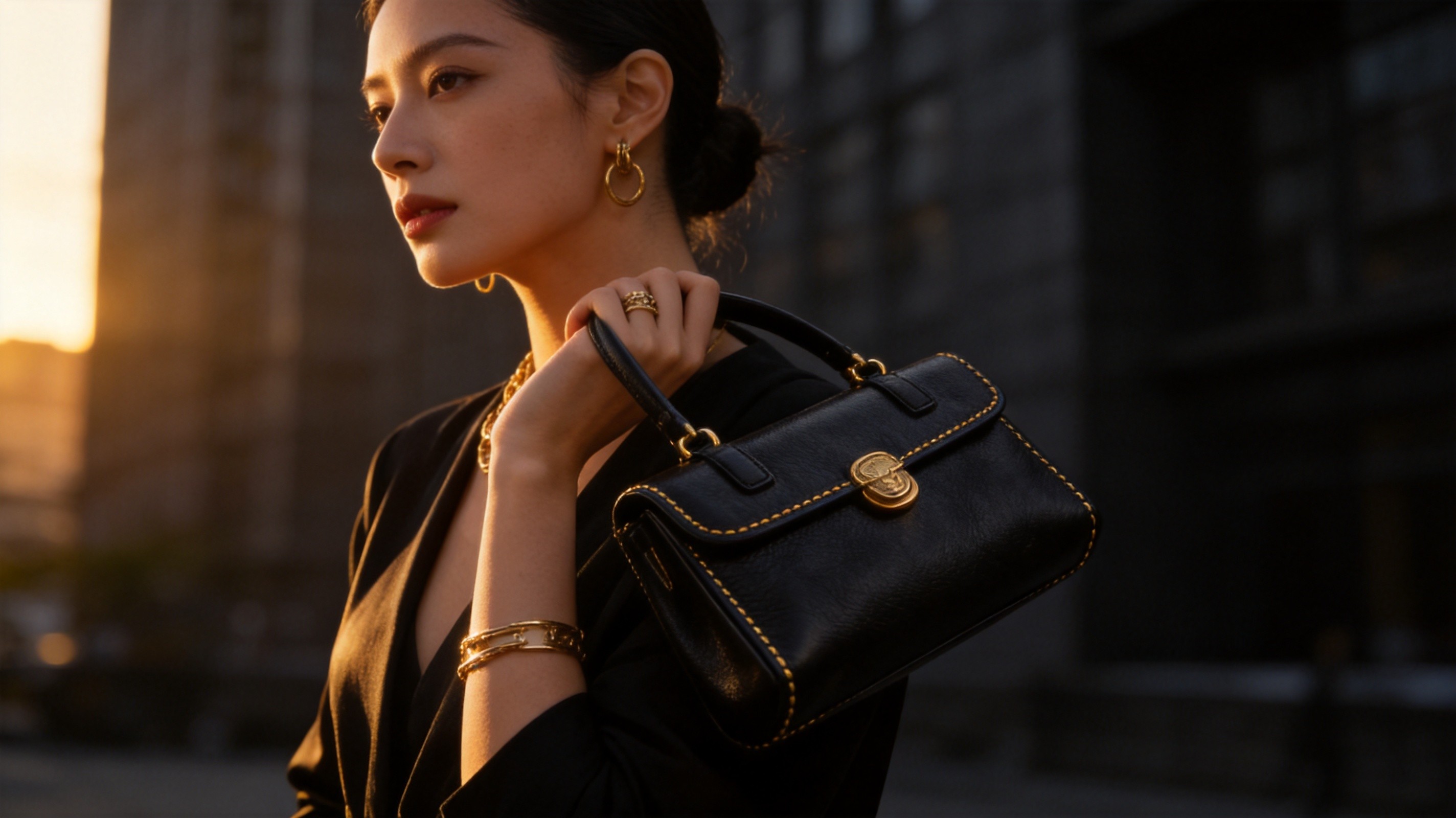
Model shots communicate scale, style, and aspiration for potential buyers
Model photography shows how the bag looks when worn, communicating scale, style, and aspiration. Select models whose appearance aligns with your target customer persona. Shoot a variety of poses: carrying the bag by the handle, wearing it crossbody, resting it on one shoulder, and holding it as a clutch. Include both full-body shots showing the bag in outfit context and mid-close shots focusing on the bag itself.
Diversity in model representation broadens your appeal and reflects real customer demographics. Consider shooting with models of different heights, body types, and skin tones to help diverse customers envision themselves with your product. These images serve multiple purposes: product pages, social media content, advertising campaigns, and PR materials.
Post-Production — Editing and Retouching Standards
Professional post-production ensures color accuracy and consistent presentation
Post-production transforms good captures into excellent images. Standard editing for handbag photography includes: color correction for accurate representation, exposure adjustment for consistent brightness, background cleanup for white background shots (ensuring pure white without gray edges), shadow removal or addition for dimensional appearance, blemish removal for any surface imperfections on the product, and resizing for different platform requirements.
Avoid excessive retouching that makes the product look different from reality. The goal is to show your actual product in its best light, not to create a fantasy version that generates returns when customers receive the real thing. Maintain an editing style guide for consistency across your entire catalog. For tips on how photography impacts listings, see our guide on building a handbag brand on Shopify.
Video Content — 360-Degree Views and Unboxing Clips
Product video increases conversion rates by 10 to 15 percent on average. For handbags, useful video content includes: 360-degree rotation showing all angles, interior and compartment walkthrough, hardware function demonstration (zippers, clasps, adjustable straps), packing demonstration showing capacity, and unboxing experience showing packaging quality and first impressions.
Keep videos between 30 and 60 seconds for product pages and up to 90 seconds for social media advertising. Shoot in landscape format for website and YouTube, and vertical format for Instagram Reels, TikTok, and Stories. Even simple smartphone videos with stable shooting and good lighting outperform having no video at all.
Optimizing Photos for Different Platforms
Each platform has specific image requirements and best practices. Amazon requires a pure white background main image at minimum 2000 by 2000 pixels for zoom functionality. Shopify works best with consistent aspect ratios across all product images (square 1:1 or portrait 4:5). Instagram performs best with 4:5 portrait format or square 1:1. Pinterest favors 2:3 vertical format. Create your images at the highest resolution needed and resize for each platform.
| Platform | Main Image | Max Images | Aspect Ratio | Key Requirement |
|---|---|---|---|---|
| Amazon | White background | 7 + 1 video | 1:1 (2000x2000+) | 85% frame fill, pure white BG |
| Shopify | Flexible | Unlimited | 1:1 or 4:5 | Consistent across catalog |
| Flexible | 10 per post | 1:1 or 4:5 | Visual appeal, lifestyle focus | |
| Flexible | 5 per pin | 2:3 vertical | Tall format, text overlay OK | |
| TikTok | Video only | N/A | 9:16 vertical | Short-form, engaging content |
Invest in professional photography for your launch and hero products, then maintain DIY capabilities for ongoing content needs. This combination delivers professional quality at sustainable cost. Our team can help you prepare product samples that photograph beautifully, with premium materials and construction details that look stunning in any photography setup. Reach out on WhatsApp at +86 17750020688 or email service@junyuanbags.com to discuss your product photography needs.
Need Photogenic Handbags for Your Brand?
Our premium materials and construction details look stunning in photography. Start with samples that showcase quality in every close-up shot.
WhatsApp: +86 17750020688 | Email: service@junyuanbags.com
MOQ: 200 pcs/style | Factory: 30,000 sqm, Quanzhou, China
Frequently Asked Questions
What equipment do I need for handbag product photography?
Minimum: smartphone, natural window light, white poster board ($30-40). Mid-range: mirrorless camera, 50mm lens, softbox kit ($980-1,850). Professional: full-frame DSLR, strobe system ($2,850-5,500).
How many photos does a handbag listing need?
Amazon: use all 7 image slots plus 1 video. Shopify: 8-12 images per product. Include white background shots, lifestyle photos, detail close-ups, interior views, scale references, and infographics.
How do I achieve color-accurate photos?
Shoot RAW, use a color checker card, set custom white balance, use consistent 5000K-5500K lighting, edit on a calibrated monitor, and compare edited images to the physical product under natural light.
Should I hire a professional photographer or do DIY?
Hire professionals for your initial launch ($500-2,000 per product). Use DIY for social media content, seasonal updates, and new colorways. The combination delivers quality at sustainable cost.
How should I style handbags for photography?
Stuff with tissue paper for natural shape, arrange straps symmetrically, clean all surfaces, position hardware to catch light, ensure logos face camera, and use fishing line or wax to hold elements in position.
Limitations and Scope of This Guide
This guide covers product photography tips for handbag e-commerce brands, including lighting, styling, equipment, and platform-specific requirements. It is based on our experience as a handbag manufacturer in Quanzhou, China, serving brands worldwide since 2004. Key limitations to keep in mind:
- Photography recommendations assume a professional or semi-professional setup. Smartphone photography can achieve good results with different techniques than described here.
- Platform-specific image requirements (Amazon, Shopify, Instagram) change periodically. Always check current specifications before producing final assets.
- This guide covers handbag photography specifically. Other product categories (jewelry, clothing, food) require different lighting, styling, and technical approaches.
For advice tailored to your specific situation, contact our team directly.