Table of Contents
- Why Pricing Is the Most Important Business Decision
- Understanding Your Full Cost Structure
- Calculating Landed Cost Per Unit
- Factory Cost Breakdown — Materials, Labor and Overhead
- Shipping and Import Costs
- Platform Fees — Amazon, Shopify and Wholesale
- Marketing and Advertising Cost Per Acquisition
- The Keystone Pricing Model and Beyond
- Cost-Plus vs Value-Based vs Competitive Pricing
- Price Positioning by Market Segment
- Psychological Pricing Strategies for Handbags
- When to Discount and When to Hold Firm
- Seasonal Pricing and Promotion Calendar
- How to Test and Adjust Your Pricing
- Common Pricing Mistakes New Brands Make
- FAQ — Pricing Private Label Handbags
Pricing is the single most impactful business decision for private label handbag brands. Set your price too low and you erode margins that fund growth, marketing, and quality improvements. Set it too high and you lose conversions to competitors and compress sales volume. The right pricing strategy balances profitability with market competitiveness while reinforcing your brand's value positioning.
This comprehensive guide covers every aspect of handbag pricing, from calculating your true cost structure to implementing psychological pricing strategies that drive conversions. Whether you sell on Amazon, Shopify, wholesale, or across multiple channels, this framework provides the calculations and strategies you need to price with confidence. For sellers working through the sourcing process, our factory quote interpretation guide helps you understand the cost components that feed into your pricing decisions.

Strategic pricing combines cost understanding with market positioning to maximize profitability
Why Pricing Is the Most Important Business Decision for Handbag Brands
A one percent improvement in pricing, with no change in volume or costs, increases profit by an average of 11 percent for consumer goods businesses. This makes pricing optimization more powerful than cost reduction or volume growth for improving profitability. Yet most new handbag brands set prices based on gut feeling or simple cost multiplication without systematic analysis.
Pricing decisions cascade through your entire business. They determine which factory you can work with (higher prices allow better quality sourcing), how much marketing budget you have (higher margins fund more aggressive advertising), whether you can survive returns and chargebacks (adequate margins absorb operational costs), and how customers perceive your brand (premium pricing signals premium quality). Our manufacturing services are designed to support healthy margin structures at various price points.
Understanding Your Full Cost Structure
Before setting any price, map every cost that goes into selling a handbag. Missing even one cost element leads to pricing that looks profitable on paper but generates losses in practice. Your full cost structure includes factory costs, logistics costs, platform costs, marketing costs, operational costs, and quality costs (returns, defects, chargebacks).
| Cost Category | Components | % of Selling Price (DTC) | % of Selling Price (Amazon) |
|---|---|---|---|
| Product (landed) | Factory, shipping, duty, packaging | 15 - 25% | 15 - 25% |
| Platform fees | Shopify fees or Amazon referral + FBA | 3 - 5% | 25 - 32% |
| Marketing | PPC, social ads, influencer costs | 8 - 15% | 8 - 15% |
| Operations | Payment processing, returns, overhead | 3 - 5% | 3 - 5% |
| Net profit | Remaining after all costs | 25 - 40% | 20 - 35% |
Calculating Landed Cost Per Unit
Landed cost is the total cost of getting one unit of your handbag from the factory floor to your warehouse, ready for sale. It includes the factory unit price, all shipping costs (origin transport, ocean or air freight, insurance, destination transport), import duties and customs fees, and any prep or packaging costs required before the unit enters your sales channel.
Landed Cost Formula
Landed Cost = Factory Unit Price + Origin Transport + Freight Cost Per Unit + Insurance + Import Duty + Customs Broker Fee Per Unit + Destination Transport Per Unit + Prep/Packaging Per Unit. Example: $8.00 + $0.20 + $1.50 + $0.10 + $1.36 + $0.15 + $0.30 + $0.50 = $12.11 per unit.
Factory Cost Breakdown — Materials, Labor and Overhead
Understanding your factory's cost structure helps you negotiate effectively and identify opportunities for cost optimization without sacrificing quality. A typical handbag factory quote breaks down into materials (40 to 55 percent), labor (20 to 30 percent), overhead and profit (15 to 25 percent).
Understanding material and labor costs enables effective price negotiations
Materials include the main body material, lining, hardware (zippers, buckles, D-rings, feet), thread, interfacing, and any decorative elements. Labor covers cutting, sewing, edge finishing, hardware installation, and assembly. Overhead includes factory facility costs, equipment depreciation, utilities, quality control, and factory profit margin. When requesting quotes from our factory, we provide detailed breakdowns so you understand exactly what drives your unit cost. Contact us at service@junyuanbags.com for a detailed quote.

Understanding factory cost components enables smarter negotiation and optimization
Shipping and Import Costs
Shipping and import costs vary significantly based on shipping method, order volume, and destination country. Ocean freight offers the lowest per-unit cost for large orders, while air freight provides speed at higher expense. Import duties for handbags entering the United States typically range from 10 to 20 percent of the product value, depending on material composition.
For detailed shipping comparisons, see our shipping methods guide. Key factors affecting shipping costs include: weight and dimensions of packed cartons, shipping method (FCL, LCL, air, express), origin and destination ports, fuel surcharges and seasonal rate fluctuations, and customs broker fees. Build a shipping cost model that accounts for all variables to ensure accurate landed cost calculations.
Platform Fees — Amazon, Shopify and Wholesale Margins
Each sales channel has a different fee structure that directly impacts your net margin at any given selling price. Understanding these differences enables strategic channel selection and pricing decisions.
| Channel | Platform Fee | Fulfillment Cost | Total Fee Impact | Best Margin Strategy |
|---|---|---|---|---|
| Shopify (DTC) | 2.9% + $0.30 | $3 - $7/order (3PL) | 8 - 12% | Maximize margin, build brand |
| Amazon FBA | 15% referral | $5 - $8 FBA fee | 28 - 35% | Volume over margin, PPC efficient |
| Wholesale | None | Bulk ship to retailer | 0 - 2% | Lower margin but high volume, no marketing cost |
| Amazon FBM | 15% referral | Your fulfillment | 18 - 25% | Balance of control and marketplace reach |
Marketing and Advertising Cost Per Acquisition
Marketing cost per acquisition (CPA) represents the advertising spend required to generate one sale. For handbag brands, CPA varies dramatically by channel, brand maturity, and advertising strategy. New brands typically spend $8 to $15 per acquisition in PPC advertising, while established brands with strong organic presence spend $3 to $6.
Calculate your blended CPA across all marketing channels: Amazon PPC, Facebook and Instagram ads, Google Shopping, influencer partnerships, and organic marketing (which has cost but not direct ad spend). Your pricing must support your target CPA while maintaining desired profit margins. This is why higher-priced products with better margins can sustain more aggressive marketing investment, accelerating growth.
The Keystone Pricing Model and Beyond
The keystone pricing model, which doubles the wholesale price to set retail price, has been the traditional standard in fashion retail. For handbags produced at $10 factory cost, keystone pricing suggests: wholesale at $20, retail at $40. While simple, keystone pricing often leaves money on the table for DTC brands that do not need the wholesale intermediary.
Modern DTC brands frequently price at 4x to 6x factory cost, capturing the margin that would otherwise go to wholesale intermediaries. A bag costing $10 to produce might retail at $60 to $80 in a DTC model, with the additional margin funding superior marketing, customer experience, and product development. This "direct margin" is the economic advantage that makes DTC handbag brands so attractive.
Cost-Plus vs Value-Based vs Competitive Pricing
Three primary pricing approaches apply to private label handbags, each with advantages depending on your brand's stage and positioning.
| Model | How It Works | Strengths | Weaknesses | Best Stage |
|---|---|---|---|---|
| Cost-plus | Add fixed margin to cost | Simple, ensures profit | Ignores market, may underprice | Launch phase |
| Competitive | Price relative to competitors | Market-aware | Reactive, margin pressure | Crowded markets |
| Value-based | Price based on perceived value | Maximum margin | Requires brand strength | Established brands |
Most successful handbag brands use a combination: cost-plus establishes a floor price, competitive analysis sets the range, and value-based thinking pushes toward the top of that range when brand strength allows. Our guide on launching a DTC brand covers pricing in the context of overall brand strategy.
Price Positioning by Market Segment
Your target market segment determines the viable price range. Positioning too far above or below the segment's expectations creates friction: above triggers sticker shock and comparison to luxury brands, below triggers quality skepticism.
Budget segment: $15 to $35, competing primarily on price with basic construction. Mid-range: $40 to $90, the largest market segment where private label brands compete on quality-to-value ratio. Premium: $90 to $200, competing on design, materials, and brand identity. Luxury: $200+, competing on heritage, craftsmanship narrative, and exclusivity. Each segment has different customer expectations for materials, construction, packaging, and brand storytelling.

Strategic price positioning must align with your target customer's expectations and willingness to pay
Psychological Pricing Strategies for Handbags
Psychological pricing techniques influence purchase decisions at every price point
Consumer psychology influences how prices are perceived and whether they trigger purchase decisions. Effective psychological pricing strategies for handbags include charm pricing (ending in .99 or .97), price anchoring (showing a higher original price alongside your selling price), tiered pricing (offering good-better-best options), and decoy pricing (adding a third option that makes the target option appear more valuable).
Research consistently shows that prices ending in 9 outperform round prices for consumer goods. A handbag priced at $79.99 converts better than one at $80.00 despite the one-cent difference. The left-digit effect means customers process $79.99 as "in the seventies" rather than "almost eighty." Bundle pricing also increases perceived value: offering a bag plus wallet set at $99 (versus $79 for the bag alone) increases average order value while making the bundle feel like a deal.
When to Discount and When to Hold Firm
Discounting is a powerful tool when used strategically but destructive when used constantly. Establish clear discount rules before you need them: limit promotional periods to 7 to 14 days maximum, maintain full pricing for at least 70 percent of the calendar year, offer discounts primarily for customer acquisition (first-order discounts) rather than retention, and never discount below your calculated minimum profitable price.
Acceptable Discount Scenarios
- New customer acquisition: 10 to 15 percent off for email subscribers
- Seasonal events: Black Friday, Cyber Monday, end-of-season clearance
- Inventory management: Clearing slow-moving styles before new collection arrival
- Bundle incentives: Volume discounts that increase average order value
- Loyalty rewards: Exclusive discounts for repeat customers (not public)
Seasonal Pricing and Promotion Calendar
Handbag brands should plan their pricing and promotional calendar around key retail moments. The holiday season (November through December) commands premium pricing because demand is high and buyers are less price-sensitive when purchasing gifts. Back-to-school (July through September) and Mother's Day (April through May) also support full pricing with promotional incentives rather than deep discounts.
Avoid discounting during peak demand periods when full-price sales are achievable. Instead, offer value-adds like free gift wrapping, bonus accessories, or free expedited shipping that maintain your price point while adding perceived value for the buyer.
How to Test and Adjust Your Pricing
Pricing is not a set-it-and-forget-it decision. Test different price points systematically and measure the impact on conversion rate, sales velocity, and total profit (not just margin percentage). A higher price with slightly lower volume often generates more total profit than a lower price with slightly higher volume.
On Amazon, use Manage Your Experiments to test different prices for Brand Registry holders. On Shopify, test prices by running limited-time promotions at different price points and measuring conversion response. Track the relationship between price changes and key metrics: conversion rate, units sold per day, total revenue, and net profit. Adjust incrementally (5 to 10 percent changes) rather than dramatically to isolate the impact of each change.
Common Pricing Mistakes New Handbag Brands Make
- Pricing too low to compete: Competing on price against established high-volume sellers is a losing strategy for new brands. Differentiate on quality, design, and brand story instead
- Forgetting to include all costs: Failing to account for marketing costs, returns, and overhead in pricing calculations leads to margins that look healthy but are actually negative
- Discounting too early and too often: Frequent discounts train customers to wait for sales and erode brand value perception
- Using the same price across channels without understanding fee differences: Amazon's 30%+ fee structure requires different margin thinking than Shopify's 3-5%
- Not accounting for the cost of unsold inventory: Every unsold unit ties up capital and incurs storage fees. Price to sell through within your target inventory turn period
- Igoring the psychological impact of price: Round numbers, poorly positioned prices, and inconsistent pricing across products confuse customers and reduce conversions
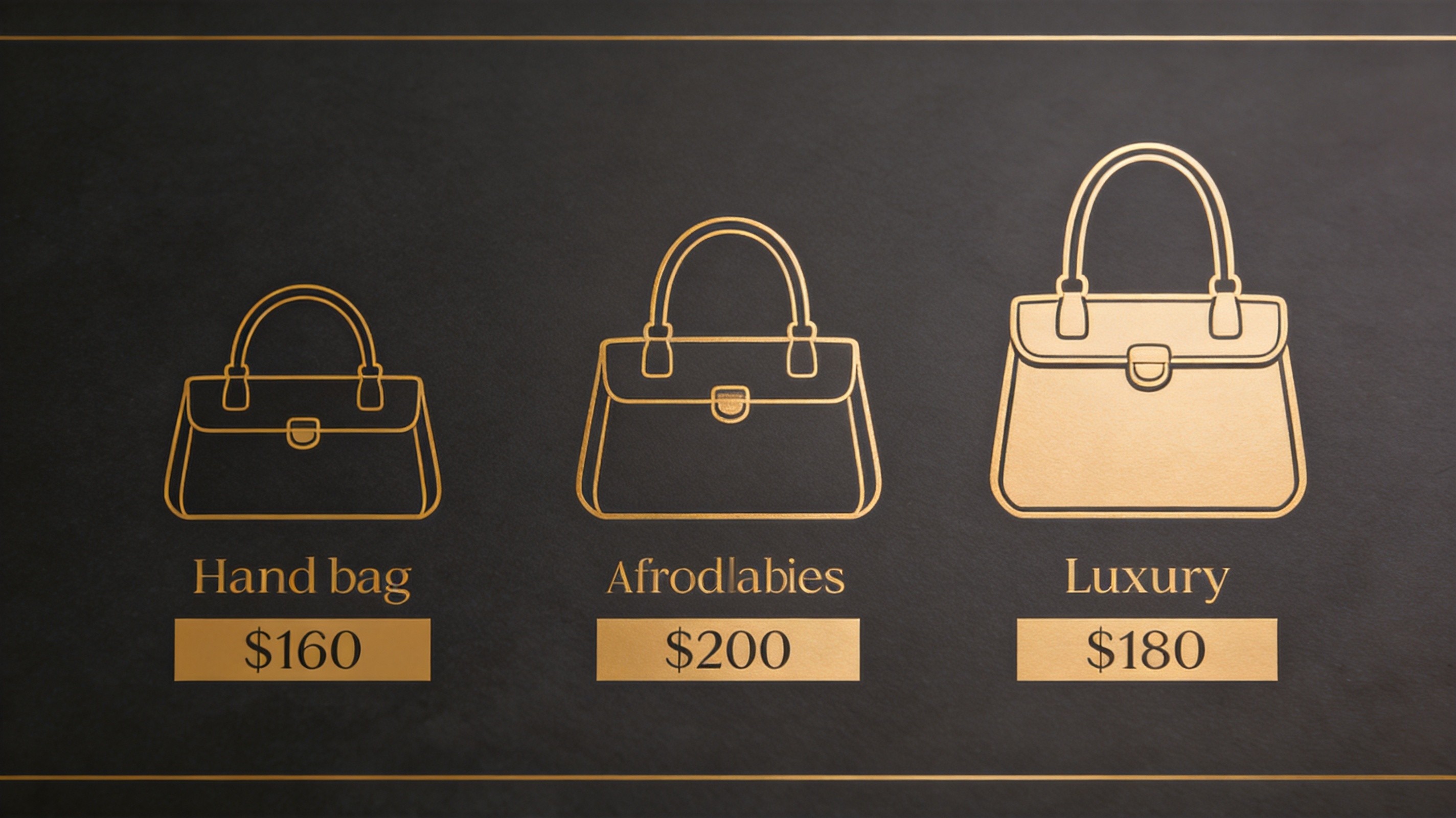
Systematic pricing analysis ensures every product contributes to overall business profitability
For personalized pricing guidance for your specific handbag line, our team is available to discuss your cost structure and recommend optimal pricing strategies. Reach out on WhatsApp at +86 17750020688 or email service@junyuanbags.com. Our 20+ years of manufacturing experience helps you understand the true cost of quality handbag production and how to structure pricing that supports both profitability and growth.
Need Quality Handbags at Prices That Support Healthy Margins?
Our factory delivers premium quality at competitive prices, enabling DTC brands to maintain 50%+ margins. 200-piece MOQ, transparent pricing, and 20+ years of expertise.
WhatsApp: +86 17750020688 | Email: service@junyuanbags.com
MOQ: 200 pcs/style | Factory: 30,000 sqm, Quanzhou, China
Frequently Asked Questions
What is the typical markup for private label handbags?
DTC brands typically use 4x to 6x markup on landed cost. For wholesale, 2.5x to 3.5x markup. A $10 landed cost bag retails at $40-$60 DTC or $25-$35 wholesale.
What percentage of selling price should product cost represent?
For DTC, total landed cost should be 15-25% of retail selling price. For wholesale, 35-45%. If product cost exceeds 30% of DTC price, optimize sourcing or increase pricing.
Should I price differently on Amazon versus my own website?
Maintain the same customer-facing price across channels. The margin structure differs (Amazon takes 30%+ in fees, Shopify 3-5%), but consistent pricing protects brand integrity.
When should I offer discounts?
Strategically: new customer acquisition (10-15%), seasonal events, slow inventory clearance, and bundle deals. Limit promotional periods to 7-14 days and maintain full pricing 70%+ of the year.
How do I calculate the minimum profitable selling price?
Add all costs: landed cost + platform fees + marketing CPA + returns cost + overhead. Divide by (1 - target margin). Example: $21 total cost at 20% margin target = $26.25 minimum price.
Limitations and Scope of This Guide
This guide covers pricing strategies for private label handbags to ensure profitability, including cost-plus, value-based, and competitive pricing approaches. It is based on our experience as a handbag manufacturer in Quanzhou, China, serving brands worldwide since 2004. Key limitations to keep in mind:
- Pricing frameworks are applicable to brands manufacturing in China and selling in Western markets. Different sourcing or selling regions require adjusted cost structures.
- Margin benchmarks reflect industry averages for DTC and wholesale. Luxury brands, mass-market, and promotional categories have different margin expectations.
- This guide covers pricing strategy, not accounting. Tax implications, currency exchange risk, and full P&L management require professional financial advice.
For advice tailored to your specific situation, contact our team directly.