Table of Contents
- Why Material Testing Before Bulk Orders Is Non-Negotiable
- Leather Durability Tests — Abrasion, Tensile and Tear Strength
- Fabric Testing — Rub Count, Pilling and Color Fastness
- Hardware Testing — Salt Spray, Pull Strength and Cycle Tests
- Lining Material Tests — Seam Slippage and Wash Fastness
- Zipper and Closure Endurance Testing
- Strap and Handle Load Testing Methods
- Color Fastness — Light, Water and Rub Tests Explained
- Water Resistance and Waterproof Testing
- Cold and Heat Resistance for Different Markets
- How to Request Testing from Your Factory
- Third-Party Testing Labs — SGS, Bureau Veritas, Intertek
- Reading and Understanding Test Reports
- Setting Acceptable Quality Thresholds for Your Brand
- Cost and Timeline for Material Testing
- Frequently Asked Questions
Placing a bulk handbag order without testing material durability first is one of the most expensive mistakes a brand owner can make. A single failed material — a leather that cracks after three months, a fabric that pills within weeks, hardware that tarnishes — can result in thousands of defective units, costly returns, damaged retailer relationships, and irreparable brand reputation damage. The cost of comprehensive pre-production testing, typically $500 to $2,000, is trivial compared to the risk of a $50,000 production order built on untested materials.
This guide provides a complete framework for testing every material in your handbag before committing to bulk production. You will learn exactly which tests to request, what quality thresholds to set, how to work with testing laboratories, and how to interpret test reports with confidence. Whether you are a first-time brand owner or an experienced buyer expanding your product range, this guide ensures your materials perform as expected throughout the product lifecycle. For related quality topics, see our stitching quality standards guide.
Professional material testing identifies durability issues before they become costly production failures
Why Material Testing Before Bulk Orders Is Non-Negotiable
Material specifications on paper tell only part of the story. Two leathers both described as "1.2mm full-grain cowhide" can perform dramatically differently depending on tannage quality, fiber density, and finishing processes. Two nylon fabrics with identical weight specifications can show completely different abrasion resistance based on yarn quality and weave density. Physical testing is the only reliable way to verify that materials meet your durability requirements.
The Cost of Skipping Testing
Consider the economics: a 2,000-piece handbag order at $35 per unit represents $70,000 in production investment. If a leather finish fails after six months of customer use, the brand faces product recalls, replacement costs, retailer chargebacks, and customer trust erosion. The total cost can exceed 5 times the original production investment. Pre-production testing at $500 to $2,000 represents an insurance premium of less than 3 percent against this risk. Our quality control services include material testing coordination as part of production management.
When Testing Reveals Problems
Testing before production allows you to reject non-conforming materials, negotiate better specifications with suppliers, or adjust your design to accommodate material limitations. These adjustments are infinitely less costly than discovering problems after 2,000 bags are already manufactured and shipped.
Leather Durability Tests — Abrasion, Tensile and Tear Strength
Leather is the most expensive material in most handbag constructions, and its durability directly determines product lifespan. A comprehensive leather testing panel should cover the following key parameters.
Abrasion Resistance
The Taber abrasion test (ASTM D1044) and the IUF 403 leather abrasion test measure how well the leather surface withstands rubbing and scraping. A premium bag leather should withstand a minimum of 50,000 cycles on the Taber test with less than 10 percent haze increase. For IUF 403, the test runs for 500 cycles with a specified abrasive wheel, and the surface should show no visible damage. Color loss during abrasion is evaluated separately using the gray scale rating system.
Tensile Strength and Elongation
Tensile testing (ISO 3371) measures the force required to break the leather and how much it stretches before breaking. Premium bag leather should demonstrate a minimum tensile strength of 10 N/mm and elongation of 40 to 80 percent at break. Lower values indicate weak fiber structure or over-processing during tanning. The ratio of tensile strength to elongation indicates the leather's character — high strength with low elongation suggests stiff, boardy leather, while low strength with high elongation indicates soft, potentially weak material.
Tear Load
Tear testing (ISO 3377) measures the force required to propagate a tear in the leather. This is particularly important for handbag leather because stress concentrations at stitch holes and hardware attachment points create tear initiation sites. Minimum tear load for bag leather should be 30 N for leather up to 1.2mm thickness and 40 N for thicker leathers.

Standardized testing equipment evaluates leather performance under controlled conditions
Fabric Testing — Rub Count, Pilling and Color Fastness
For handbags using fabric materials — canvas, nylon, polyester, or blends — different testing protocols apply. Fabric testing focuses on surface durability, appearance retention, and color stability.
Wyzenbeek and Martindale Rub Tests
The Wyzenbeek test (ASTM D4157) is the standard for the North American market, while Martindale (ISO 12947-2) serves European and Asian markets. Both tests measure fabric abrasion resistance through repeated rubbing cycles. For handbag fabric, minimum performance should be 30,000 double-rubs for Wyzenbeek or 20,000 cycles for Martindale. Premium bags should target 50,000+ cycles. Failure occurs when two yarn breaks appear or a hole forms in the fabric.
Pilling Resistance
Pilling occurs when loose fibers tangle on the fabric surface, creating small balls of fiber that degrade appearance. The Martindale pilling test (ISO 12945-2) evaluates this tendency. Fabric for handbags should achieve a minimum grade 3 on the 1-to-5 pilling scale, where 5 represents no pilling and 1 represents severe pilling. Blended fabrics with synthetic components tend to pill more than pure natural fiber fabrics.
Hardware Testing — Salt Spray, Pull Strength and Cycle Tests
Metal and plastic hardware components require specific testing protocols that evaluate corrosion resistance, mechanical strength, and functional durability.
Salt Spray Testing
The salt spray test (ASTM B117) evaluates the corrosion resistance of metal hardware finishes. Hardware is placed in a chamber with a continuous salt fog at 35 degrees Celsius. The number of hours before visible corrosion appears determines the rating. Standard fashion hardware should withstand 48 hours minimum. Premium hardware requires 72 to 96 hours. Luxury-grade hardware with PVD coating should exceed 200 hours. The test reveals whether plating thickness, adhesion, and coverage are adequate for the product's expected lifespan.
Pull Strength Testing
Pull testing measures the force required to detach hardware from the bag material. Snap hooks, D-rings, and magnetic closures are tested to specified pull forces. Standard requirements: snap hooks minimum 80N, D-rings minimum 100N, magnetic snap backing plates minimum 50N attachment force. Hardware should withstand these forces without detachment or material tearing. For more on hardware quality, see our hardware guide.
| Hardware Component | Test Method | Standard Requirement | Premium Requirement | Cycle Count |
|---|---|---|---|---|
| Metal Zippers | Salt spray (ASTM B117) | 48 hours | 96 hours | N/A |
| Turn-Lock Finish | Salt spray + cycle test | 72 hours | 200 hours | 10,000 rotations |
| Snap Hook | Pull strength + cycle | 80N pull | 120N pull | 5,000 cycles |
| Magnetic Snap | Pull + shear test | 50N attachment | 80N attachment | 8,000 press cycles |
| Chain Strap | Pull + flex test | 150N pull | 250N pull | 10,000 flex cycles |
| Feet Studs | Pull + abrasion | 30N pull | 50N pull | N/A |
Professional tensile testing equipment provides precise material strength data
Lining Material Tests — Seam Slippage and Wash Fastness
Lining materials face different stress patterns than exterior materials. They experience friction from contents, stress at seam lines, and exposure to hand oils and cosmetics. Testing should reflect these specific conditions.
Seam Slippage Test
The seam slippage test (ASTM D434) measures whether fabric lining pulls away from stitch lines under load. This is critical because lining failure at seams is one of the most common warranty claims. The test applies a specified force perpendicular to the seam and measures gap formation. Maximum allowable slippage for handbag lining is 3mm at the rated load.
Color Fastness to Crocking
Lining materials that transfer color to bag contents create immediate customer complaints. The crocking test (AATCC 116) measures color transfer under rubbing. Both dry and wet crocking should achieve grade 4 or higher on the 1-to-5 gray scale. This test is particularly important for dark-colored linings.
Zipper and Closure Endurance Testing
Zippers are among the most failure-prone components in handbags. Testing should evaluate both the zipper element and the slider mechanism under realistic use conditions.
Zipper Cycle Testing
Zipper cycle testing opens and closes the zipper repeatedly under specified load and speed conditions. Metal zippers should withstand 5,000 cycles without tooth damage or slider failure. Molded plastic zippers should achieve 3,000 cycles. Coil zippers should achieve 4,000 cycles. The test reveals manufacturing defects in tooth alignment, slider fit, and stop attachment.
Slider Retention Test
This test measures whether the zipper slider holds securely when subjected to lateral force. A weak slider can pop open during use, exposing bag contents. The test applies force perpendicular to the zipper direction and measures the force required to open the slider. Minimum retention force should be 30N for handbag applications.
Strap and Handle Load Testing Methods
Straps bear the entire weight of the bag and its contents. Failure results in the bag dropping, potentially damaging contents and creating customer injury risk. Load testing should exceed realistic use conditions by a significant safety margin.
Static Load Test
The strap is loaded with 3 times the rated bag capacity and held for 24 hours. The strap must show no signs of failure, excessive stretching (more than 10 percent permanent elongation), or attachment point separation. For a bag rated at 5kg capacity, the test load would be 15kg.
Dynamic Drop Test
The loaded bag is dropped from a height of 60cm onto a hard surface, simulating the shock of the bag being set down forcefully. The test is repeated 4 times, once for each face. Straps and attachment points must withstand the impact without breaking or detaching. This test identifies weaknesses in strap attachment that static loading alone would not reveal.
Dynamic load testing simulates real-world conditions that straps encounter during daily use
Color Fastness — Light, Water and Rub Tests Explained
Color fastness testing evaluates how well a material retains its color when exposed to various environmental factors. For handbags sold in different climates and used in different conditions, multiple color fastness tests are essential.
Color Fastness to Light
The Xenon arc test (ISO 105-B02) simulates sunlight exposure to evaluate fading resistance. Materials are exposed for 20 to 80 hours (depending on the rating required) and compared to blue wool standards. Handbag exterior materials should achieve minimum grade 4 for indoor use and grade 5 for bags marketed for outdoor or tropical use. This test is critical for light-colored leathers and printed fabrics that show fading most obviously.
Color Fastness to Water
Water fastness (ISO 105-E01) evaluates color change and staining when the material is wetted and dried. This matters for bags used in rainy climates or placed on wet surfaces. The material is wetted with artificial sweat or water, pressed against a multi-fiber test fabric, and dried. Color change on the sample and staining on the adjacent fabric are both rated. Minimum grade 3 for water fastness is acceptable for most bag materials.
Color Fastness to Rubbing
The crocking test (ISO 105-X12) measures color transfer when the material surface is rubbed. Both dry rubbing and wet rubbing are tested. For handbag leather and fabric, dry rubbing should achieve grade 4 minimum and wet rubbing grade 3 minimum. Lower ratings indicate that color transfers to clothing or other surfaces during contact — a common customer complaint.
Water Resistance and Waterproof Testing
Depending on your brand positioning and target market, water resistance may be an important performance requirement. Testing methods vary by the level of protection claimed.
Surface Water Repellency
The spray test (AATCC 22) evaluates how well a fabric surface repels water. Water is sprayed onto the fabric surface, and the pattern of wetting is rated on a 0-to-100 scale. A rating of 90 or above indicates excellent water bead-up and roll-off. This test applies to fabrics with water-repellent treatments but not to materials claimed as waterproof.
Hydrostatic Pressure Test
For materials claimed as waterproof, the hydrostatic pressure test (ISO 811) measures the water pressure the material can withstand before leaking. Water is applied to one side of the material at increasing pressure. The pressure at which three drops appear on the opposite side is recorded. For handbag applications, 1,000mm hydrostatic pressure provides rain resistance. 5,000mm and above provides protection in heavy downpour conditions.
Colorfastness tests simulate years of UV exposure in accelerated testing conditions
Cold and Heat Resistance for Different Markets
Handbags sold in extreme climates face different material challenges. A bag used in Scandinavian winter experiences temperatures below -20 degrees Celsius, while a bag in the Middle East faces interior temperatures exceeding 60 degrees Celsius when left in sunlight.
Cold Crack Test
Materials are conditioned at -10, -20, or -30 degrees Celsius (depending on market requirements) and then flexed. The material should show no cracking, splitting, or stiffening beyond acceptable limits. This test is critical for leather, PU coating, and plastic components. Vinyl and PU-coated materials are particularly vulnerable to cold cracking if plasticizer content is inadequate.
Heat Resistance Test
Materials are exposed to 60 to 80 degrees Celsius for 24 hours and evaluated for dimensional change, surface damage, color change, and adhesive failure. Heat can cause PU coatings to become sticky, adhesives to soften, and materials to shrink or warp. This test is particularly important for bags bonded with adhesive rather than sewn construction.
How to Request Testing from Your Factory
Professional factories like ours with 20+ years of experience and established quality control systems can coordinate material testing efficiently. Here is how to request and manage testing effectively.
Testing Request Process
- Submit Test Requirements: Provide a testing specification sheet listing every material, component, and test method required for your order
- Factory Collects Samples: The factory prepares test samples from the exact materials designated for your production run
- Sample Submission: Samples are sent to the designated testing laboratory (in-house or third-party)
- Testing Execution: The laboratory performs all specified tests under controlled conditions
- Report Delivery: Test reports with pass/fail results are delivered to the factory and the buyer
- Production Authorization: Only after all tests pass is bulk production authorized
Request that your factory provide test samples from production-intent materials, not "golden samples" specially prepared for testing. This ensures test results represent actual production quality. Our quality control team provides transparent testing coordination for all client orders.
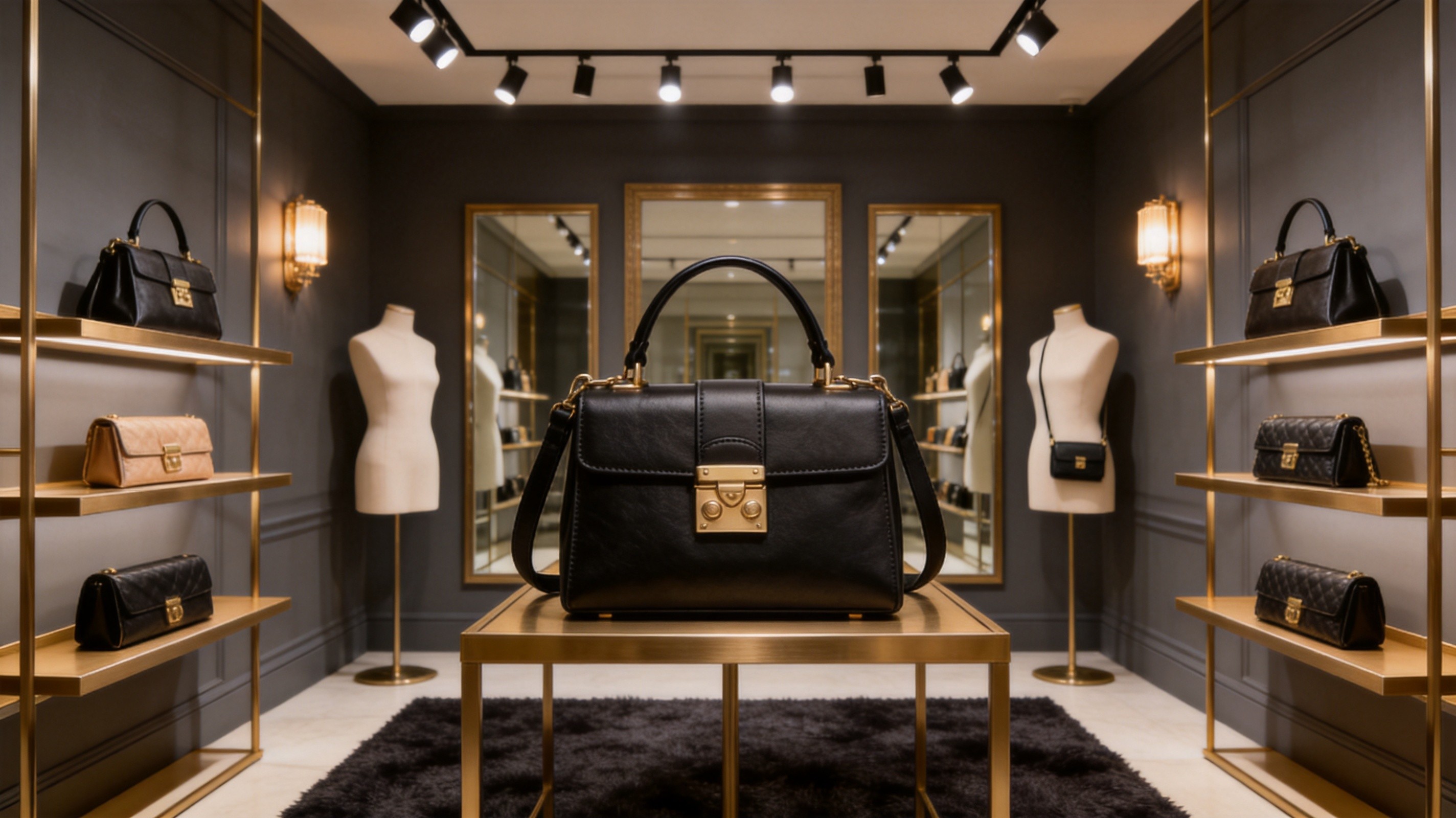
Professional testing laboratories provide standardized, repeatable results for material quality verification
Third-Party Testing Labs — SGS, Bureau Veritas, Intertek
Third-party testing provides independent verification that carries credibility with retailers, regulators, and consumers. The three major international testing organizations all maintain significant operations in China.
| Laboratory | China Locations | Strength | Typical Cost | Turnaround |
|---|---|---|---|---|
| SGS | Guangzhou, Shenzhen, Xiamen, Shanghai | Largest network, comprehensive testing | $80 – $250/test | 5 – 10 days |
| Bureau Veritas | Shanghai, Guangzhou, Shenzhen | European compliance expertise | $90 – $280/test | 5 – 12 days |
| Intertek | Hong Kong, Shanghai, Guangzhou | North American market standards | $70 – $220/test | 5 – 10 days |
| TUV Rheinland | Guangzhou, Shanghai | German/European certifications | $100 – $300/test | 7 – 14 days |
Choosing the Right Lab
For handbag materials, SGS offers the most comprehensive testing portfolio and the fastest turnaround in China's major manufacturing regions. Bureau Veritas provides strong expertise for brands targeting European retail where REACH compliance documentation is critical. Intertek excels in testing for brands targeting the North American market with CPSC and California Proposition 65 requirements. Select the lab that aligns with your primary market compliance needs.
Reading and Understanding Test Reports
Test reports from professional laboratories follow standardized formats. Understanding the key elements ensures you can interpret results accurately and make informed decisions about material acceptance.
Key Report Elements
- Test Method Reference: The international standard used (ISO, ASTM, AATCC, etc.)
- Sample Description: Material type, color, supplier, and identifying information
- Test Conditions: Temperature, humidity, duration, and equipment used
- Results: Numerical values or pass/fail determinations with comparison to requirements
- Conclusion: Pass or fail against specified requirements
- Accreditation Marks: CNAS, ILAC, or other accreditation body logos confirming lab credentials
Common Pitfalls in Report Reading
Watch for tests conducted on different conditions than specified (e.g., 24-hour salt spray when 72 hours was required). Verify that the sample description matches your actual material, not a similar substitute. Check that the test method version is current. If any result is borderline, request the raw data rather than relying solely on the pass/fail conclusion.
Setting Acceptable Quality Thresholds for Your Brand
Quality thresholds should reflect your brand positioning, price point, and target customer's expected product lifespan. A $100 promotional bag and a $800 luxury bag require different testing standards.
Threshold Recommendations by Price Tier
| Test Parameter | Budget ($50–$150) | Mid-Tier ($150–$400) | Premium ($400–$800) | Luxury ($800+) |
|---|---|---|---|---|
| Leather Abrasion | 20,000 cycles | 40,000 cycles | 60,000 cycles | 100,000 cycles |
| Fabric Rub Count | 15,000 | 30,000 | 50,000 | 80,000+ |
| Salt Spray (hardware) | 24 hours | 48 hours | 96 hours | 200+ hours |
| Color Fastness to Light | Grade 3 | Grade 4 | Grade 4-5 | Grade 5 |
| Zipper Cycles | 2,000 | 4,000 | 6,000 | 10,000+ |
| Strap Load (safety factor) | 2x rated | 3x rated | 4x rated | 5x rated |
Cost and Timeline for Material Testing
Understanding the investment and time required for material testing helps you plan your product development calendar effectively and budget appropriately.
Budget Planning
A comprehensive testing panel for a typical handbag with leather exterior, fabric lining, metal hardware, and zipper closure costs approximately $800 to $1,500 at a third-party laboratory. This includes leather testing ($300–$500), fabric testing ($150–$300), hardware testing ($200–$400), and zipper testing ($150–$300). Factory in-house testing reduces costs by 30 to 50 percent but lacks the independent verification that third-party testing provides.
Timeline Integration
Build 3 to 4 weeks into your product development timeline for testing: 5 to 7 days for sample preparation and courier shipping to the laboratory, 7 to 15 days for test execution and report preparation, and 3 to 5 days for report review and decision-making. If any test fails, add 2 to 3 weeks for replacement material sourcing and re-testing. Our production planning team integrates testing timelines into every order schedule. Learn more about our production management approach.
Need Comprehensive Material Testing for Your Handbag Order?
Our quality control team coordinates all material testing with accredited laboratories, manages the testing timeline, and ensures only approved materials enter production. With 30,000 sqm of factory space and 300+ workers, we maintain in-house testing capability plus established relationships with SGS, Bureau Veritas, and Intertek. MOQ starts at 200 pcs/style.
Email: service@junyuanbags.com | WhatsApp: +86 17750020688
Request a QuoteFrequently Asked Questions
How much does material testing cost for a handbag order?
Comprehensive testing costs $500 to $2,000 depending on materials and tests required. Leather testing ranges $80–$200 per test, fabric testing $50–$150, and hardware testing $100–$300. Third-party labs charge more than factory in-house labs but provide internationally recognized certificates.
How long does material testing take before bulk production can begin?
Standard testing requires 7 to 15 business days from sample receipt to report delivery, plus 3 to 5 days for sample shipping. A complete testing panel typically takes 10 to 20 business days total. Rush testing is available at 50 percent premium.
What are the most critical tests for leather used in handbags?
The most critical tests are abrasion resistance (ISO 105-X12), tensile strength (ISO 3371), tear load (ISO 3377), color fastness to light (ISO 105-B02), and grain crack assessment (ISO 3379). REACH compliance testing is also essential for regulated markets.
Which third-party testing labs are best for handbag materials?
SGS, Bureau Veritas, and Intertek are the three most recognized labs for handbag materials. All have facilities in China with handbag testing expertise. SGS has the largest network, Bureau Veritas excels in European compliance, and Intertek leads in North American testing standards.
Should I test materials before or after approving the pre-production sample?
Test materials before approving the pre-production sample. Test results should be available and passed before bulk production is authorized. If testing occurs after PP sample approval, test failures require re-sampling and cause significant delays.
Continue Exploring
Deepen your quality knowledge with our related guides: Leather Grades Complete Guide, Thread and Stitching Standards, and Quality Control in Handbag Factories. Visit our about page to learn about our QC systems or contact us for testing support.
Limitations and Scope of This Guide
This guide covers testing material durability before placing bulk handbag orders, including abrasion, tensile, colorfastness, and environmental testing methods. It is based on our experience as a handbag manufacturer in Quanzhou, China, serving brands worldwide since 2004. Key limitations to keep in mind:
- Testing standards referenced (ISO, ASTM, AATCC) are international norms. Specific markets may require compliance with different or additional standards.
- Lab testing provides accelerated data but cannot perfectly predict real-world durability. Consumer use patterns vary widely and are hard to simulate completely.
- Testing costs and turnaround times are approximate. Third-party labs have different pricing, and rush testing typically incurs premium charges.
For advice tailored to your specific situation, contact our team directly.