Table of Contents
The leather handbag market generated over $275 billion in global revenue in 2024, and the material grade you choose directly determines your product quality, pricing structure, and brand positioning. Yet the terminology used in the leather industry — full-grain, top-grain, genuine, bonded — remains one of the most confusing aspects for emerging brand owners. Misunderstanding these terms can lead to costly sourcing errors, quality inconsistency, and brand reputation damage.
This guide eliminates the confusion with a comprehensive, factory-level breakdown of every major leather grade used in handbag manufacturing. By the end, you will know exactly which grade suits your brand positioning, how to verify quality when ordering from suppliers, and how to specify leather requirements in your production contracts.
Full-grain leather displays natural markings that reflect the hide's authentic character
What Is Full-Grain Leather?
Full-grain leather represents the highest quality tier available for handbag manufacturing. It is the complete outer layer of the hide, left entirely intact without sanding, buffing, or snuffing to remove natural imperfections. The grain layer — the densest, strongest portion of the hide — remains completely undisturbed.
Manufacturing Process
After tanning (whether vegetable or chrome tannage), the hide undergoes minimal surface treatment. It may receive a light conditioning or dye, but the surface is never altered mechanically. This preserves the full fiber structure that gives full-grain leather its exceptional strength and characteristic patina development.
Visual Characteristics
Full-grain leather displays natural markings including pores, occasional scars, insect bites, and wrinkle patterns. These are not defects — they are evidence that the full grain layer remains intact. No two pieces look identical, which adds exclusivity to limited-production handbag lines.
Why Premium Brands Choose Full-Grain
The untouched fiber structure provides several advantages: superior tensile strength, natural water resistance, breathability, and the ability to develop a rich, deepening patina over years of use. Brands like Hermès and Bottega Veneta use full-grain leather almost exclusively, and its aging qualities become a key part of their value proposition.
Skilled artisans work with full-grain leather to create premium handbags that age beautifully
Top-Grain Leather Explained
Top-grain leather is the second-highest grade, produced by sanding or buffing the outermost surface of the hide to remove natural imperfections. After this correction process, the leather typically receives an embossed pattern and a protective finish coating. This creates a more uniform, consistent appearance that many consumers associate with a polished, refined aesthetic.
The Correction Process
During correction, the topmost 0.2–0.4mm of the grain surface is mechanically removed. This eliminates scars, stretch marks, and other natural markings. The resulting surface is then embossed — often with a simulated grain pattern — and sealed with a finish that provides stain resistance and color consistency.
Advantages for Bag Manufacturing
Top-grain leather offers several practical benefits for handbag brands. It provides more consistent color across production batches, which simplifies quality control. The surface finish resists staining better than full-grain. It can be produced in larger usable yields since imperfections are removed. And it costs significantly less than full-grain while still being real, quality leather.
Limitations
The sanding process reduces fiber density at the surface, which means top-grain leather will not develop the same depth of patina as full-grain. The protective finish coating can also create a less natural feel. Over extended use (typically 3–5+ years), the surface coating may show wear patterns differently than full-grain leather.
Genuine Leather Defined
The term "genuine leather" creates more confusion than any other in the industry. Technically, it means real leather — as opposed to synthetic or bonded materials. However, in the leather grading hierarchy, "genuine leather" refers to the lowest tier of real leather commonly used in consumer goods.
Production Method
Genuine leather is typically produced from the remaining layers of the hide after the top portions are separated for full-grain and top-grain production. These inner layers, called splits, have a much looser fiber structure. They may be sanded and finished with heavy coatings, embossed patterns, or used as suede.
Performance Characteristics
While genuine leather is real animal hide, its performance falls significantly below higher grades. The fiber structure is looser, meaning less tensile strength and abrasion resistance. Heavy surface coatings can crack and peel over time. The material does not develop an attractive patina — instead, it tends to look worn and deteriorated.
Important Distinction
When a product is labeled simply as "genuine leather" without specifying the grade, it typically means the manufacturer is using the lowest real-leather tier. Premium brands never label products as "genuine leather" — they specify "full-grain" or "top-grain" because those designations communicate quality. If you see only "genuine leather," approach with appropriate caution.
Grade Comparison Chart
Understanding the differences between leather grades requires examining multiple dimensions simultaneously. The following comparison matrix provides a comprehensive overview across the factors most relevant to handbag brand owners.
| Attribute | Full-Grain | Top-Grain | Genuine Leather |
|---|---|---|---|
| Grain Layer | 100% intact | Partially sanded | Removed or split layer |
| Fiber Density | Maximum | High (reduced surface) | Moderate to low |
| Thickness Range | 1.2–1.8mm typical | 1.0–1.4mm typical | 0.8–1.2mm typical |
| Surface Finish | Natural, unfinished | Embossed + coated | Heavy coating or suede |
| Natural Markings | Visible and preserved | Removed | Removed or absent |
| Patina Development | Excellent, deepens with age | Limited | Poor, deteriorates |
| Expected Lifespan | 15–30+ years | 8–15 years | 2–5 years |
| Water Resistance | Natural (absorbs some) | Good (coated surface) | Varies by finish |
| Breathability | Excellent | Moderate | Low to moderate |
| Cost (per sq ft) | $8–15 | $5–10 | $2–5 |
Durability and Aging
Durability is the most commercially significant difference between leather grades. A handbag's ability to maintain structural integrity and visual appeal over years of daily use directly impacts customer satisfaction, brand reputation, and the likelihood of repeat purchases.
Tensile Strength
Full-grain leather demonstrates the highest tensile strength because the complete, undisturbed grain layer provides maximum fiber density. Standard testing shows full-grain bag leather typically withstands 15–25 Newtons per millimeter of width before tearing, compared to 8–15 N/mm for top-grain and 4–8 N/mm for genuine leather splits.
Abrasion Resistance
The Martindale abrasion test reveals significant differences. Full-grain leather endures 50,000+ cycles before visible wear, top-grain manages 20,000–40,000 cycles, and genuine leather often shows deterioration below 10,000 cycles. For handbags that encounter daily contact with surfaces, keys, and other objects, abrasion resistance is critical.
Patina vs Deterioration
One of the most misunderstood aspects of leather aging is the difference between patina and deterioration. Full-grain leather develops a patina — a soft, luminous surface sheen that deepens in color and character with use. This is considered desirable and adds value. Top-grain leather's finish may slowly wear, revealing the corrected surface beneath. Genuine leather tends to crack, peel, or discolor in ways that are clearly deterioration rather than attractive aging.
Full-grain leather develops an increasingly attractive patina that enhances the bag's character over time
Cost Differences
Material cost is one of the largest variables in handbag production, and leather grade is the primary driver. Understanding the full cost picture — not just per-square-foot pricing — is essential for accurate margin calculations.
| Cost Factor | Full-Grain | Top-Grain | Genuine Leather |
|---|---|---|---|
| Material per sq ft | $8–15 | $5–10 | $2–5 |
| Material per standard tote | $120–300 | $75–200 | $30–100 |
| Yield efficiency | 70–80% | 80–90% | 85–95% |
| Waste factor | Higher (natural defects) | Moderate | Lower (uniform material) |
| Minimum order impact | High (premium hides) | Moderate | Low |
| Suggested retail multiplier | 8–12x material cost | 6–10x | 4–6x |
The total cost picture is more nuanced than per-square-foot pricing alone suggests. Full-grain leather has lower yield efficiency because cutting patterns must work around natural markings. However, the higher perceived quality supports significantly higher retail pricing, which often results in better gross margins at the brand level.
How to Identify Each Grade
Being able to identify leather grade by visual and tactile inspection is an essential skill for brand owners conducting factory visits or reviewing production samples.
The Water Drop Test
Place a small drop of water on the leather surface. On full-grain leather (especially vegetable-tanned), the water will be absorbed within 5–15 seconds, darkening the spot temporarily. On top-grain leather with a heavy finish coating, the water will bead and sit on the surface longer. This test helps distinguish natural surfaces from heavily coated ones.
Edge Inspection
Examine the cut edge of the leather. Full-grain shows a tight, dense fiber structure that transitions smoothly from the smooth grain surface. Top-grain may show a slight density change near the surface where correction occurred. Genuine leather (especially splits) shows progressively looser fibers moving from the surface into the interior.
Flex Test
Gently flex the leather and observe the surface. Full-grain develops fine wrinkles that reflect light differently, showing natural fiber movement. Top-grain may show more uniform creasing from the embossed pattern. Low-grade leather can show cracking or whitening at flex points if the coating is too thick or poorly bonded.
Inspecting the cut edge reveals fiber density differences between leather grades
Best Uses by Grade
Each leather grade has ideal applications in handbag manufacturing. Choosing the right grade for your product category is more important than simply selecting the highest grade available.
Full-Grain Applications
- Luxury and heritage-positioned handbag brands
- Products marketed with lifetime or multi-decade durability claims
- Vegetable-tanned goods where patina is a selling feature
- Small-batch, artisan-produced collections
- Unlined or partially lined bags where interior leather quality matters
Top-Grain Applications
- Mid-to-high-tier fashion handbag brands
- Products requiring consistent color across large production runs
- Structured handbags that benefit from uniform material behavior
- Brands targeting the $200–800 retail price range
- Seasonal collections where color consistency is critical
Genuine Leather Applications
- Entry-level leather goods where "real leather" is a marketing differentiator over synthetics
- Interior components, non-structural panels, or decorative elements
- Promotional or gift-with-purchase items
- Products targeting price-sensitive markets under $100 retail
Sourcing from Factories
Reliable leather sourcing is one of the most critical aspects of handbag manufacturing. The relationship between brand owners and their leather suppliers — often mediated through the factory — determines consistency, quality, and ultimately your brand's reputation.
Supplier Qualification
When evaluating a factory's leather sourcing capabilities, request documentation for their tannery partnerships. Reputable factories work with established tanneries that provide consistent quality, proper certifications (such as Leather Working Group audits), and traceable supply chains. Ask to see the tannery's test reports for key performance indicators.
Sampling Process
Before committing to production, always request leather strike-offs (color and finish samples) and physical test swatches. Evaluate hand-feel, thickness, flexibility, and color accuracy. For full-grain leather, examine multiple hides from the same batch to understand the range of natural variation you should expect.
Quality Agreements
Your purchasing specification should clearly define acceptable leather parameters: thickness tolerance (±0.1mm is standard for premium), color fastness ratings, tensile strength minimums, and visual grading standards. Include provisions for rejection and replacement of non-conforming material. See our services page for detailed OEM production support.
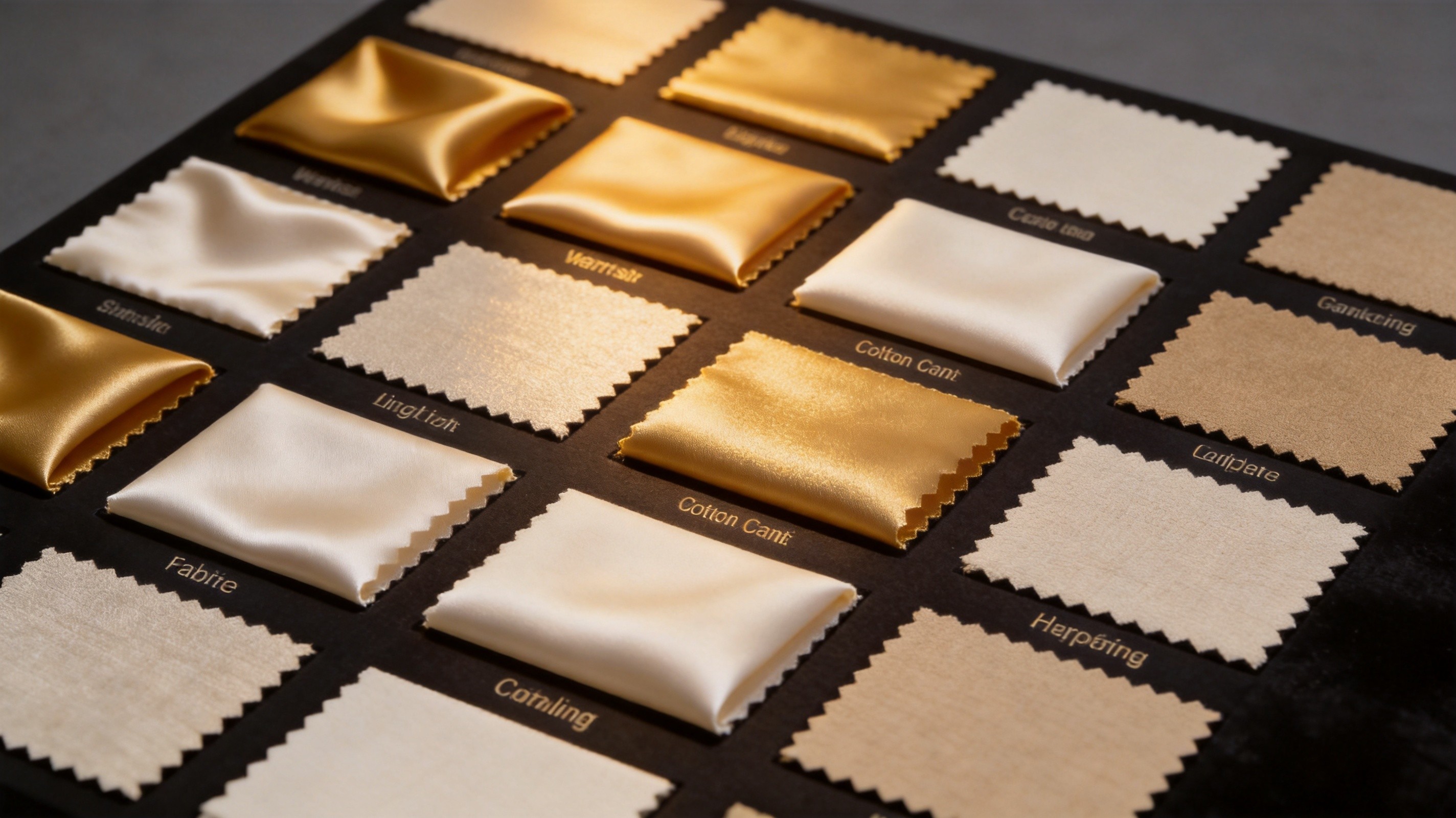
Careful evaluation of leather samples before production ensures consistent quality across your order
Quality Specifications for Orders
When placing leather handbag orders with a factory, precise specifications protect both parties and ensure the finished products meet your quality expectations. Below is a framework for leather specifications in your tech pack.
Essential Specification Fields
- Leather Type: Full-grain, top-grain, or specify split/suede
- Tannage: Vegetable, chrome, or combination
- Thickness: Target ± tolerance (e.g., 1.4mm ± 0.1mm)
- Color: Pantone reference + physical standard
- Finish: Natural, semi-aniline, corrected + coating type
- Origin: Country of hide origin if specified
- Certifications: LWG, REACH compliance, azo-free dyes
Testing Requirements
Specify which tests must pass before leather approval. Standard tests include color fastness to light (ISO 105-B02, minimum grade 4), color fastness to rubbing (ISO 105-X12, dry grade 4, wet grade 3), tensile strength and elongation (ISO 3371), tear load (ISO 3377), and grain crack assessment (ISO 3379). Your product development team can help establish appropriate test thresholds based on your market positioning.
Common Misconceptions
The leather industry is rife with misinformation. Below is a summary of the most common misconceptions and the facts that correct them.
| Misconception | Reality |
|---|---|
| "Genuine leather means high quality" | "Genuine leather" only means real animal hide — it is the lowest grade used in handbags |
| "Full-grain is always better than top-grain" | "Better" depends on brand needs — top-grain may be more commercially appropriate for $300–600 retail |
| "Italian leather is a grade" | "Italian leather" refers to geographic origin, not quality grade — Italian tanneries produce all grades |
| "Thicker leather is better" | Fiber density, tannage quality, and finishing matter more than raw thickness for handbag applications |
| "All leather smells the same" | Vegetable-tanned leather has a distinct sweet, earthy scent; chrome-tanned has a different chemical character |
"Genuine Leather Means High Quality"
As explained above, "genuine leather" only means the product contains real animal hide. It is the lowest common grade and performs significantly below full-grain and top-grain. This misconception is perhaps the most damaging to consumers and emerging brand owners.
"Full-Grain Is Always Better Than Top-Grain"
While full-grain offers superior material properties, "better" depends on your brand's needs. If your brand targets the $300–600 retail range and prioritizes consistent color across seasonal production runs, top-grain may be the more commercially appropriate choice. Full-grain at a mid-tier price point creates margin pressure without proportional customer-perceived value.
"Italian Leather Is a Grade"
"Italian leather" refers to geographic origin, not quality grade. Italy does host some of the world's finest tanneries, but Italian tanneries produce leather across all grades. Always specify the grade first, then the origin. Our solutions page covers supply chain transparency in more detail.
"Thicker Leather Is Better"
Thickness correlates with durability only up to a point. A well-chosen full-grain leather at 1.2mm can outperform a poorly processed hide at 1.8mm. Fiber density, tannage quality, and finishing methods matter more than raw thickness for handbag applications.
Understanding leather grades empowers smarter sourcing decisions for your handbag brand
Leather Finish Options and Their Impact
The finish applied to leather significantly affects both aesthetics and performance. Understanding finish types helps brand owners specify the right combination of leather grade and finish for their target market:
Aniline Finish: The most natural-looking finish, using soluble dyes without opaque surface coatings. Aniline-finished leather showcases the hide's natural grain, pores, and subtle markings. This finish is exclusively applied to full-grain leather from premium hides, as any surface defects remain visible. Handbags with aniline finishes command the highest prices and appeal to consumers who value natural beauty and authenticity.
Semi-Aniline Finish: Adds a light surface coating with pigment and a protective clear topcoat. This provides more color uniformity and stain resistance while retaining much of the natural grain appearance. Semi-aniline finishes are common on high-quality top-grain leather and represent the sweet spot for premium private label brands seeking durability without sacrificing luxury appeal.
Pigmented (Corrected) Finish: An opaque surface coating that completely covers the grain surface. While this eliminates natural markings, it also eliminates the unique character that differentiates real leather from synthetic materials. Pigmented finishes are common on genuine leather and budget-grade top-grain. They offer maximum uniformity but minimal natural leather character.
Nubuck and Suede: Created by buffing the surface of the leather to raise a soft nap. Nubuck is buffed from the grain side (typically full-grain or top-grain), while suede is buffed from the flesh side. Both offer luxurious tactile qualities but require more careful maintenance. Nubuck, in particular, is prone to water spots and oil absorption.
Seasonal Care Guide for Leather Handbags
Leather responds to environmental conditions, and seasonal changes require adjusted care routines. Providing customers with seasonal care guidance reduces warranty claims and strengthens brand loyalty:
| Season | Primary Concern | Recommended Action | Product Type |
|---|---|---|---|
| Spring | Humidity changes, pollen | Light conditioning; store with silica gel packets | All-purpose leather conditioner |
| Summer | UV exposure, sweat oils, heat | Apply UV-protectant spray; avoid leaving in hot cars | UV-blocking leather spray |
| Fall | Rain, moisture transition | Apply water-repellent treatment; deep condition if dried out | Wax-based water repellent |
| Winter | Dry air, salt stains, cracking | Heavy conditioning; wipe salt immediately; humidify storage | Rich cream conditioner, leather soap |
Full-grain leather benefits most from regular conditioning because its open pore structure absorbs and releases moisture freely. Top-grain leather with semi-aniline finishes requires less frequent conditioning but still benefits from seasonal attention. Genuine leather with heavy pigmented finishes is the most forgiving but can still crack if neglected during dry winter months.
For brands selling in tropical or high-humidity climates, mold prevention becomes a critical consideration. Anti-fungal treatments can be applied during manufacturing, and storage recommendations should emphasize airflow and moisture control. The lining material selection also plays a role in moisture management within the bag interior.
How to Verify Leather Claims from Suppliers
Leather fraud is a persistent issue in the global supply chain. Suppliers may misrepresent lower grades as higher grades, or blend leather with synthetic materials while claiming "genuine leather." Brand owners need reliable verification methods:
The Smell Test: Genuine leather has a distinctive, rich smell that is nearly impossible to replicate with synthetics. While this test is subjective, experienced professionals can identify fake leather by smell with over 90% accuracy. If a sample smells chemical, plasticky, or has no discernible scent, it may contain synthetic layers.
Cross-Section Analysis: Cut a small sample and examine the cross-section under magnification. Full-grain leather shows dense, uniform fiber structure throughout. Top-grain shows a slightly disrupted surface layer. Bonded leather reveals distinct layers of fiber and adhesive. This destructive test should be performed on sample swatches, not finished products.
Water Absorption Test: Place a drop of water on the leather surface. Full-grain and aniline-finished leather absorbs water within 3-5 seconds because the pores are open. Pigmented and corrected leather resists absorption due to the surface coating. Synthetic materials show no absorption at all. This test helps verify the finish type claimed by the supplier.
Certification Verification: Request Leather Working Group (LWG) audit reports from your supplier's tannery. LWG-certified tanning facilities undergo regular third-party audits and can provide traceability documentation for their hides. Verification through the LWG online database confirms whether a tannery's certification is current and valid.
Chemical Analysis: For high-value orders, consider sending samples to a third-party laboratory for chemical composition analysis. Fourier Transform Infrared Spectroscopy (FTIR) can identify the presence of synthetic polymers mixed with natural collagen fibers, definitively proving whether a material is 100% leather or a blend. This service typically costs $150-300 per sample but provides ironclad verification for premium orders.
Building a relationship with a trusted manufacturing partner who provides transparent documentation and welcomes verification requests is the most effective long-term strategy for ensuring leather quality across all your production runs.
Ready to Source Premium Leather for Your Brand?
Our team provides end-to-end leather sourcing, quality control, and production management for private label handbag brands. MOQ starts at 200 pcs/style.
Email: service@junyuanbags.com | WhatsApp: +86 17750020688
Request a QuoteFrequently Asked Questions
What is the difference between full-grain and top-grain leather?
Full-grain leather retains the entire original grain layer with no sanding or buffing, preserving natural markings and maximum fiber density. Top-grain leather has the outermost surface sanded or buffed to remove imperfections, then typically receives an embossed finish. Full-grain is stronger, develops a richer patina, and costs 30–60% more than top-grain.
Is genuine leather real leather?
Yes, genuine leather is real leather, but it represents the lowest grade commonly used in handbags. It is produced from the lower layers of the hide after the top portions are separated for higher grades. While technically real leather, it lacks the fiber density, durability, and aging characteristics of full-grain or top-grain leather.
Which leather grade is best for premium handbags?
Full-grain leather is preferred for premium and luxury handbags due to its superior durability, natural beauty, and distinctive patina. Top-grain leather serves well for mid-to-high tier brands prioritizing consistent appearance. The ideal grade depends on your brand positioning, price point, and target aesthetic.
How can I verify leather grade when ordering from a factory?
Request cut samples and examine the cross-section for fiber density. Ask for leather specification sheets including thickness, tannage type, and finish. Reputable factories provide leather certifications and arrange third-party testing. Consider hiring a local QC inspector to verify hide selection during production.
What is the expected cost difference between leather grades?
Full-grain leather typically costs $8–15 per square foot. Top-grain ranges from $5–10 per square foot. Genuine leather costs $2–5 per square foot. For a standard handbag using 15–20 square feet, material cost ranges from $30 to $300 depending on grade chosen.
Continue Exploring
Expand your materials knowledge with our related guides: Vegan Leather vs Real Leather, PU Leather Quality Grades, and Canvas vs Leather vs Nylon Materials Compared. For hardware selection, see our Hardware Guide. Visit our about page to learn more about our manufacturing capabilities.
Limitations and Scope of This Guide
This guide covers comprehensive comparison of full-grain, top-grain, and genuine leather grades for bag brands, including properties, pricing, and applications. It is based on our experience as a handbag manufacturer in Quanzhou, China, serving brands worldwide since 2004. Key limitations to keep in mind:
- Leather grading terminology varies between tanneries and regions. The definitions here follow commonly accepted industry standards but may not match every supplier's classification.
- Price comparisons are based on comparable thickness and finish. Exotic tanning methods (vegetable-tan, chrome-free) will shift the price hierarchy.
- Durability and aging characteristics described are based on proper care. Environmental factors (humidity, sun exposure, chemical contact) significantly affect leather performance.
For advice tailored to your specific situation, contact our team directly.