Table of Contents
- Why Closure Hardware Matters for Handbag Brands
- Magnetic Closures — How They Work and Where They Excel
- Zipper Closures — Types, Materials and Performance
- Turn-Lock Closures — Classic Elegance Meets Security
- Security Comparison — Which Closure Protects Contents Best
- Durability and Lifespan of Each Closure Type
- Cost Analysis — Per-Unit Pricing for Bulk Orders
- Aesthetic Impact — How Closures Define Bag Style
- User Experience — One-Hand Operation and Accessibility
- Best Closure Choices by Bag Category
- Custom Branding Options — Logo Hardware and Finish
- Quality Standards and Testing for Closure Hardware
- Common Problems and How to Avoid Them
- How to Specify Closure Hardware to Your Factory
- Future Trends in Handbag Closure Design
- Frequently Asked Questions
Closure hardware is the single most interacted component on any handbag. Every time a customer reaches for their bag, the closure mechanism determines their experience. Beyond functionality, closures carry immense design weight — they signal quality, define style language, and communicate brand positioning at a tactile level. For private label handbag brands, choosing the right closure type is a decision that impacts manufacturing cost, production complexity, user satisfaction, and ultimately your bottom line.
This comprehensive guide examines the three dominant closure systems in handbag manufacturing: magnetic closures, zippers, and turn-locks. Each is analyzed across security, durability, cost, aesthetics, user experience, and customizability. By the end, you will have a framework for selecting the optimal closure for every bag style in your collection and the technical knowledge to specify hardware requirements confidently with your factory. For broader hardware context, our hardware guide covers additional components.
The three dominant closure systems in handbag manufacturing, each with distinct advantages
Why Closure Hardware Matters for Handbag Brands
Closure hardware sits at the intersection of form and function in handbag design. It is the component customers touch most frequently — studies of consumer behavior show that the average handbag is opened and closed between 20 and 40 times per day. This repeated interaction means closures experience more mechanical wear than any other bag component except straps.
Beyond durability, closures serve as visual anchor points. A well-chosen turn-lock can become a brand's signature element. A sleek invisible magnetic closure communicates minimalist sophistication. A high-quality metal zipper conveys urban practicality. The closure type you select communicates volumes about your brand before a customer ever looks inside the bag.
Impact on Manufacturing Complexity
Each closure type introduces different manufacturing requirements. Magnetic closures require precise positioning jigs and reinforcement backing. Zippers demand skilled sewing operations and alignment accuracy. Turn-locks require leather punching, post setting, and rotational alignment. These differences affect production time, skill requirements, and defect rates at your factory. Understanding these nuances helps you make decisions that balance design ambition with production reality. Our manufacturing services team can advise on optimal closure selection during product development.
Magnetic Closures — How They Work and Where They Excel
Magnetic closures use opposing neodymium or ferrite magnets embedded in two backing plates that attach to the bag's opening flaps. When the flaps come together, the magnets attract and hold the closure shut. The mechanism is invisible from the exterior when properly installed, creating a clean, uninterrupted design surface.
Types of Magnetic Closures
Three main types serve the handbag industry. Round magnetic snaps, typically 12mm to 18mm in diameter, are the most common. They use a post-and-tab installation method through pre-punched holes. Rectangle magnets offer a larger holding surface for heavier bags. Invisible magnetic strips embed within folded fabric edges for completely concealed closure. Each type serves different design and functional requirements.
Holding Strength Specifications
Magnetic holding strength is measured in Newtons. Standard bag magnets range from 3N to 8N of pull force. Light-duty closures for clutches and small bags use 3N to 4N magnets. Medium-duty for everyday handbags use 5N to 6N. Heavy-duty for totes and bags carrying significant contents require 7N to 8N or multiple magnet pairs. The magnet grade, size, and spacing all influence effective holding force.

A magnetic snap closure provides clean lines while maintaining secure closure
Zipper Closures — Types, Materials and Performance
Zipper closures create a continuous, interlocking seal along the bag opening. They provide the most complete enclosure among the three types and are available in numerous configurations. The zipper's versatility makes it suitable for everything from sleek clutches to rugged travel bags.
Zipper Types for Handbags
Three zipper categories dominate handbag applications. Metal zippers, made from brass, nickel, or aluminum teeth, provide premium aesthetics and excellent durability. They are the standard for luxury and mid-tier bags. Molded plastic zippers, typically Delrin or Vislon, offer lightweight performance and color versatility. They are common in sporty, casual, and travel-oriented designs. Coil zippers, made from polyester or nylon coil, provide the most flexible option and are often used in curved openings and lightweight bags.
Slider and Pull Tab Options
The slider mechanism and pull tab represent the primary customization opportunity with zipper closures. Sliders come in auto-lock, semi-auto-lock, and non-locking varieties. Auto-lock sliders engage automatically when the pull tab rests flat, preventing accidental opening. Pull tabs can be customized with branded fobs, leather extensions, metal rings, or cord pulls. The pull tab is often the first element a customer grabs, making it a key tactile touchpoint. See our detailed zipper and hardware guide for more options.
Turn-Lock Closures — Classic Elegance Meets Security
Turn-lock closures consist of a rotating plate or disc mounted on the bag flap that engages with a stationary post or catch on the bag body. A quarter-turn or half-rotation locks the mechanism. This closure type has been a hallmark of luxury handbags for decades, popularized by iconic designs from major fashion houses.
Mechanism Variations
Standard turn-locks use a simple post-and-slot mechanism with a quarter-turn engagement. Twist-locks use a cam-style rotation for tighter closure. Push-turn locks combine a push-and-turn motion for added security. Hidden turn-locks embed beneath the bag surface for a minimalist exterior appearance. Each variation offers different trade-offs between ease of use, security, and design impact.
Design Versatility
Turn-locks offer the greatest design customization potential among closure types. The visible plate serves as a canvas for brand expression. Shapes range from classic circles and rectangles to custom silhouettes. Finishes include polished gold, brushed nickel, antique brass, rose gold, gunmetal, and painted enamel. The plate surface accommodates logo embossing, engraving, or enamel fills. For brands seeking a signature hardware element, the turn-lock provides the most impactful opportunity. Explore our product collection to see turn-lock applications.
Turn-lock closures serve as signature design elements that define brand identity
Security Comparison — Which Closure Protects Contents Best
Security is a primary functional requirement for handbag closures, particularly in urban environments where pickpocketing and bag theft are real concerns. Each closure type offers different security characteristics that should be evaluated against your target customer's environment and needs.
| Security Factor | Magnetic | Zipper | Turn-Lock |
|---|---|---|---|
| Accidental Opening | Moderate risk | Very low risk | Low risk |
| Pickpocket Resistance | Low | High | Moderate |
| Full Seal Coverage | Partial (flap gap) | Complete | Partial (flap gap) |
| Tamper Evidence | None | Visible | Visible |
| Force Required to Open | Low to moderate | High | Moderate |
| Add-On Security | Limited options | Lock pulls available | Keyed locks available |
Zipper closures clearly lead in security performance. The continuous interlocking seal eliminates gaps, prevents casual hand entry, and makes covert access extremely difficult. Auto-lock sliders add another layer of protection. For bags designed for crowded urban environments, travel, or commuting, zippers should be the default choice.
Durability and Lifespan of Each Closure Type
Durability expectations vary significantly between closure types. A handbag's closure must maintain reliable function through thousands of cycles while resisting the environmental challenges of daily use.
Magnetic Closure Durability
The magnets themselves are extraordinarily durable. Neodymium magnets lose less than 1% of their strength per century under normal conditions. The failure points in magnetic closures are mechanical: the backing plate may loosen from the leather, the post-and-tab connection may fatigue, or the surrounding material may tear. With proper reinforcement and installation, magnetic closures reliably function for 5 to 10 years of daily use. The key to longevity is ensuring adequate backing plate size and proper material reinforcement around the attachment points.
Zipper Durability
Zipper lifespan depends primarily on tooth material and slider quality. Metal zippers withstand 10,000+ open-close cycles before showing wear. The slider is typically the first component to fail, as the internal mechanism wears from repeated friction. High-quality YKK or Riri sliders extend zipper life significantly. Plastic and coil zippers show lower cycle life, typically 5,000 to 8,000 cycles. Tooth damage from fabric catching is the most common failure mode.
Turn-Lock Durability
Turn-locks are the most durable closure type when manufactured correctly. The solid metal construction withstands virtually unlimited cycles without functional degradation. The post mechanism rarely fails. The primary wear point is the finish — plating may show patina or wear through on high-contact surfaces after 3 to 7 years. Using PVD coating rather than standard electroplating extends finish life by 3 to 5 times.
Quality testing of closure hardware ensures long-term reliability across thousands of use cycles
Cost Analysis — Per-Unit Pricing for Bulk Orders
Hardware cost is a significant component of total bag manufacturing cost. Closure pricing varies by material, finish, customization level, and order quantity. Understanding the true cost picture helps you make informed decisions that balance design ambition with margin requirements.
| Closure Type | Standard Range | Custom Branded | Premium/Luxury | Installation Cost |
|---|---|---|---|---|
| Magnetic Snap | $0.30 – $1.50 | $0.80 – $2.50 | N/A | $0.10 – $0.20 |
| Nylon Zipper | $0.50 – $1.50 | $1.00 – $3.00 | N/A | $0.30 – $0.60 |
| Metal Zipper (YKK) | $1.50 – $4.00 | $3.00 – $6.00 | $8.00 – $15.00 | $0.50 – $1.00 |
| Turn-Lock Standard | $1.00 – $3.00 | $2.50 – $6.00 | $8.00 – $20.00 | $0.30 – $0.50 |
| Custom Molded Turn-Lock | $3.00 – $8.00 | $5.00 – $12.00 | $15.00 – $40.00 | $0.40 – $0.80 |
Installation labor costs must be added to the hardware unit cost. Magnetic snaps require the least installation time. Zippers require moderate sewing skill and time. Turn-locks require precise punching and post setting. For a factory like ours with 300+ skilled workers and 20 years of handbag manufacturing experience, these costs are optimized through efficient production lines. Contact us at service@junyuanbags.com for specific project pricing.
Aesthetic Impact — How Closures Define Bag Style
Closure hardware contributes disproportionately to a bag's visual identity. A single closure type can shift the entire aesthetic language of a design from casual to formal, from minimalist to ornate, from contemporary to classic.
Magnetic Closures and Minimalist Design
Because magnetic closures are concealed within the bag structure, they allow designers to create uninterrupted exterior surfaces. This makes them the default choice for minimalist, architectural bag designs where clean lines and unbroken surfaces are the primary aesthetic goal. Brands like Bottega Veneta and The Row frequently use magnetic closures to maintain their signature clean aesthetic.
Zipper Closures and Urban Edge
Visible metal zippers communicate a sporty, urban, utilitarian aesthetic. The teeth pattern and slider create visual texture and mechanical interest. Exposed zippers are a signature element of brands like Celine and Alexander Wang. Zippers also enable asymmetric designs, diagonal closures, and multi-compartment architectures that define contemporary bag styling.
Turn-Locks and Heritage Luxury
Turn-locks carry strong associations with heritage luxury. The mechanism itself is a visual performance — the satisfying rotation communicates craftsmanship and intentional design. Brands from Chanel to Coach use turn-locks as signature identifiers. A well-designed custom turn-lock becomes inseparable from brand identity, creating visual recognition at a distance.
Different closure types define distinct aesthetic languages across handbag categories
User Experience — One-Hand Operation and Accessibility
The way a customer interacts with a bag closure dozens of times daily profoundly shapes their overall satisfaction. Accessibility and ease of use are particularly important considerations for bags designed for commuting, travel, or professional environments where frequent access is necessary.
One-Hand Operation
Magnetic closures excel at one-hand operation. A simple press-together motion works from any angle and requires minimal dexterity. This makes them ideal for bags used while multitasking. Standard turn-locks also support one-hand operation with practice, though they require more precise alignment. Zippers are the most challenging for one-hand use because they require one hand to stabilize the bag body while the other pulls the slider.
Accessibility for All Users
For brands targeting older demographics or users with dexterity limitations, magnetic closures provide the easiest operation. The self-aligning nature of magnets means users do not need to achieve precise positioning. Large-format magnetic snaps with strong pull force accommodate users who may have difficulty with small clasps or zipper pulls. Our solutions team can recommend accessible design options for your target market.
Best Closure Choices by Bag Category
Different bag categories naturally align with specific closure types based on their functional requirements and design conventions. The following matrix provides a starting framework, though innovative designs often benefit from breaking conventions.
| Bag Category | Primary Recommendation | Alternative | Key Consideration |
|---|---|---|---|
| Open Tote | Magnetic snap | Open top (no closure) | Quick access priority |
| Structured Satchel | Turn-lock | Magnetic + decorative | Brand signature element |
| Crossbody | Zipper | Magnetic snap | Security for active use |
| Clutch / Evening Bag | Magnetic or Turn-lock | Frame clasp | Compact, elegant design |
| Backpack | Zipper | Magnetic + zipper combo | Full access, security |
| Wallet / WOC | Magnetic snap | Zipper | Compact, slim profile |
| Travel Bag | Zipper (lockable) | Turn-lock + zipper | Maximum security |
| Hobo Bag | Zipper | Magnetic snap | Curve-friendly closure |
Custom Branding Options — Logo Hardware and Finish
Custom branded hardware transforms functional components into powerful brand assets. Each closure type offers different branding opportunities that should be evaluated during the design phase.
Magnetic Closure Branding
Standard magnetic snaps offer limited branding potential since they are installed inside the bag. However, decorative magnetic covers on the exterior can incorporate embossed logos. Some brands use branded metal discs that conceal internal magnets, combining the aesthetic of a turn-lock with the function of a magnet.
Zipper Pull Branding
Zipper pulls offer moderate branding opportunity through custom pull tabs. Metal fobs can be stamped, engraved, or enameled with brand logos. Leather pull extensions can be debossed with brand marks. Custom sliders with branded pull rings are also available from premium hardware suppliers. Minimum orders for custom zipper pulls typically start at 1,000 pieces per design.
Turn-Lock Branding
Turn-locks provide the most impactful branding canvas. The visible plate surface accommodates full logo reproduction in embossed, engraved, or enamel-filled formats. Custom shapes can be developed through die-casting or CNC machining. PVD coating allows color-matching to brand palettes. For brands investing in signature hardware, the turn-lock delivers the highest return on customization investment. Custom turn-lock molds typically require 1,000 to 3,000 pieces minimum and have lead times of 30 to 45 days.
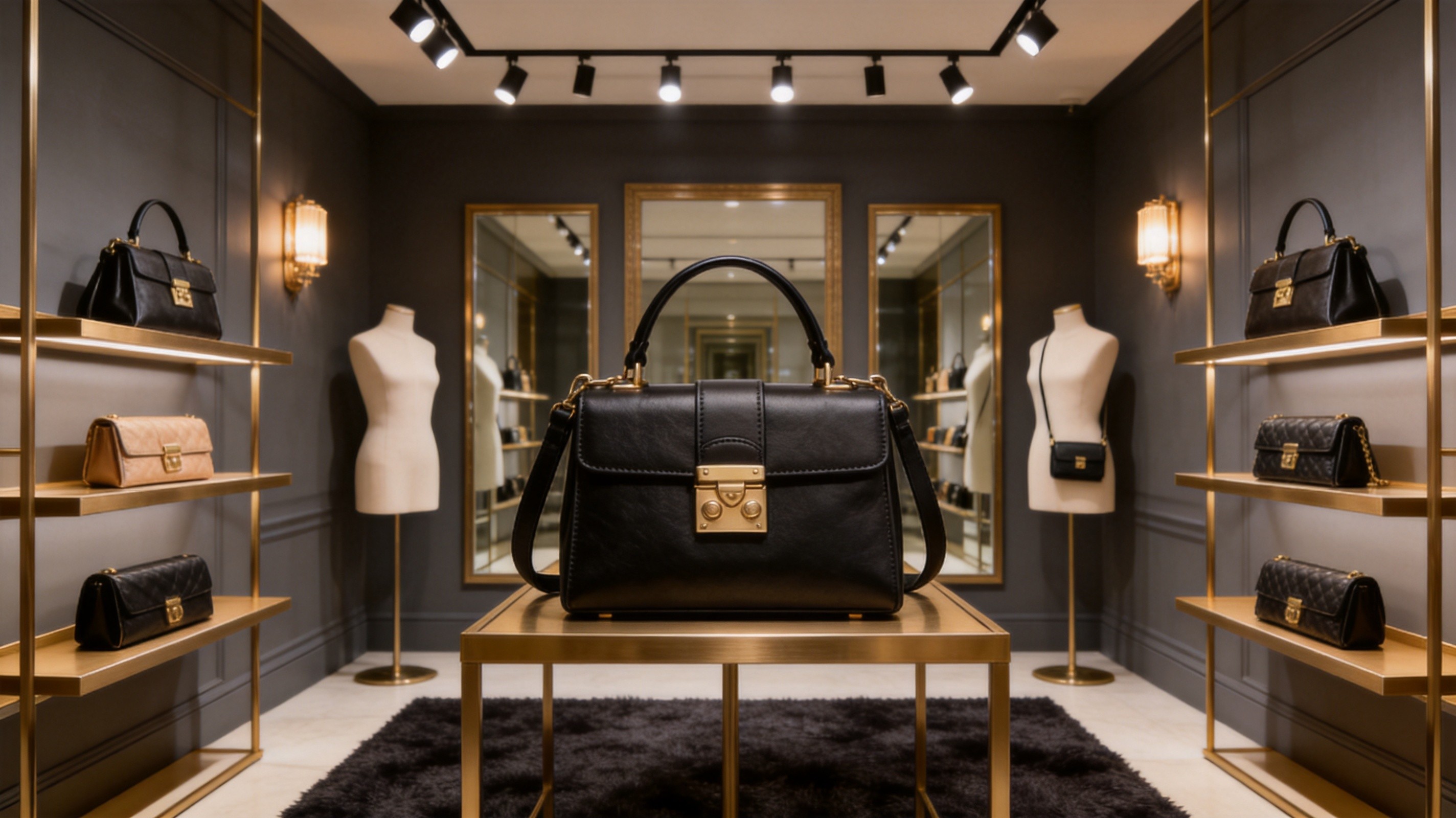
Custom branded hardware turns functional closures into signature brand elements
Quality Standards and Testing for Closure Hardware
Professional handbag factories implement rigorous quality standards for closure hardware. Testing protocols ensure that every closure meets functional, aesthetic, and durability requirements before shipment.
Key Testing Parameters
- Salt Spray Test (ASTM B117): 48 to 96 hours minimum for metal finishes. Tests corrosion resistance and plating adhesion. Gold and silver finishes require 72+ hours to pass.
- Pull Strength Test: Magnetic closures tested to 15N minimum attachment strength. Turn-lock posts tested to 50N minimum withdrawal force. Zipper teeth tested for separation strength.
- Cycle Testing: Zippers tested through 5,000+ open-close cycles. Turn-locks tested through 10,000+ rotations. Magnetic snaps tested through 8,000+ press cycles.
- Dimensional Accuracy: All hardware checked against specification drawings with ±0.2mm tolerance for critical dimensions.
- Visual Inspection: Surface finish checked for scratches, pits, color variation, and coating uniformity under standardized lighting.
Supplier Qualification
Reputable hardware suppliers provide material certificates, plating thickness reports, and test data with each shipment. Ask your factory for hardware supplier documentation and test reports. Premium hardware brands like YKK, Riri, Lampo, and Opti provide consistent quality backed by decades of manufacturing expertise. Our factory partners with certified hardware suppliers to ensure every component meets international quality standards.
Common Problems and How to Avoid Them
Understanding common closure failures helps brand owners specify requirements that prevent issues before they occur. Each closure type has characteristic failure modes that experienced factories know how to avoid.
Magnetic Closure Problems
- Weak holding force: Caused by undersized magnets or excessive gap between plates. Solution: specify magnet pull force in Newtons and verify with sample testing.
- Backing plate detachment: Occurs when adhesive fails or leather tears around attachment. Solution: require reinforced backing plates with rivet attachment, not adhesive only.
- Misalignment: Plates fail to meet properly, reducing holding force. Solution: use positioning jigs during installation and verify alignment on every unit.
Zipper Problems
- Slider derailment: Teeth separate at the bottom stop. Solution: ensure proper bottom stop installation and fabric insertion technique.
- Fabric catching: Lining or bag material jams in the slider. Solution: add anti-catch tape or fabric guards at the slider entry point.
- Stiff operation: Slider moves with excessive force. Solution: specify smooth-gliding sliders and ensure proper tooth alignment during sewing.
Turn-Lock Problems
- Loose rotation: Plate wobbles or feels unstable. Solution: ensure proper post length and tension adjustment during installation.
- Finish wear: Plating wears through on contact surfaces. Solution: specify PVD coating for high-wear areas or add protective clear coat.
- Post pull-through: Post pulls through the bag material under load. Solution: use adequate backing plates and reinforce mounting area.
Professional QC inspection identifies potential closure issues before they reach production
How to Specify Closure Hardware to Your Factory
Clear, precise hardware specifications in your tech pack prevent miscommunication, sampling delays, and production errors. Every closure specification should include the following elements:
Essential Specification Fields
- Closure Type: Magnetic snap, zipper, turn-lock, or combination
- Material: Brass, zinc alloy, stainless steel, neodymium, etc.
- Finish: Polished gold, brushed nickel, antique brass, PVD coating, etc.
- Dimensions: Diameter/length/width with tolerance (e.g., 15mm ± 0.2mm)
- Holding Force: For magnets, specify in Newtons (e.g., 5N minimum)
- Brand Logo: Attached vector file, emboss depth, enamel colors
- Quantity: Pieces per bag, total pieces per order
- Testing Requirements: Salt spray hours, cycle count, pull force minimums
- Reference Supplier: YKK, Riri, or approved supplier list
Providing physical reference samples alongside your written specification dramatically reduces ambiguity. Our product development team reviews every specification before sampling to identify potential issues and suggest optimizations. Learn more about our OEM manufacturing services and how we support hardware specification and sourcing.
Future Trends in Handbag Closure Design
The handbag hardware industry continues to evolve with new materials, technologies, and consumer expectations. Several emerging trends are shaping the future of closure design.
Smart Closures
Integration of NFC chips and Bluetooth modules into closure hardware enables smart functionality. A turn-lock with embedded NFC can authenticate product legitimacy, connect to brand apps, or trigger digital experiences. This technology is already being adopted by premium brands and will become more widespread as components shrink in size and cost.
Sustainable Materials
Recycled metals, bio-based plastics, and lead-free plating processes are entering the hardware supply chain. Consumer demand for sustainable products extends to hardware components. Factories that invest in sustainable hardware sourcing gain a competitive advantage with environmentally conscious brands.
Magnetic Innovation
New magnetic alloy compositions provide stronger holding forces in smaller form factors. Self-aligning magnetic geometries simplify user operation. Multi-pole magnetic arrays create directional holding that resists opening in specific directions while allowing easy intentional opening. These advances expand the applications where magnetic closures can compete with mechanical alternatives.
Innovative closure designs continue to push boundaries in handbag hardware engineering
Need Expert Hardware Sourcing for Your Handbag Line?
Our 20+ years of manufacturing experience covers every closure type and hardware configuration. We source premium hardware from certified suppliers and implement rigorous quality testing on every production run. MOQ starts at 200 pcs/style.
Email: service@junyuanbags.com | WhatsApp: +86 17750020688
Request a QuoteFrequently Asked Questions
Which handbag closure type is the most secure?
Zipper closures provide the highest security among the three main types. They create a continuous seal that prevents accidental opening and makes unauthorized access significantly more difficult. Magnetic closures offer moderate security, while turn-locks provide good security when properly engaged but can be vulnerable to deliberate manipulation.
How long do magnetic closures last on handbags?
Quality magnetic closures maintain effective holding strength for 5 to 10 years of regular use. The magnets themselves do not lose significant strength. The primary failure point is the attachment to the bag material rather than the magnet itself.
What is the cost difference between magnetic closures and zippers for bulk orders?
Standard magnetic closures cost $0.30 to $1.50 per piece at 500+ quantities. Basic nylon zippers range from $0.50 to $2.00. Metal turn-lock closures cost $1.00 to $4.00 per piece. Custom branded hardware increases costs by 50 to 200 percent depending on customization complexity.
Can turn-lock closures be customized with brand logos?
Yes, turn-locks offer excellent logo customization through embossing, engraving, or enamel filling. Custom turn-locks typically require minimum orders of 1,000 pieces per finish with 30 to 45 day production lead time for hardware molds.
Which closure type is best for luxury handbags?
Turn-lock closures are traditionally associated with luxury handbags and serve as signature design elements. High-end brands also use premium metal zippers from manufacturers like Riri and Lampo for security-focused designs. The best choice depends on brand positioning and target customer expectations.
How do I specify closure hardware requirements to my factory?
Include closure type, material, finish, dimensions with tolerances, holding force requirements, logo artwork, quantity per bag, testing requirements, and preferred supplier references in your tech pack. Providing physical reference samples alongside written specifications dramatically reduces miscommunication risk.
Continue Exploring
Expand your hardware knowledge with our related guides: Complete Hardware Guide, Choosing Lining Materials, and Thread and Stitching Standards. Visit our about page to learn about our factory capabilities or contact us for project-specific guidance.
Limitations and Scope of This Guide
This guide covers comparison of magnetic closures, zippers, and turn-locks for handbags, including pros, cons, durability, cost, and design applications. It is based on our experience as a handbag manufacturer in Quanzhou, China, serving brands worldwide since 2004. Key limitations to keep in mind:
- This comparison covers the three most common closure types. Other options (snap buttons, hook clasps, drawstrings, buckle closures) have different characteristics.
- Durability assessments are based on standard-quality hardware. Premium hardware brands (Riri, Lampo, YKK Excella) outperform budget alternatives regardless of closure type.
- Consumer preference data reflects general market trends. Specific target demographics (luxury buyers, value shoppers, younger consumers) may show different preferences.
For advice tailored to your specific situation, contact our team directly.