Table of Contents
- What Is MOQ and Why Does It Exist?
- The Factory Perspective: Why MOQs Matter
- Typical MOQ Ranges in the Handbag Industry
- Factors That Influence MOQ Requirements
- How MOQ Affects Your Per-Unit Cost
- First Order Strategy: How Many Should You Actually Order?
- How to Negotiate Lower MOQs
- MOQ vs. Price: Finding the Right Balance
- Risk Management: Avoiding Overstock
- Scaling Your Orders: From 200 to 10,000
- Inventory Planning for New Brands
- Common MOQ Mistakes New Brands Make
- Frequently Asked Questions
Minimum Order Quantity (MOQ) is the first number every brand owner encounters when contacting handbag manufacturers. It determines your initial investment, your per-unit cost, and your inventory risk. Understanding how MOQs work — and how to work with them strategically — directly impacts your brand's financial health and growth trajectory.
This guide demystifies MOQ requirements in the handbag manufacturing industry, explains why factories set them, reveals the economics behind different MOQ levels, and provides practical strategies for optimizing your first production order quantity.
Understanding MOQ economics helps you optimize your first production order
What Is MOQ and Why Does It Exist?
MOQ stands for Minimum Order Quantity — the smallest number of units a manufacturer will produce in a single production run. In the handbag industry, MOQ is typically expressed as units per style per color. A factory with a 200-piece MOQ requires you to order at least 200 bags of each style-color combination.
The Economics Behind MOQ
Every production run involves fixed costs that do not change regardless of whether you produce 50 or 500 units. These include machine setup time, pattern cutting preparation, material purchasing minimums from suppliers, thread and adhesive preparation, and quality control initialization. These fixed costs typically range from $200-$800 per production run depending on product complexity.
When spread across 200 units, fixed costs add $1-$4 per bag. When spread across 50 units, those same costs add $4-$16 per bag — making the smaller run economically unviable for the factory. MOQs ensure that production runs remain economically efficient for both the manufacturer and the buyer.
MOQ vs. Material MOQ
Your factory's MOQ may be driven by their material suppliers' MOQs. Leather is sold by the sheet, zippers by the gross, and custom-dyed fabrics by the roll. If a leather supplier requires a minimum purchase of 50 sheets and each sheet yields material for 10 bags, the factory must produce at least 500 bags to use the full leather purchase — or accept the cost of unused material into your order price.
The Factory Perspective: Why MOQs Matter
Understanding why factories set MOQs helps you negotiate more effectively. Factory managers are not trying to create barriers — they are managing production efficiency and financial viability.
Production Line Efficiency
A production line staffed with 8-12 workers operates most efficiently when running the same product continuously for at least 3-5 days. Switching between styles requires retooling, retraining workers on new construction details, and recalibrating machines. A 200-piece order of a moderately complex handbag occupies a production line for approximately 3-5 days — the minimum efficient run length.
Material Procurement Logic
Factories purchase materials from specialized suppliers who have their own MOQs. A zipper supplier may sell minimum packs of 100 pieces. A leather supplier may sell minimum half-sheets. When your order quantity aligns with material purchase units, the factory avoids waste costs that would otherwise be passed to you.
Quality Control Consistency
Quality consistency improves with production volume. Workers develop rhythm and precision through repetition. The first 20-30 units of any production run typically show slightly higher variation than units 50-200 as workers calibrate their technique. Very small runs (under 100 pieces) never reach optimal rhythm, resulting in inconsistent quality across the batch.
Typical MOQ Ranges in the Handbag Industry
| Factory Type | Typical MOQ | Best For | Price Level |
|---|---|---|---|
| Large Export Factory (500+ workers) | 500 – 1,000 pcs | Established brands, retailers | Competitive |
| Mid-Size Factory (100-300 workers) | 200 – 500 pcs | Growing brands, boutiques | Moderate |
| Small Workshop (under 100 workers) | 50 – 200 pcs | Startups, test orders | Higher per unit |
| Specialized Artisan Workshop | 10 – 50 pcs | Luxury, handmade, artisan | Premium |
Purse Private Label operates as a mid-size factory with 300+ workers, setting our MOQ at 200 pieces per style — the sweet spot between production efficiency and accessibility for emerging brands. Our manufacturing services are designed to support brands from their first order through significant growth.
Factors That Influence MOQ Requirements
Product Complexity
Simple designs (tote bags, basic crossbody) have lower effective MOQs because setup is quick and materials are standardized. Complex designs (structured handbags with multiple compartments, custom hardware, intricate stitching patterns) require more setup time and specialized skills, pushing factories toward higher MOQs.
Material Customization
Using factory-stock materials keeps MOQs low. Requesting custom-dyed leather, exclusive fabric prints, or bespoke hardware increases MOQs because material suppliers require minimum orders for custom production. A custom color dye lot may require 500+ meters of fabric minimum.
Custom Hardware
Standard hardware (stock zippers, clasps, D-rings) can be purchased in any quantity. Custom-designed hardware requires mold creation ($300-$1,500 per design) and minimum casting runs (typically 500-1,000 pieces). If your design uses fully custom hardware, expect MOQs of 500+ pieces to justify the tooling investment.
Brand Relationship Stage
Factories may offer lower MOQs for initial trial orders to established brands that demonstrate growth potential. A first order of 200 pieces with confirmed reorders of 1,000+ pieces per season is more attractive than a one-time order of 200 pieces with no future commitment.
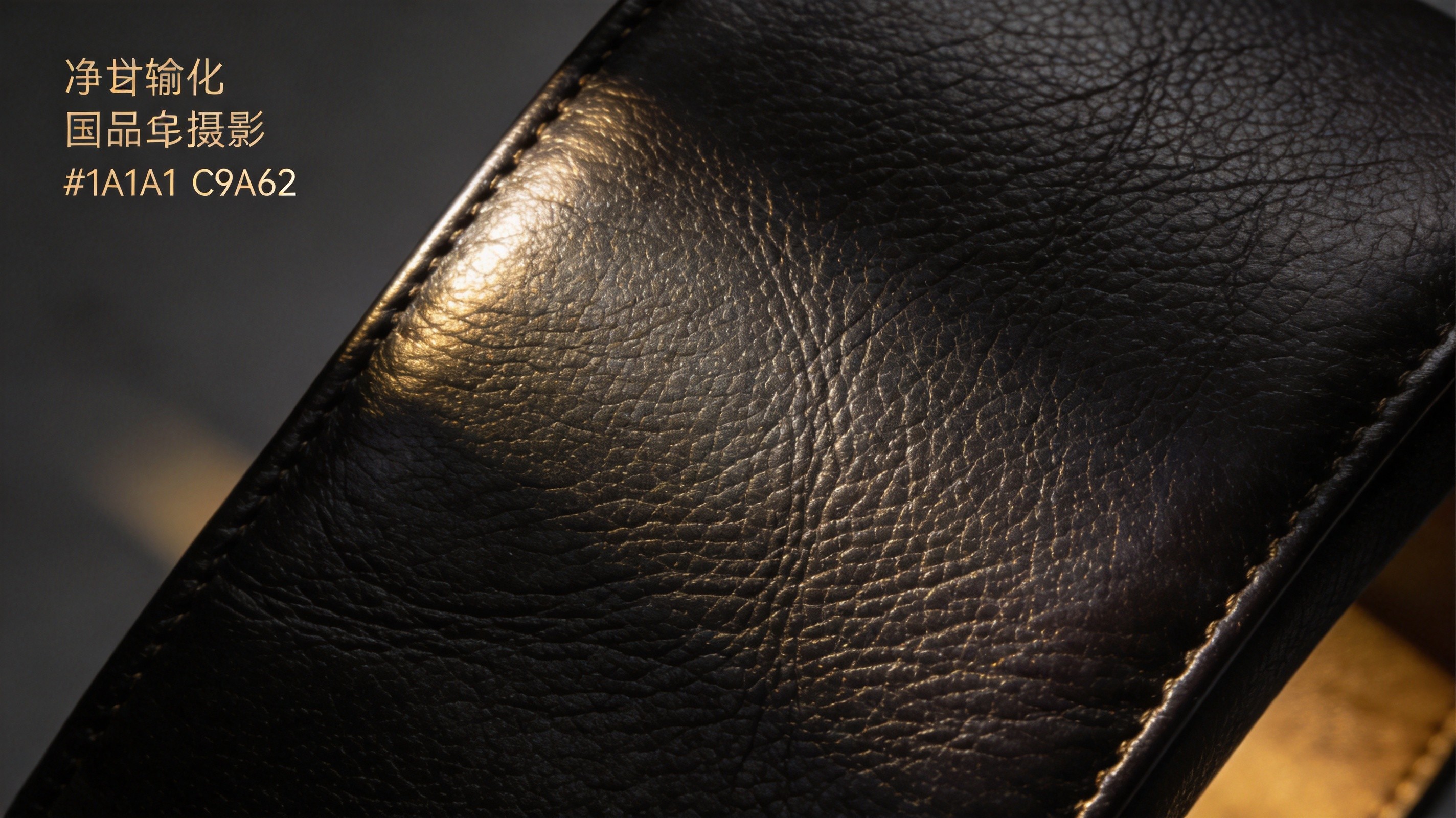
Custom hardware increases MOQs due to mold creation and minimum casting requirements
How MOQ Affects Your Per-Unit Cost
The relationship between order quantity and per-unit cost is not linear. Significant cost savings emerge at specific volume thresholds. Understanding these thresholds helps you optimize your order quantity for the best unit economics.
| Order Quantity | Est. Unit Cost | Cost Driver | Recommendation |
|---|---|---|---|
| 50 – 100 pcs | $18 – $35 | High setup cost allocation, material waste | Sample validation only |
| 200 pcs | $12 – $22 | Moderate setup allocation, reasonable material use | Optimal first order |
| 500 pcs | $10 – $18 | Efficient setup, material bulk discounts begin | First reorder threshold |
| 1,000 pcs | $8 – $15 | Full efficiency, material bulk pricing | Growth stage orders |
| 5,000+ pcs | $6 – $12 | Maximum efficiency, custom material pricing | Established brand volumes |
The jump from 200 to 500 pieces typically reduces per-unit costs by 15-25%. The jump from 500 to 1,000 pieces adds another 10-15% savings. These savings come from material bulk discounts, more efficient production line utilization, and reduced setup cost allocation per unit.
First Order Strategy: How Many Should You Actually Order?
The optimal first order quantity balances three competing priorities: minimizing financial risk, achieving reasonable per-unit costs, and having sufficient inventory to test market demand meaningfully.
The Case for Starting at MOQ (200 Pieces)
If you have no sales history for a specific design, ordering exactly at MOQ (200 pieces) minimizes financial risk while providing enough inventory for a meaningful market test. At $12-$22 per unit, a 200-piece order represents $2,400-$4,400 in production costs — a manageable investment for testing a new product.
Calculating Your Test Quantity
Consider your sales channels and testing timeline. If you sell through a Shopify store averaging 5-10 orders per week, 200 pieces provides approximately 4-10 weeks of inventory. If you sell at weekend markets moving 15-25 pieces per event, 200 pieces covers 8-13 events. This quantity provides enough data to evaluate customer response, identify popular colors, and plan your reorder strategy.
Order Quantity Formula
For your first order, use this calculation: (Expected weekly sales) × (Weeks until reorder arrives) + Safety stock (20%). If you expect to sell 15 bags per week and your reorder takes 6 weeks to arrive, you need: 15 × 6 = 90 bags to cover the reorder period, plus 18 safety stock = 108 bags minimum. Rounding up to the 200-piece MOQ gives you comfortable coverage plus growth buffer.
How to Negotiate Lower MOQs
If your ideal order quantity falls below a factory's standard MOQ, several negotiation strategies can bridge the gap without damaging the relationship.
Strategy 1: Multi-Style Orders
If a factory requires 500 pieces per style, propose ordering 200 pieces across three styles (600 total pieces). The factory achieves their minimum efficient run across multiple products while you test several designs with smaller commitments per style.
Strategy 2: Stock Material Agreement
Agree to use the factory's available stock materials rather than requesting custom colors or finishes. This eliminates material MOQ constraints and allows the factory to use inventory they have already purchased. You sacrifice some customization but gain lower MOQs and faster production.
Strategy 3: Graduated Commitment
Propose a trial order of 200 pieces at a 10-15% surcharge per unit, with a contractual commitment to order 500+ pieces within 90 days at standard pricing. This arrangement compensates the factory for the smaller initial run while demonstrating your serious intent to build volume.
Strategy 4: Consolidated Production
Ask if your order can be combined with another client's order using the same materials and construction methods. Some factories consolidate similar orders to achieve efficient production runs while serving multiple small clients. This approach works best during the factory's off-peak seasons.
Strategic negotiation can reduce MOQs while maintaining factory relationships
MOQ vs. Price: Finding the Right Balance
Higher MOQs reduce per-unit costs but increase total investment and inventory risk. Finding the right balance depends on your financial capacity, market confidence, and growth stage.
| Scenario | Recommended Approach | Rationale |
|---|---|---|
| Completely new design, untested market | Order at MOQ (200 pcs) | Minimize risk while validating market response |
| Proven design, expanding to new channel | Order 500 pcs | Proven demand justifies moderate volume increase |
| Best-selling design, established channel | Order 1,000+ pcs | Maximum cost efficiency for confirmed sellers |
| Seasonal/trend design | Order at MOQ (200 pcs) | Limited selling window increases overstock risk |
| Core/classic design | Order 500-1,000 pcs | Evergreen designs sell consistently over time |
Risk Management: Avoiding Overstock
Ordering more than you can sell ties up capital in unsold inventory. While per-unit costs decrease with volume, the cost of unsold inventory — storage, markdowns, dead stock write-offs — often exceeds the per-unit savings from larger orders.
Overstock Cost Calculation
If you order 1,000 pieces but only sell 600 at full price, you must sell the remaining 400 at a 40% discount. The revenue from 600 full-price units minus the discount on 400 units may produce less total profit than ordering 500 pieces at a slightly higher per-unit cost and selling all of them at full price.
The 80/20 Inventory Rule
Most handbag brands find that 20% of their styles generate 80% of their revenue. For new styles and unproven designs, order at MOQ. For your proven bestsellers, order at 2-3x MOQ to capture volume pricing. This approach concentrates inventory investment where returns are highest.
Scaling Your Orders: From 200 to 10,000
A healthy brand typically scales through predictable order quantity stages. Understanding this progression helps you plan financial requirements and manufacturing partnerships.
Scaling Timeline
- Months 1-6: 200 pieces per style, 2-4 styles. Total: 400-800 pieces per order cycle.
- Months 6-12: 300-500 pieces for bestsellers, 200 for new styles. Total: 1,000-2,000 per cycle.
- Year 2: 500-1,000 pieces for core styles, 300 for seasonal. Total: 3,000-5,000 per cycle.
- Year 3+: 1,000-5,000 pieces for core, 500 for seasonal. Total: 5,000-15,000+ per cycle.
At each scaling stage, renegotiate pricing with your manufacturer. Volume increases should trigger unit cost reductions of 10-20% at each tier. A reliable manufacturing partner, like the one described on our about page, adjusts pricing transparently as your volumes grow.
Inventory Planning for New Brands
Color Distribution Strategy
For your first 200-piece order, avoid even color distribution. Industry data suggests starting with 50% in your most commercial color (black, brown, or tan), 30% in a secondary color, and 20% in a statement color. Adjust future orders based on actual sales data.
Reorder Timing
Place your reorder when you have approximately 4-6 weeks of inventory remaining. This accounts for sampling approval (if modifications needed), production time (30-45 days), and shipping (15-30 days). Ordering too late creates stockouts; ordering too early ties up capital unnecessarily.
Strategic color distribution minimizes overstock risk while meeting customer preferences
Common MOQ Mistakes New Brands Make
Mistake #1: Ordering Too Many Variations
Ordering 200 pieces in each of 10 color variations equals 2,000 total pieces — far more than a new brand can sell before market preferences become clear. Start with 2-3 core colors per style and expand based on data.
Mistake #2: Ignoring Shipping Volume
Handbags are voluminous. A 20ft shipping container holds approximately 3,000-5,000 handbags depending on packaging. Ordering 5,000 pieces may require full container shipping ($1,500-$3,500) when LCL shipping for 1,000 pieces costs significantly less. Consider shipping costs alongside production costs when determining order quantity.
Mistake #3: Not Planning for Reorder Quantities
Your first order may be at MOQ, but your reorder should be larger to capture better unit pricing and amortize shipping costs across more units. If you cannot commit to reordering at higher quantities, the initial MOQ order may not be economically justified.
Mistake #4: Choosing a Factory Solely Based on Low MOQ
A factory accepting 50-piece orders may lack the capacity, quality systems, and scalability your brand needs as it grows. Prioritize manufacturing quality, communication, and growth capacity alongside MOQ requirements. A factory with a 200-piece MOQ and excellent quality is preferable to one accepting 50 pieces with inconsistent output.
Finding the right manufacturing partner with MOQs that match your stage is critical. Purse Private Label offers MOQs starting at 200 pieces per style with full OEM, ODM, and private label capabilities. Our solutions are designed for brands at every growth stage, from first launch to scale-up. Contact our team to discuss your specific order requirements and get a tailored quotation.
Ready to Launch Your Private Label Collection?
Get a free consultation and sample quote within 24 hours. MOQ from 200 pcs.
📧 service@junyuanbags.com | 📱 +86 17750020688 | MOQ: 200 pcs/style
Frequently Asked Questions
Why do handbag factories require a minimum order quantity?
Factories set MOQs because each production run involves fixed setup costs: material purchasing minimums, machine setup, pattern cutting, thread loading, and quality control initialization. These fixed costs must be spread across enough units to remain economically viable. For a 200-piece run, setup costs add roughly $1-3 per unit. For 50 pieces, they would add $8-15 per unit, making small runs economically impractical.
How can I negotiate a lower MOQ with a purse manufacturer?
Strategies include: committing to multiple styles to increase total order volume, agreeing to use the factory's stock materials instead of custom orders, offering flexible delivery timelines, proposing a trial order with a commitment to larger reorders, and building a relationship through initial sampling and consistent communication. Some factories accept lower MOQs with a small surcharge per unit to offset setup costs.
Is 200 pieces per style a good MOQ for a new brand?
Yes, 200 pieces per style is an excellent MOQ for new brands. It keeps initial investment manageable ($2,000-$6,000 depending on materials), allows you to test multiple styles without overcommitting capital, and represents the threshold where per-unit production costs become reasonable. Many established factories, including Purse Private Label, set their MOQ at 200 pieces specifically to support emerging brands.
Limitations and Scope of This Guide
This guide covers understanding MOQ (Minimum Order Quantity) for handbag manufacturing, including typical ranges, negotiation strategies, and first-order planning. It is based on our experience as a handbag manufacturer in Quanzhou, China, serving brands worldwide since 2004. Key limitations to keep in mind:
- MOQ ranges described are typical for handbag factories in China. MOQs in other sourcing countries (India, Vietnam, Italy) follow different norms.
- Factory MOQs are influenced by material purchasing requirements, production line setup costs, and the factory's existing client commitments. These factors fluctuate.
- Lower MOQs typically come with higher per-unit costs. The relationship between quantity and price is not always linear—each factory has its own pricing structure.
For advice tailored to your specific situation, contact our team directly.