Table of Contents
- Why Communication Breaks Down in Cross-Border Manufacturing
- Understanding Chinese Business Culture
- Best Communication Channels: WeChat, Email, WhatsApp
- How to Write Clear Specification Documents
- Using Visual References: Tech Packs, Mood Boards, Samples
- Time Zone Management Tips
- Overcoming Language Barriers
- How to Give and Receive Feedback Effectively
- Building Trust Through Consistent Communication
- Handling Disputes Professionally
- Key Phrases and Templates for Factory Communication
- Understanding the Chinese Manufacturing Calendar
- Documenting Everything: The Written Record
- Common Communication Mistakes and How to Fix Them
- Frequently Asked Questions
Communication failures cause more manufacturing problems than any technical deficiency. Misunderstood specifications, unclear expectations, lost messages across time zones, and cultural misalignments turn simple production runs into expensive ordeals. For brand owners working with Chinese handbag factories, mastering cross-border communication is not a soft skill — it is an essential business competency that directly affects product quality, lead times, and profitability.
This guide distills lessons from over 20 years of international client communication at our 30,000 sqm factory in Quanzhou, where our team of 300+ workers serves brands across North America, Europe, Australia, and the Middle East. Every tip reflects real situations where communication made the difference between smooth production and costly corrections.
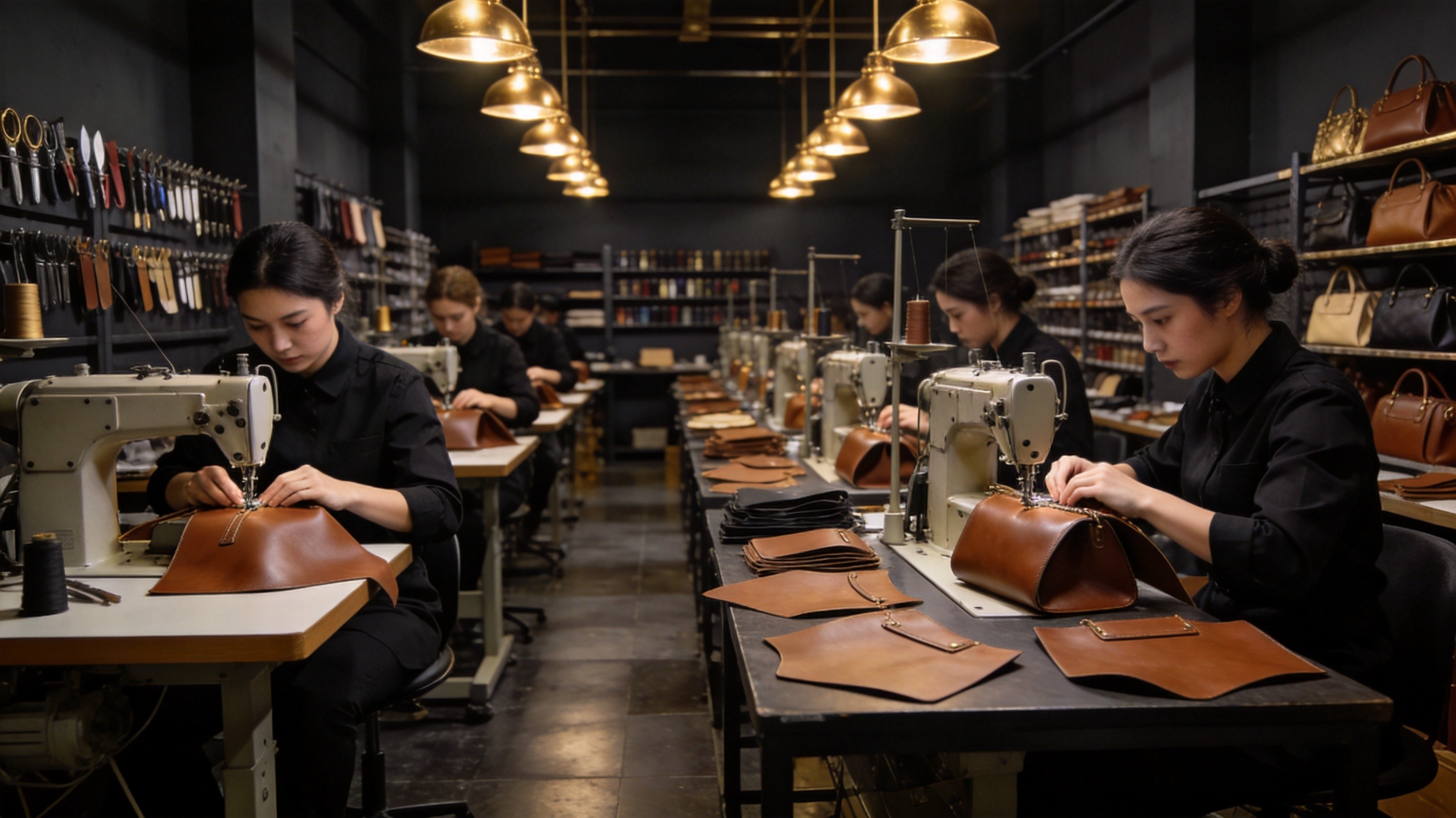
Effective cross-border communication is the foundation of successful manufacturing partnerships
Why Communication Breaks Down in Cross-Border Manufacturing
Cross-border manufacturing communication faces challenges that domestic business relationships rarely encounter. Understanding these challenges helps you build systems that prevent them.
The Distance Multiplier
Physical distance eliminates the quick in-person conversations that resolve misunderstandings before they become problems. A five-minute factory floor discussion between a domestic brand and their local manufacturer becomes a multi-day email exchange with a Chinese factory. Every assumption must be made explicit. Every specification must be documented. Every decision must be confirmed in writing.
Cultural Context Gaps
Western communication tends to be direct and explicit — say what you mean, mean what you say. Chinese communication often relies on context, indirectness, and relationship dynamics. A factory representative who says "no problem" may actually mean "I will try my best but there are challenges." Recognizing these cultural patterns prevents false confidence that everything is proceeding smoothly.
Technical Translation Losses
Handbag manufacturing involves specialized terminology — construction methods, material specifications, hardware finishes, finishing techniques. Technical terms that are standard in English may not have direct Chinese equivalents, and vice versa. This translation gap creates ambiguity that leads to production errors when specifications are interpreted differently than intended.
Understanding Chinese Business Culture
Chinese business culture operates on principles that differ significantly from Western business norms. Understanding these principles transforms your factory relationships from transactional interactions into productive partnerships.
Guanxi (guānxi): Relationship Capital
Chinese business depends heavily on guanxi — the network of relationships built on mutual trust, obligation, and reciprocity. A factory that has strong guanxi with your brand will prioritize your orders, invest extra effort on your projects, and proactively flag issues before they become problems. Building guanxi requires consistent engagement, personal connection, and demonstrated loyalty as a buyer.
Mianzi (miànzi): Face and Respect
The concept of face — maintaining dignity and respect in all interactions — profoundly shapes Chinese business communication. Criticizing a factory's work publicly, demanding changes in an accusatory tone, or putting a representative in a position where they must admit fault in front of colleagues causes loss of face and damages the relationship. Address issues privately, frame corrections as collaborative problem-solving, and always maintain respectful tone.
Long-Term Orientation
Chinese business culture values long-term relationships over short-term transactional gains. Factories invest more in buyers they believe will remain partners for years. Communicating your long-term vision, sharing growth plans, and demonstrating commitment to the partnership signals that you are a valuable long-term client deserving of priority attention.
Best Communication Channels: WeChat, Email, WhatsApp
Choosing the right communication channel for each type of message significantly improves efficiency and reduces misunderstandings.
| Channel | Best For | Response Speed | Limitations |
|---|---|---|---|
| Daily communication, quick questions, photo sharing, voice messages, video calls | Minutes (during business hours) | Not ideal for formal contracts; messages can get lost in group chats | |
| Formal specifications, contracts, price confirmations, detailed instructions | 12-48 hours | Slower response; can feel impersonal for relationship building | |
| Quick updates, photo sharing, international team coordination | Minutes to hours | Not all factory staff use it; less common than WeChat in China | |
| Video Call | Sample review, production floor walk-through, complex discussions | Scheduled | Requires time zone coordination; language barrier more apparent live |
The WeChat Imperative
If you work with Chinese manufacturers, installing WeChat is not optional — it is essential. WeChat is the primary business communication tool in China. Factories respond fastest on WeChat, share production photos and updates through WeChat, and build stronger relationships with buyers who communicate through their preferred platform. Set up your WeChat account before engaging with factories.
Email for Formal Documentation
While WeChat handles daily communication, email remains the channel for formal documentation. Specifications, purchase orders, contracts, price confirmations, and quality standards should always be communicated via email to create a written record that both parties can reference.

Using multiple communication channels strategically improves coordination with your factory team
How to Write Clear Specification Documents
Clear specifications are the single most impactful communication investment you can make. A well-written tech pack prevents more production errors than any amount of back-and-forth messaging.
Writing Principles for Cross-Cultural Clarity
- Use simple, direct sentences — avoid complex grammar, passive voice, and multi-clause sentences
- Eliminate idioms and colloquialisms — "this needs to be tight" means nothing; "stitching density: 8-10 stitches per inch" is precise
- Use numbered lists for sequential instructions — factories process step-by-step instructions more accurately than paragraph descriptions
- Include measurements in both metric and imperial — Chinese factories work in metric (cm, mm); if you think in inches, provide both
- Specify tolerance ranges — "length: 28 cm (±0.5 cm)" is more useful than "approximately 28 cm"
The Specification Document Template
Every specification document should include: product name and style number, detailed dimensions with tolerance ranges, material specifications with grade and supplier preferences, hardware specifications with finish and color codes (Pantone or custom color swatches), stitching requirements (type, density, color), interior configuration with pocket placement and dimensions, labeling and branding placement with exact positioning, packaging requirements, and quality acceptance criteria with photographic references.
Using Visual References: Tech Packs, Mood Boards, Samples
Visual communication transcends language barriers more effectively than text. A well-constructed visual reference communicates your intent more clearly than any written description.
Tech Pack as Communication Tool
A professional tech pack is your most powerful communication asset. It should include flat sketches (front, back, side, interior), construction detail photos, material swatch images, hardware close-ups, color callouts with Pantone references, dimension diagrams with measurements, and assembly sequence descriptions. Each visual element should be labeled with clear annotations.
Reference Samples
When possible, provide a physical reference sample — either your own previous production or a commercial product that demonstrates the quality level you expect. Physical samples communicate texture, weight, hand feel, and construction quality in ways that photographs and written descriptions cannot match. For sample evaluation, always compare factory output against your approved reference sample.

Detailed tech packs with visual references communicate design intent more clearly than text alone
Time Zone Management Tips
China operates on a single time zone (CST, UTC+8) despite its geographic size. Managing time zone differences strategically prevents communication delays from becoming production delays.
Optimal Communication Windows
| Your Location | Best Call Time (Your Time) | China Time | Overlap Hours |
|---|---|---|---|
| US East Coast (EST) | 8:00 PM - 10:00 PM | 9:00 AM - 11:00 AM (next day) | 2-3 hours |
| US West Coast (PST) | 5:00 PM - 8:00 PM | 9:00 AM - 12:00 PM (next day) | 3-4 hours |
| UK (GMT) | 2:00 PM - 6:00 PM | 10:00 PM - 2:00 AM (next day) | Limited evening overlap |
| Central Europe (CET) | 2:00 PM - 5:00 PM | 9:00 PM - 12:00 AM | Limited evening overlap |
| Australia (AEST) | 10:00 AM - 2:00 PM | 8:00 AM - 12:00 PM | 4-5 hours |
Async Communication Strategy
Rather than relying on real-time conversations, adopt an asynchronous communication strategy. Send detailed messages at the end of your business day. By the time your factory starts their day, your message is waiting. Their responses arrive while you sleep. The next morning, you review and respond. This cycle, managed consistently, keeps projects moving forward without requiring either party to work inconvenient hours regularly.
Overcoming Language Barriers
Language barriers remain a persistent challenge even with factories that employ English-speaking sales teams. Strategic approaches minimize misunderstandings.
Simplification Strategies
Write in Simple English — short sentences, common words, active voice. Avoid business jargon, sports metaphors, and cultural references that do not translate. "Let's touch base on the ball park figures" communicates nothing to a non-native speaker. "Please confirm the estimated cost range" is clear and actionable.
Confirmation Protocols
After communicating critical specifications, ask the factory to confirm their understanding by repeating the key details back to you. "Can you confirm the dimensions and material specifications for Style A204?" This simple step catches misunderstandings before they become production errors.
When to Use Translation Tools
For complex technical discussions, professional translation services provide better results than machine translation. However, for day-to-day communication, tools like WeChat's built-in translation feature and Google Translate handle basic messages adequately. Use them as aids, not replacements for clear original communication.

Clear communication protocols ensure production teams understand your requirements precisely
How to Give and Receive Feedback Effectively
Feedback quality directly affects production quality. How you communicate approval, corrections, and concerns shapes the factory's understanding and effort.
The Feedback Sandwich for Cross-Cultural Context
When communicating corrections, use a constructive structure: acknowledge what was done well, identify the specific issue with evidence (photos, measurements), and propose a solution. Avoid vague criticism ("this is not good") and instead provide precise guidance ("the flap curve needs to be 2mm wider at the center point — see annotated photo").
Documenting Feedback
After verbal discussions, always follow up with written confirmation summarizing what was agreed. "As discussed on our call today, the following changes will be made to Style B107: 1) zipper pull changed from round to rectangular, 2) interior pocket moved 2cm lower, 3) strap length increased to 55cm. Please confirm." This written record prevents the "but I thought you said..." disputes that delay production.
Building Trust Through Consistent Communication
Trust is the currency of manufacturing relationships. Factories invest more in buyers they trust, offer better pricing to loyal clients, and prioritize trusted buyers' orders when capacity is constrained.
Consistency Signals Reliability
Respond to factory messages promptly. Pay invoices on time. Honor your commitments on order quantities and timelines. When you must change plans, communicate early with clear explanations. These consistency signals build the trust that translates into better service, more flexible terms, and proactive partnership.
Personal Connection Matters
Chinese business relationships extend beyond pure commerce. Ask about your factory contact's well-being. Acknowledge Chinese holidays. Share news about your brand's growth. When you visit the factory — and you should visit at least annually — bring small gifts from your home country. These gestures build the personal connection that strengthens business collaboration.
Handling Disputes Professionally
Disputes are inevitable in manufacturing. How you handle them determines whether the relationship survives and strengthens — or deteriorates beyond recovery.
The Dispute Resolution Framework
- Gather evidence first — photos, measurements, production records, written specifications. Never raise a dispute based on incomplete information
- Communicate privately — never raise issues in group chats or in front of the factory's other clients
- Frame as shared problem-solving — "we have a challenge we need to solve together" rather than "you made a mistake"
- Propose solutions, not just problems — come prepared with at least one proposed resolution
- Document the resolution — after agreement, send written confirmation of the resolution and any timeline changes
Key Phrases and Templates for Factory Communication
Requesting Quotes
Structure quote requests with clear context: "We are [brand name], a [market description] brand. We are developing [product description] for our [season/collection]. Please provide pricing for the following quantities: 200 pcs, 500 pcs, 1000 pcs. Specifications are attached. Please provide a detailed cost breakdown including materials, labor, hardware, and packaging."
Providing Sample Feedback
Structure sample feedback clearly: "Thank you for the sample of Style [number]. Overall assessment: [approved/needs revision/rejected]. Specific feedback: 1) [element] — [observation] — [required change]. 2) [element] — [observation] — [required change]. Please confirm which changes can be incorporated in the next sample and expected timeline."
Understanding the Chinese Manufacturing Calendar
China's manufacturing calendar has predictable peaks and valleys that affect communication responsiveness and production capacity.
Key Calendar Periods
- Chinese New Year (Jan-Feb) — Factories close for 2-4 weeks. Production and communication halt. Plan orders to complete before CNY or resume after
- Golden Week (Oct 1-7) — One-week national holiday. Reduced responsiveness
- Peak Season (Aug-Oct) — Factories are at maximum capacity. Communication may be slower as production teams prioritize output
- Slow Season (Mar-May) — Factories seek orders. Communication is responsive, pricing may be more flexible
Documenting Everything: The Written Record
In cross-border manufacturing, if it is not documented, it did not happen. Every agreement, every specification change, every timeline adjustment must be captured in writing.
Building a Communication Archive
Maintain organized records of all specifications, approvals, changes, and agreements. Use consistent file naming conventions. Store everything in a shared cloud folder accessible to both parties. When disputes arise, your documentation archive becomes the authoritative reference that resolves disagreements quickly and fairly.
Common Communication Mistakes and How to Fix Them
Mistake #1: Assuming "No Problem" Means Everything Is Fine
Chinese factory representatives often say "no problem" or "OK" to acknowledge receipt of your message — not necessarily to confirm they understand or can execute your request. Verify understanding by asking specific questions: "What material will you use for this component? What is the exact stitch count you plan?"
Mistake #2: Sending Complex Instructions in a Single Message
Long, multi-topic messages get partially read and incompletely executed. Break complex instructions into numbered steps. Send one topic per message. Follow up to confirm each point was understood.
Mistake #3: Ignoring the Relationship Dimension
Treating factory communication as purely transactional — only reaching out when you need something — builds weak relationships that deliver weak results. Regular communication, even without immediate business needs, builds the guanxi that produces better outcomes when you do need something.
For brands seeking a manufacturing partner with English-speaking project managers, transparent communication protocols, and WeChat and email responsiveness within 24 hours, Purse Private Label combines 20+ years of international client service with the communication infrastructure that keeps projects running smoothly. Our product development process includes clear communication milestones at every stage.
Learning to evaluate factory communication quality during your initial research phase helps you select partners who match your communication expectations before committing to production.
Ready for Smooth Factory Communication?
Our English-speaking team responds within 24 hours on WeChat, WhatsApp, or email. MOQ from 200 pcs.
📧 service@junyuanbags.com | 📱 +86 17750020688 | MOQ: 200 pcs/style
Frequently Asked Questions
What is the best communication channel for working with Chinese handbag factories?
WeChat is the primary communication channel for Chinese factories, offering instant messaging, file sharing, voice notes, and video calls. WhatsApp serves as a good secondary channel for international buyers. Email remains important for formal communications, contracts, and detailed specification documents.
How do I overcome the language barrier with Chinese bag manufacturers?
Use simple, clear English without idioms or complex sentence structures. Supplement written descriptions with visual references — photos, diagrams, tech packs, and annotated images. Confirm understanding by asking the factory to repeat specifications back. Consider a bilingual sourcing agent for critical negotiations.
What time zone challenges should I expect?
China operates on CST (UTC+8), which is 12-16 hours ahead of US time zones. The most productive overlap for US buyers is typically 8-10 PM EST. Adopt an asynchronous communication strategy to keep projects moving without requiring inconvenient hours for either party.
How should I handle quality complaints without damaging the relationship?
Approach quality issues as collaborative problem-solving. Lead with specific evidence — photos, measurements, defect counts. Frame the conversation around shared goals. Propose solutions rather than just identifying problems. Avoid public criticism to preserve face (mianzi).
Limitations and Scope of This Guide
This guide covers practical communication strategies for Western brand owners working with Chinese bag factories, including tools, etiquette, and common pitfalls. It is based on our experience as a handbag manufacturer in Quanzhou, China, serving brands worldwide since 2004. Key limitations to keep in mind:
- Communication advice is based on our experience working with Western brands from our factory in Quanzhou. Practices may vary across different regions of China.
- Time zone references assume US and European business hours. Factories in other sourcing destinations (Vietnam, India, Bangladesh) may have different communication norms.
- Technology recommendations (WeChat, email, video calls) reflect commonly used tools as of 2026. Platform availability and popularity may change over time.
For advice tailored to your specific situation, contact our team directly.