Table of Contents
- Why Curation Defines Your Boutique's Success
- Understanding Your Target Customer's Handbag Preferences
- Building a Balanced Collection: Categories and Price Points
- How Many SKUs Should Your Initial Collection Include
- Seasonal vs Evergreen: Finding the Right Mix
- Color Strategy: Neutral Foundations and Statement Pieces
- Material Selection: What Boutique Shoppers Actually Want
- Sourcing Options for Boutique Handbag Collections
- Private Label vs Wholesale vs Consignment Models
- How to Negotiate Terms with Handbag Suppliers
- Display and Merchandising Your Curated Collection
- Pricing Strategy for Maximum Margin and Turnover
- Tracking Performance: Reorder or Discontinue
- Common Mistakes When Building a Boutique Collection
- Future-Proofing Your Collection Against Market Shifts
- FAQ — Curating Boutique Handbag Collections
Curating the right handbag collection is arguably the most important skill a boutique owner possesses. Unlike mass retailers that stock hundreds of generic styles, boutiques succeed by offering carefully selected assortments that feel intentional, exclusive, and perfectly matched to their customer base. A well-curated handbag collection drives foot traffic, increases average transaction value, and builds the kind of loyal following that keeps customers returning season after season.
This comprehensive guide walks you through every decision involved in building a profitable handbag collection, from understanding your customer to selecting categories, setting price points, choosing sourcing partners, and tracking performance over time. Whether you are opening your first boutique or refreshing an existing assortment, these frameworks will help you make data-driven buying decisions that maximize both margin and customer satisfaction. For boutique owners exploring custom manufacturing options, our private label services offer a path to truly exclusive collections.
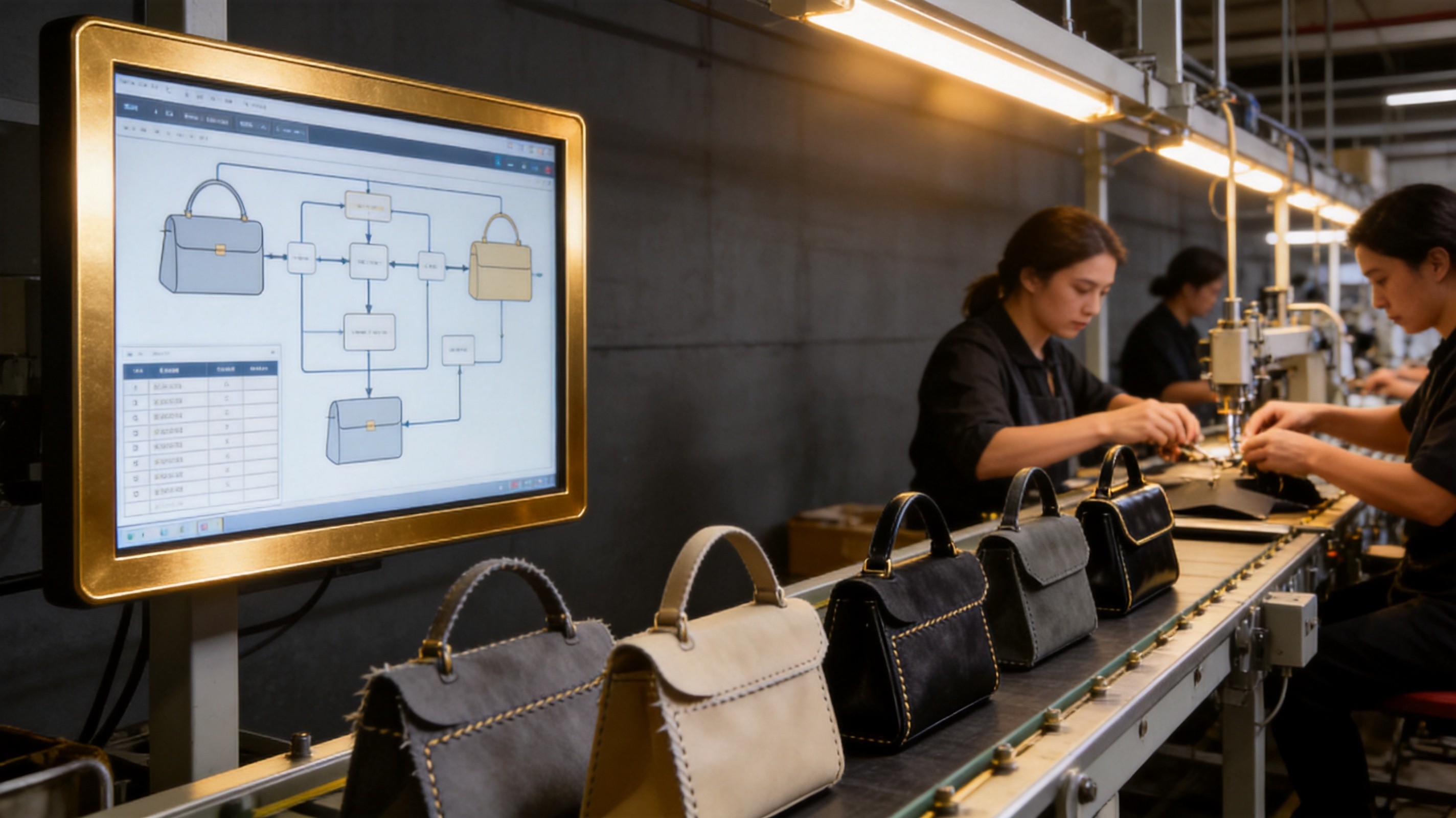
A thoughtfully curated handbag collection transforms a boutique from a shop into a destination
Why Curation Defines Your Boutique's Success
In an era where consumers can purchase any handbag online within seconds, the physical boutique must offer something beyond mere availability. Curation is that differentiator. When a customer walks into your store, every handbag on display should communicate a point of view, a lifestyle, and an understanding of who your customer is and what she needs.
Data from the Independent Boutique Retail Survey shows that stores with clearly defined curation philosophies outperform generalists by 34 percent in handbag category revenue per square foot. The reason is simple: curated collections create a sense of discovery and trust. Customers learn that anything selected by your eye is worth considering, which reduces decision fatigue and increases conversion rates. This principle extends across your entire business, and our solutions for boutique owners can help you build the supply chain that supports your curated vision.
Consider the alternative: a boutique that stocks every trending style from multiple wholesale catalogs without a unifying theme. The result feels cluttered, confused, and ultimately forgettable. Customers leave without purchasing because nothing stands out, and they have no reason to return. Curation is not about having fewer options; it is about having the right options.
Understanding Your Target Customer's Handbag Preferences
Every curation decision begins with a deep understanding of who your customer is, what her life looks like, and how handbags function within her daily routine. Before selecting a single style, you should be able to answer these questions with precision:
- Demographics: Age range, income level, occupation, family status
- Lifestyle: Work environment, social activities, travel frequency, hobbies
- Shopping behavior: Impulse vs planned purchases, price sensitivity, brand loyalty
- Handbag usage: Daily work bag needs, evening event frequency, weekend casual preferences
- Existing collection: How many bags does she own, what does she already have, what gaps exist
Create a detailed customer persona document and reference it before every buying decision. When you encounter a beautiful bag at a trade show, ask whether your persona would actually carry it, whether it fills a gap in her wardrobe, and whether she would pay the intended retail price. If any answer is uncertain, pass on the style. For more insight into regional preferences, check our analysis of global handbag market trends.

Understanding your customer's lifestyle drives every selection decision
Building a Balanced Collection: Categories and Price Points
A well-balanced handbag collection covers multiple use occasions, size categories, and price points while maintaining a cohesive aesthetic. The goal is to offer options that serve different needs while ensuring every piece feels like it belongs in your store.
| Category | Percentage of Collection | Price Range (Wholesale) | Purpose |
|---|---|---|---|
| Everyday Totes | 25% | $28 - $45 | Workhorse styles, high repeat purchase |
| Crossbody Bags | 20% | $22 - $38 | Casual and weekend use, strong demand |
| Shoulder Bags | 15% | $25 - $42 | Versatile day-to-evening options |
| Clutches and Evening | 10% | $18 - $30 | Special occasions, gift purchases |
| Backpacks and Convertibles | 10% | $30 - $48 | Trend-forward, functional appeal |
| Mini Bags and Trend | 10% | $15 - $25 | Impulse purchases, entry price point |
| Statement and Limited Edition | 10% | $35 - $65 | Destination pieces, brand identity |
This distribution ensures you capture purchases across multiple price sensitivity levels while maintaining healthy margins. The everyday categories drive consistent revenue, the mid-range styles build your brand identity, and the premium pieces create aspiration and perceived value for the entire collection.
How Many SKUs Should Your Initial Handbag Collection Include
The number of SKUs you launch with directly affects cash flow, inventory risk, and the customer's perception of your store. Too few styles make the collection feel sparse and limit purchase options. Too many styles dilute your curation message and tie up capital in untested inventory.
For a new boutique, the recommended starting range is 30 to 50 handbag SKUs. This translates to approximately 8 to 12 distinct styles offered in 2 to 4 colorways each. This range allows you to test customer response across categories while keeping initial investment manageable. As you gather sales data over your first two to three seasons, you will learn which categories overperform and which need adjustment.
Starting Collection Framework
Launch with 8 to 12 core styles in 2 to 4 colors each, totaling 30 to 50 SKUs. Plan 60 percent evergreen classics, 30 percent seasonal trends, and 10 percent statement pieces. Budget approximately $3,000 to $8,000 in wholesale inventory depending on your price positioning and supplier terms.
Seasonal vs Evergreen: Finding the Right Mix
The tension between seasonal trend pieces and evergreen staples is one of the most important balancing acts in boutique buying. Evergreen styles generate reliable, predictable revenue with lower risk. Seasonal pieces create excitement, attract media attention, and bring new customers through the door.
The optimal ratio depends on your market, but a strong starting framework allocates 60 percent of your open-to-buy budget to evergreen bestsellers, 30 percent to seasonal trend translations, and 10 percent to experimental or fashion-forward pieces. This formula ensures steady cash flow while keeping your assortment fresh and newsworthy.
Evergreen styles include classic structured totes in black, tan, and navy, simple crossbody bags in versatile silhouettes, and timeless shoulder bags with minimal branding. These pieces sell year after year with minimal marketing investment. Seasonal trends might include specific color stories like terracotta and sage green for fall, or texture play like woven straw for summer. The experimental 10 percent is where you test emerging trends before competitors, accepting that some pieces may not sell at full price but generating the buzz that drives overall store traffic.
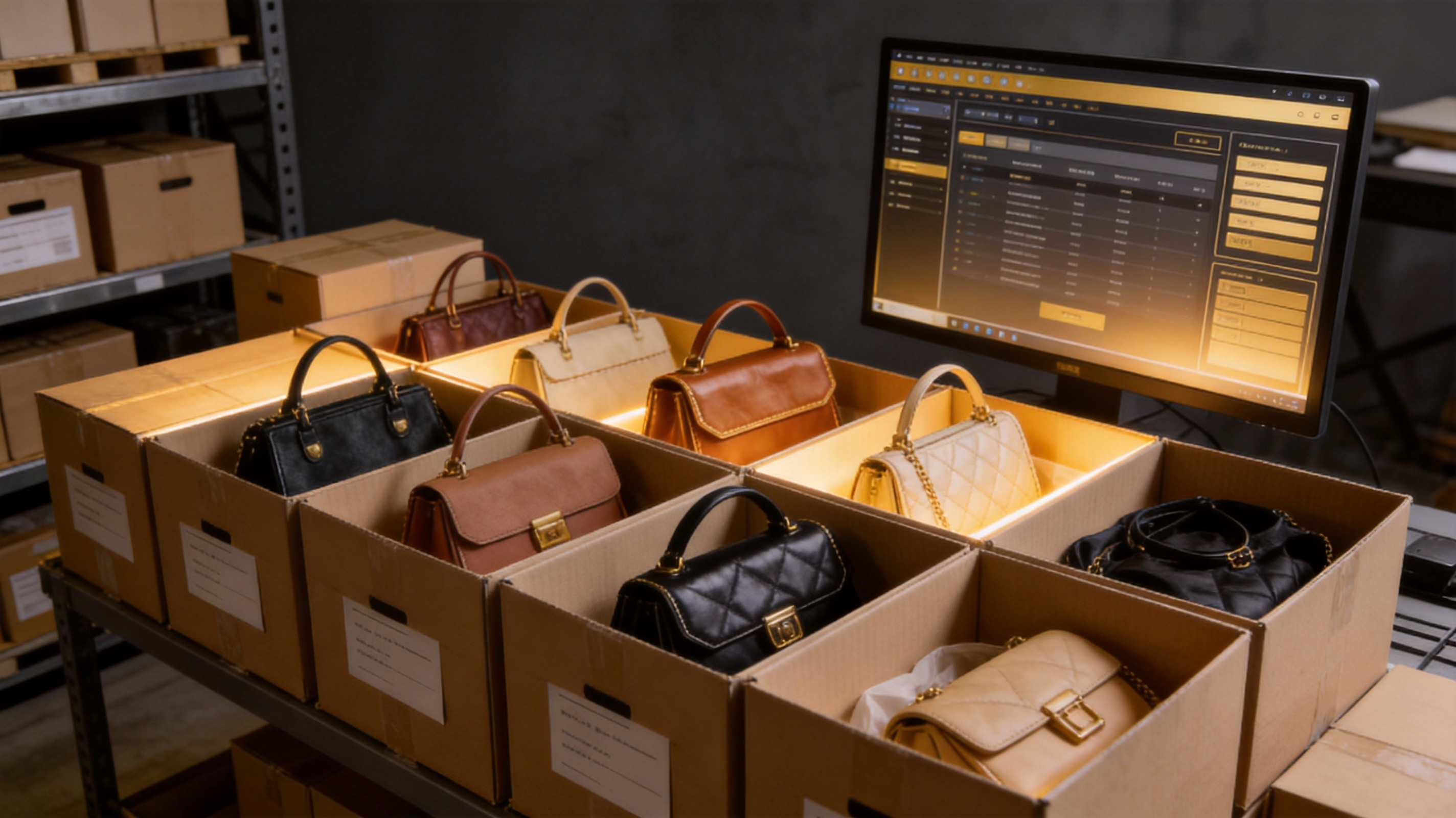
Balancing seasonal trends with evergreen staples requires data-driven buying decisions
Color Strategy: Neutral Foundations and Statement Pieces
Color is the first visual attribute customers notice, and your color strategy directly impacts sell-through rates. A well-planned color distribution ensures that every customer can find something that works with her existing wardrobe while still offering excitement and novelty.
Build your color strategy on a foundation of neutral core colors: black, tan/camel, navy, grey, and cream. These shades typically represent 50 to 60 percent of handbag sales in most boutique markets. Layer in soft neutrals like blush, olive, and dusty rose for another 20 to 25 percent. Reserve 15 to 20 percent for bold seasonal colors that align with current trend forecasts.
| Color Tier | Examples | Collection Share | Expected Sell-Through |
|---|---|---|---|
| Core Neutrals | Black, Tan, Navy, Grey | 50-60% | 85-95% |
| Soft Neutrals | Blush, Olive, Ivory, Mauve | 20-25% | 70-85% |
| Seasonal Colors | Terracotta, Emerald, Cobalt | 15-20% | 55-75% |
| Bold Statements | Neon, Metallic, Print | 5-10% | 40-60% |
Material Selection: What Boutique Shoppers Actually Want
Material choice communicates quality, justifies price points, and affects both customer satisfaction and your profit margins. Understanding what boutique shoppers actually want in terms of material helps you make sourcing decisions that align with perceived value.
Genuine leather remains the gold standard for boutique handbags, with full-grain and top-grain leather commanding premium pricing and strong customer loyalty. However, high-quality vegan leather and fabric options have growing market share, particularly among younger demographics and environmentally conscious consumers. The key is quality execution regardless of material choice. A well-made vegan leather bag outperforms a poorly made leather bag every time.
- Full-Grain Leather: Premium positioning, highest margins, develops patina over time
- Top-Grain Leather: Strong balance of quality and price, most popular for mid-range boutiques
- PU/Vegan Leather: Growing demand, lower cost, ethical appeal, improving quality
- Canvas and Fabric: Casual positioning, seasonal appeal, lightweight functionality
- Exotic and Textured: Embossed, woven, croc-print for statement pieces
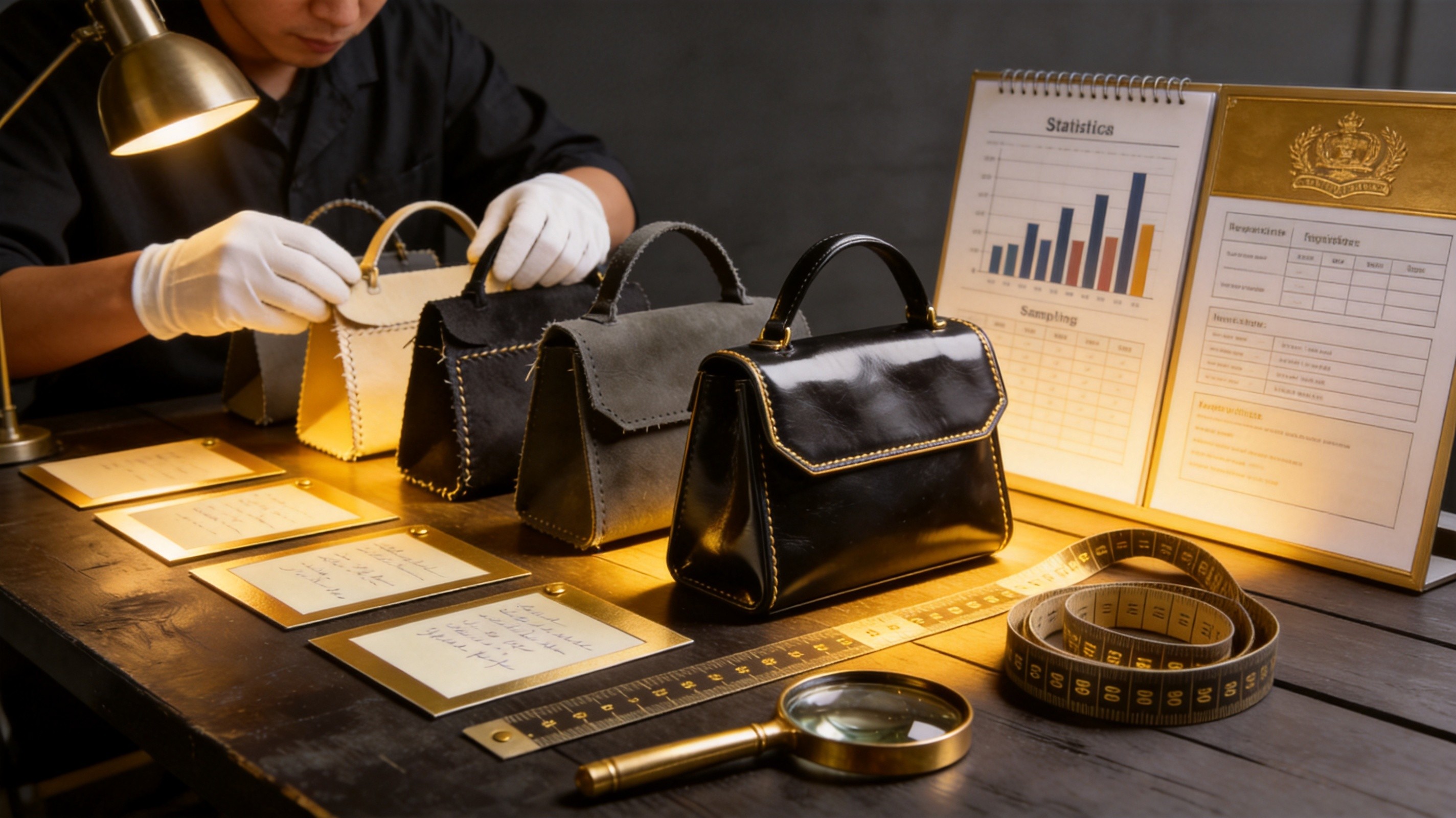
Material quality directly influences perceived value and customer satisfaction
Sourcing Options for Boutique Handbag Collections
Your sourcing strategy determines your margins, exclusivity, quality control, and ability to differentiate from competitors. Boutique owners have several sourcing channels available, each with distinct advantages and trade-offs.
Direct factory sourcing from established manufacturing hubs like Quanzhou, China offers the best pricing at scale, full customization capability, and the ability to create exclusive designs unavailable to competitors. Factories like Junyuan Bags, with over 20 years of experience and facilities spanning 30,000 square meters, provide the manufacturing infrastructure to support private label collections with MOQs starting at 200 pieces per style. Explore our product catalog for inspiration on styles that work well for boutique collections.
Private Label vs Wholesale vs Consignment Models
Each sourcing model carries different implications for margin, risk, exclusivity, and operational complexity. Understanding the trade-offs helps you choose the right mix for your boutique's stage and goals.
| Model | Avg Margin | Exclusivity | Minimum Investment | Best For |
|---|---|---|---|---|
| Private Label | 60-75% | Complete | $4,000-$12,000 | Brand building, differentiation |
| Wholesale | 45-55% | Limited | $500-$2,000 | Quick inventory, variety |
| Consignment | 30-40% | None | $0 upfront | Low risk, testing new lines |
| Hybrid Model | 50-65% | Partial | $2,000-$6,000 | Balanced approach |
Most successful boutiques eventually develop a hybrid model, combining private label core styles with selective wholesale pieces that fill gaps or provide brand variety. Our detailed comparison of private label vs wholesale profitability breaks down the financials in greater detail.
How to Negotiate Terms with Handbag Suppliers
Negotiation is a critical skill that directly impacts your profitability. The difference between a 5 percent better price on your entire inventory can mean thousands of dollars in additional profit annually. Approach negotiations with preparation, data, and a focus on building long-term relationships rather than extracting maximum short-term value.
Key negotiation points beyond unit price include payment terms (requesting 30 percent deposit with 70 percent before shipment rather than full upfront), shipping cost sharing, sample cost credits against future orders, exclusive colorway rights for your market, and improved reorder lead times. For new boutique owners entering the market, our guide on price negotiation strategies provides detailed frameworks and scripts.
Display and Merchandising Your Curated Collection
How you display your handbag collection is as important as what you select. Visual merchandising influences perceived value, drives purchase decisions, and communicates your store's brand identity. Effective handbag displays guide customers through your collection logically while creating visual moments that stop foot traffic.
Organize displays by category and use case rather than by brand or price. Group work-appropriate totes together, cluster casual crossbody bags in a lifestyle vignette, and create a dedicated evening display for clutches and mini bags. Use wall-mounted fixtures for your core collection and tabletop displays for impulse-friendly smaller pieces. For comprehensive display strategies, see our guide on visual merchandising tips for handbag displays.
Strategic display organization guides customers through your collection and increases basket size
Pricing Strategy for Maximum Margin and Turnover
Pricing is where curation strategy meets financial reality. Your pricing must cover costs, generate target margins, and align with customer expectations for your market positioning. The good news is that well-curated boutiques have significant pricing power because customers trust your selection and value the shopping experience.
The standard boutique markup for handbags is 2.2x to 3x wholesale cost. Entry-level styles (wholesale $15-$25) typically retail at $38-$65. Mid-range pieces (wholesale $25-$45) retail at $58-$120. Premium or private label styles (wholesale $35-$65) retail at $89-$180. The key is maintaining consistent markup logic across your collection so customers understand your value tiers.
Pricing Formula
Retail Price = (Wholesale Cost + Shipping/Duty Allocation) x Markup Multiplier. Target 55-65% gross margin on wholesale lines and 65-75% on private label. Factor in a 3-5% shrinkage allowance for damage and loss.
Tracking Performance: Which Styles to Reorder or Discontinue
Data-driven assortment management separates successful boutiques from those that rely on guesswork. Implement systematic tracking of key performance metrics for every SKU in your collection to make informed decisions about reorders, markdowns, and discontinuations.
Track weekly unit sales, sell-through rate by week, gross margin return on inventory (GMROI), weeks of supply remaining, and customer feedback. Establish clear thresholds: styles with sell-through above 70 percent within 8 weeks deserve immediate reorder. Styles between 40 and 70 percent sell-through should be monitored. Styles below 40 percent after 8 weeks need markdown intervention. Consistently underperforming categories should be reduced in future buying cycles.
Common Mistakes When Building a Boutique Handbag Selection
Even experienced boutique owners fall into predictable traps when curating handbag collections. Recognizing these mistakes early saves significant capital and protects your store's reputation.
- Overbuying personal preference: Stocking what you love rather than what your customer buys
- Ignoring size proportion: Too many large totes or too many mini bags without balance
- Chasing every trend: Buying trending styles without considering your customer's actual lifestyle
- Insufficient color depth: Offering too many styles in the wrong colors
- Price point gaps: Missing the sweet spot your customer is willing to spend
- Neglecting hardware quality: Zippers and clasps are the first quality signal customers notice
- Forgetting about packaging: Branded bags and dust bags affect perceived value and repeat purchases
- Not planning for replenishment: Bestsellers that go out of stock and cannot be reordered quickly

Strategic pricing and careful selection prevent common inventory mistakes
Future-Proofing Your Collection Against Market Shifts
The handbag market evolves continuously, influenced by fashion trends, economic conditions, material innovations, and shifting consumer values. Building a collection that can adapt to change requires intentional flexibility in your buying approach and supplier relationships.
Maintain relationships with multiple sourcing partners to avoid dependency on a single factory or supplier. Invest in evergreen styles that transcend seasonal fluctuations while keeping 20 to 30 percent of your open-to-buy flexible for in-season additions. Monitor social media, fashion forecasts, and customer requests for early signals of shifting preferences. Build a customer feedback loop through your POS system and social media engagement to stay connected to real-time demand signals.
Consider the growing importance of sustainability in consumer purchasing decisions. Customers increasingly ask about materials, production ethics, and environmental impact. Having answers to these questions and offering responsible options positions your boutique for long-term relevance. Partnering with manufacturers who hold environmental certifications and can provide transparent supply chain documentation gives you a competitive advantage as regulations and consumer expectations tighten.
Ready to Build Your Exclusive Handbag Collection?
Junyuan Bags has helped hundreds of boutiques create profitable private label collections. 20+ years of expertise, 200-piece MOQ, and full customization support.
WhatsApp: +86 17750020688 | Email: service@junyuanbags.com
Factory: 30,000 sqm, 300+ workers, Quanzhou, China
Frequently Asked Questions
How many handbag SKUs should a new boutique start with?
Start with 30 to 50 SKUs across 8 to 12 styles in 2 to 4 colorways each. Follow the 60-30-10 rule: 60 percent evergreen classics, 30 percent seasonal trends, and 10 percent statement pieces. Expand based on sales data after your first two to three buying cycles.
What is the recommended markup for handbags in a boutique?
Standard boutique markup ranges from 2.2x to 3x wholesale cost. Premium boutiques often apply 2.5x to 3x, especially for private label lines. Target gross margins of 55 to 65 percent for wholesale lines and 65 to 75 percent for exclusive collections.
How often should a boutique reorder handbag inventory?
Reorder every 8 to 12 weeks during peak seasons and 12 to 16 weeks during slower periods. Factor in supplier lead times of 30 to 45 days for domestic orders and 60 to 90 days for overseas manufacturing. Set automatic reorder triggers when stock drops below a two-week supply.
How do you balance trend pieces with classic styles?
Apply the 60-30-10 rule: 60 percent evergreen classics in neutral colors for steady revenue, 30 percent seasonal trends for excitement, and 10 percent bold statement pieces for brand identity and social media buzz. Adjust ratios based on your specific customer demographics.
What are the best sourcing options for boutique handbags?
Top sourcing options include private label manufacturing for highest margins and exclusivity, wholesale showrooms for quick inventory with lower minimums, trade shows like MAGIC and NY NOW for discovery, and direct factory sourcing from China for best pricing at scale. Many successful boutiques use a hybrid approach combining private label cores with selective wholesale pieces.
Limitations and Scope of This Guide
This guide covers curating a handbag collection for a boutique, including assortment planning, brand selection, price architecture, and inventory management. It is based on our experience as a handbag manufacturer in Quanzhou, China, serving brands worldwide since 2004. Key limitations to keep in mind:
- Assortment advice is based on independent fashion boutiques in US and European markets. Boutique dynamics in Asia, Middle East, and other regions differ.
- Margin expectations reflect typical independent retail operations. Consignment, drop-shipping, and cooperative advertising arrangements change the financial model.
- Seasonal buying patterns described assume a Northern Hemisphere retail calendar. Southern Hemisphere boutiques follow opposite seasonal cycles.
For advice tailored to your specific situation, contact our team directly.