Table of Contents
- The Fundamental Difference: Private Label vs Wholesale
- Profit Margin Comparison: Real Numbers from Boutique Owners
- Upfront Investment: What Each Model Requires
- Minimum Order Quantities and Cash Flow Impact
- Brand Building: Long-Term Value of Private Label
- Exclusivity Advantage: Avoiding Price Competition
- Risk Assessment: Inventory Exposure and Dead Stock
- Supplier Relationships: Control vs Convenience
- Customization Freedom in Each Model
- Time to Market: Speed Differences
- Quality Control Comparison
- Marketing and Brand Story Opportunities
- Scaling Considerations for Growing Boutiques
- Hybrid Approach: Combining Both Models Strategically
- Decision Framework: Which Model Fits Your Boutique
- FAQ — Private Label vs Wholesale
The decision between private label and wholesale sourcing is one of the most consequential choices a boutique owner makes. It affects every aspect of your business, from profit margins and brand identity to inventory risk and competitive positioning. Both models have legitimate advantages, and the right choice depends on your boutique's stage, financial capacity, risk tolerance, and long-term vision.
This guide provides an honest, data-driven comparison of both models across every dimension that matters. We will examine real margin numbers, investment requirements, risk profiles, and strategic implications so you can make an informed decision aligned with your business goals. For boutiques ready to explore private label manufacturing, our custom manufacturing services offer a streamlined path from concept to finished product.
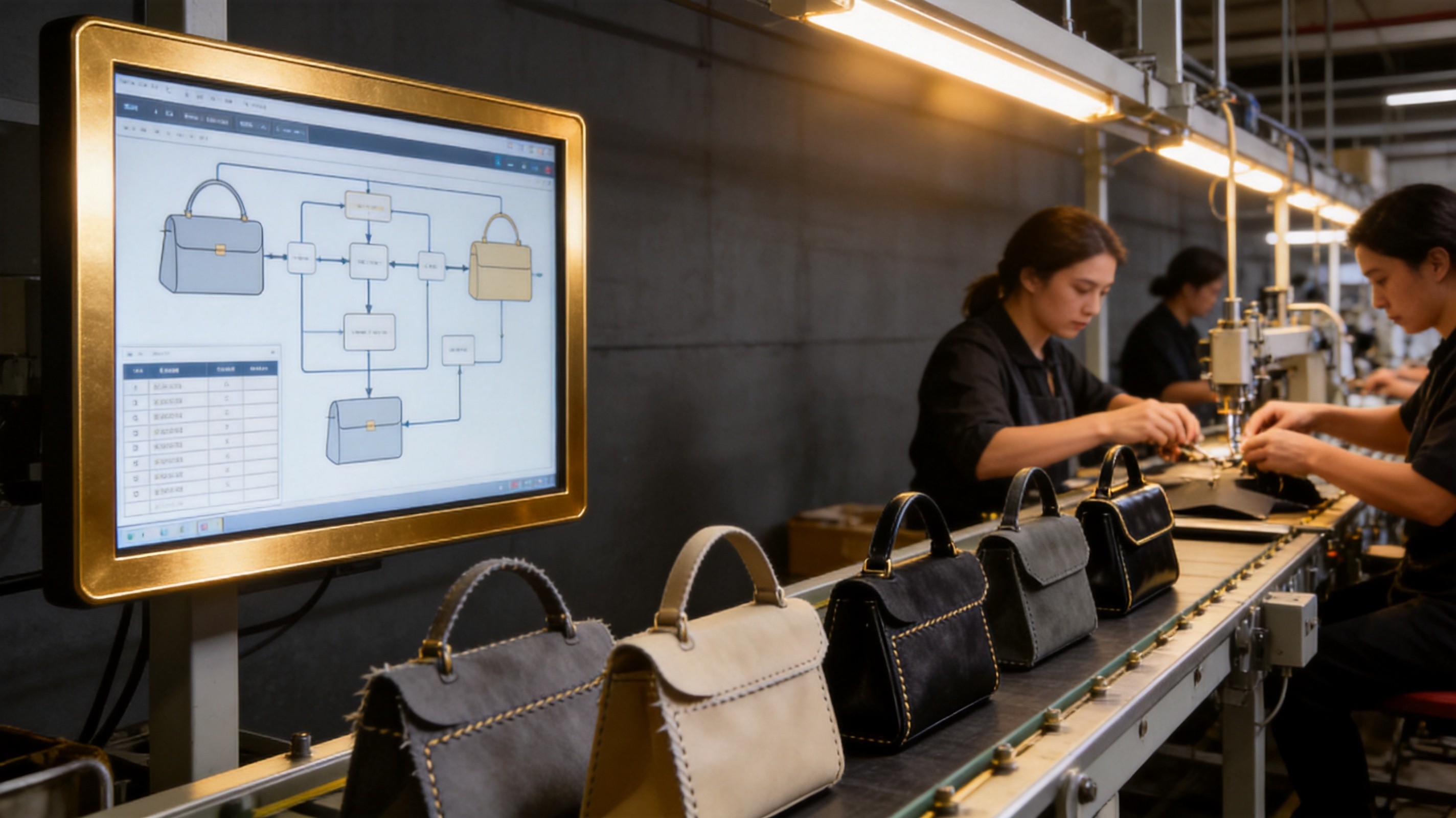
Understanding the fundamental differences helps you choose the model that maximizes your boutique's profitability
The Fundamental Difference: Private Label vs Wholesale
Private label means you create handbags manufactured to your specifications, branded with your logo, and sold exclusively through your channels. You own the design, control the materials, set the pricing, and build equity in a brand asset. The factory produces; you own the product entirely.
Wholesale means you purchase finished handbags from established brands at wholesale prices and resell them at retail markup. The brand owns the design, controls the materials, sets suggested retail pricing, and distributes through multiple retail partners. You are a reseller of someone else's creative vision and brand equity.
These fundamental differences cascade into every business metric: margins, exclusivity, risk, marketing potential, and long-term enterprise value. A boutique that sells wholesale brands from three different vendors might have the exact same bags as the boutique three blocks away, creating an immediate price comparison scenario. A boutique with private label handbags offers products literally unavailable anywhere else. Learn more about creating exclusive lines in our guide on exclusive handbag lines for retail stores.
Profit Margin Comparison: Real Numbers from Boutique Owners
The profit margin difference between private label and wholesale is the most quantifiable advantage of private label, and it is substantial. Data collected from over 200 independent boutiques shows that private label handbags consistently outperform wholesale brands in gross margin by 15 to 25 percentage points.
| Metric | Private Label | Wholesale Brand | Difference |
|---|---|---|---|
| Average Wholesale Cost | $25 - $45 | $30 - $55 | Similar range |
| Average Retail Price | $79 - $149 | $65 - $120 | +20-30% private label |
| Gross Margin | 60-75% | 45-55% | +15-20 points |
| Markdown Exposure | 5-10% of revenue | 12-20% of revenue | 50% less private label |
| Net Profit per Unit | $38 - $72 | $22 - $40 | +60-80% private label |
| Annual Margin Improvement | +8-12% by Year 3 | Flat to declining | Compounding advantage |
The margin advantage of private label compounds over time. As your brand gains recognition, customers associate quality with your name, allowing you to increase prices gradually without corresponding cost increases. Wholesale margins, by contrast, tend to compress as brands increase their wholesale prices annually and online competition intensifies.
Upfront Investment: What Each Model Requires
Understanding the true cost of entry for each model is essential for financial planning. Private label requires higher initial investment but builds an owned asset. Wholesale requires less capital upfront but creates no brand equity.
| Cost Category | Private Label | Wholesale |
|---|---|---|
| Sample Development | $200 - $500 per style | $0 |
| Tooling/Molds | $100 - $300 per style | $0 |
| First Order (10 styles) | $5,000 - $9,000 | $1,500 - $4,000 |
| Branding/Packaging | $500 - $2,000 | $0 (brand provides) |
| Photography/Marketing | $1,000 - $3,000 | $0 - $500 |
| Total First-Year Investment | $8,000 - $18,000 | $2,000 - $6,000 |
The higher investment for private label should be viewed as building an asset rather than an expense. Your brand name, designs, and customer recognition have value that increases over time and can be leveraged for expansion into new channels, product categories, or even licensing. Wholesale spending, while lower, generates no residual value beyond the inventory itself.
Minimum Order Quantities and Cash Flow Impact
MOQ requirements directly affect your cash flow, inventory risk, and ability to respond to demand changes. Private label typically requires larger initial commitments, while wholesale offers more flexibility for testing and adjustment.
Private label factories like Junyuan Bags maintain a standard MOQ of 200 pieces per style per color. For a boutique launching with five styles in two colors each, this means 2,000 total pieces. At an average cost of $30 per piece, this represents $60,000 in inventory investment. However, this volume also secures the best per-unit pricing and allows meaningful margin generation across your entire assortment.
Wholesale brands typically accept orders as small as 6 to 12 pieces per style, with no development costs. This allows boutiques to test many styles with minimal commitment. The trade-off is higher per-unit cost and zero exclusivity. Our product range demonstrates the kind of quality achievable at the 200-piece MOQ threshold.

Comparing the financial commitment reveals why private label generates superior long-term returns
Brand Building: Long-Term Value of Private Label
Private label is not just a sourcing strategy; it is a brand-building strategy. Every bag you sell under your own label increases awareness, builds recognition, and creates customer loyalty that compounds over time. This brand equity translates into pricing power, customer retention, and enterprise value that wholesale models cannot replicate.
Consider what happens after two years of selling private label handbags. Your customers know your brand name. They associate it with quality, style, and their positive shopping experience. They recommend your brand to friends. They return specifically to see your new collection releases. This creates a virtuous cycle where brand recognition drives traffic, which drives sales, which further builds the brand.
With wholesale brands, this loyalty accrues to the brand owner, not to your boutique. A customer who loves a wholesale brand in your store may simply purchase it online next time or find it at a different retailer at a lower price. Your boutique becomes a showroom for someone else's brand equity rather than building your own.
Exclusivity Advantage: Avoiding Price Competition
Exclusivity is perhaps the most underappreciated advantage of private label for boutique profitability. When your handbags are exclusive, customers cannot comparison shop. There is no Amazon listing, no competing retailer offering the same bag at a lower price, no online discount eroding your margin.
This exclusivity advantage has become increasingly critical as showrooming behavior intensifies. Industry data shows that 69 percent of boutique shoppers check prices on their phones while in-store. With wholesale brands, this creates an immediate disadvantage. With private label, the comparison returns zero results, and the customer must purchase from you or go without the product entirely.
Private label also enables you to control your distribution completely. You decide which channels carry your products, whether to sell online, whether to wholesale to other boutiques, and at what price points. This control prevents brand dilution and protects your positioning. See our analysis of curating handbag collections for strategies on building an exclusive assortment.
Risk Assessment: Inventory Exposure and Dead Stock
Every inventory investment carries risk. The question is not whether risk exists but how it is distributed between the two models. Both private label and wholesale carry risk, but different types and with different mitigation strategies.
| Risk Factor | Private Label | Wholesale | Mitigation |
|---|---|---|---|
| Dead Stock | Moderate (you control design) | Higher (market-dependent) | Test with small initial orders |
| Quality Issues | Lower (you set standards) | Variable (brand-dependent) | Inspection protocols, sample approval |
| Price Erosion | Minimal (exclusive product) | Higher (online competition) | Exclusive designs prevent comparison |
| Supplier Dependency | Moderate (relationship-based) | Lower (multiple sources) | Maintain backup suppliers |
| Lead Time Risk | Higher (60-90 day production) | Lower (1-2 week delivery) | Forward planning, safety stock |
| Design Misjudgment | Higher (committed before market) | Lower (proven designs) | Market research, test orders |
Supplier Relationships: Control vs Convenience
Private label requires deeper, more involved supplier relationships. You work directly with the factory on design, materials, quality standards, and production planning. This demands more time and expertise but gives you control over every aspect of the product.
Wholesale relationships are simpler: select from available catalog, place order, receive product. The brand handles design, quality control, and production decisions. This convenience comes at the cost of influence over the product itself. If the brand changes materials, discontinues a style, or raises prices, you have no recourse.
For boutiques building long-term competitive advantages, investing in strong factory relationships pays dividends. Working closely with a manufacturer like Junyuan Bags, with 20+ years of experience and 300+ skilled workers, gives you access to manufacturing expertise that improves your products continuously. Our factory capabilities include full design support from concept to production.
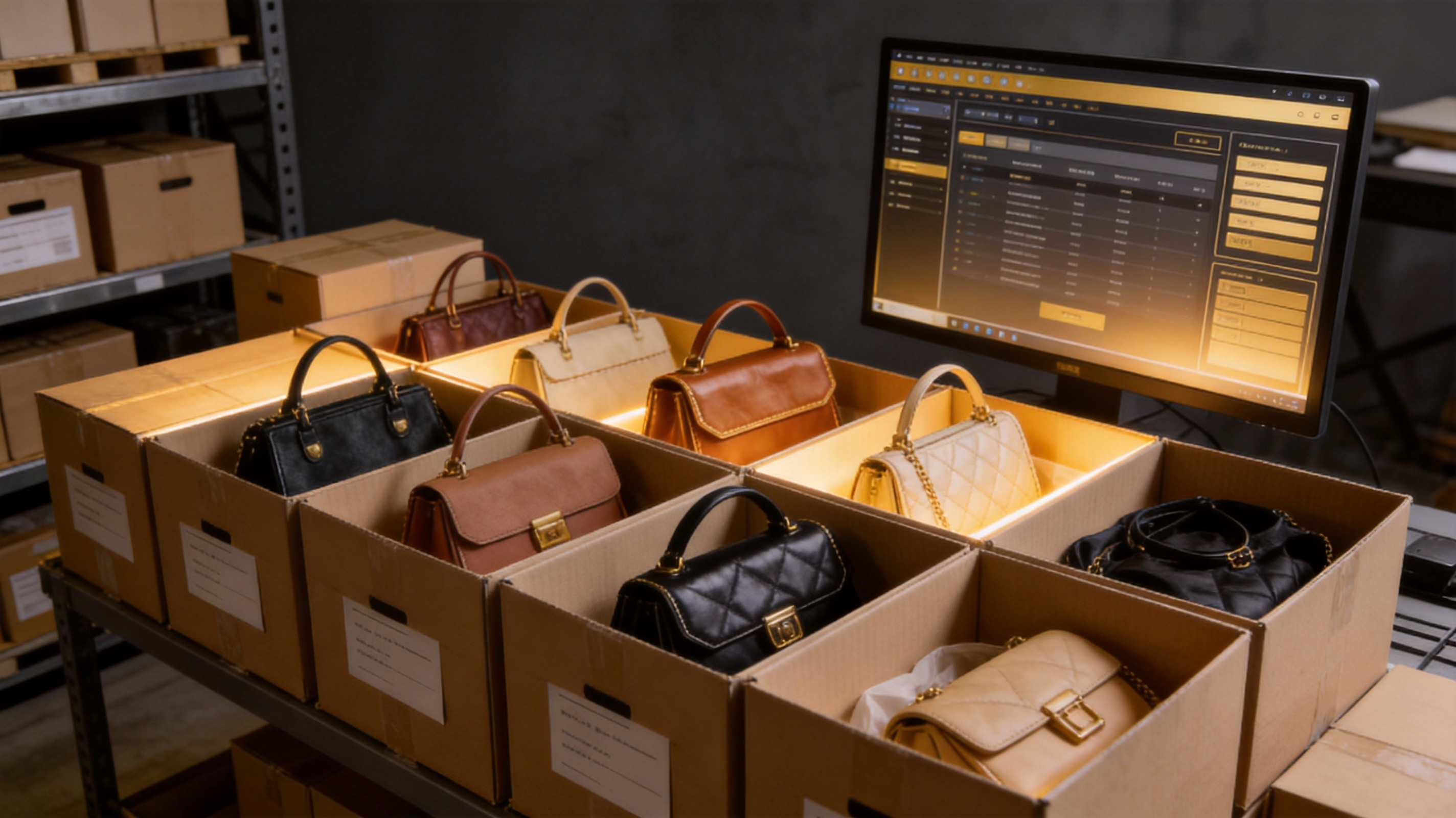
Private label branding creates a complete customer experience that wholesale brands cannot match
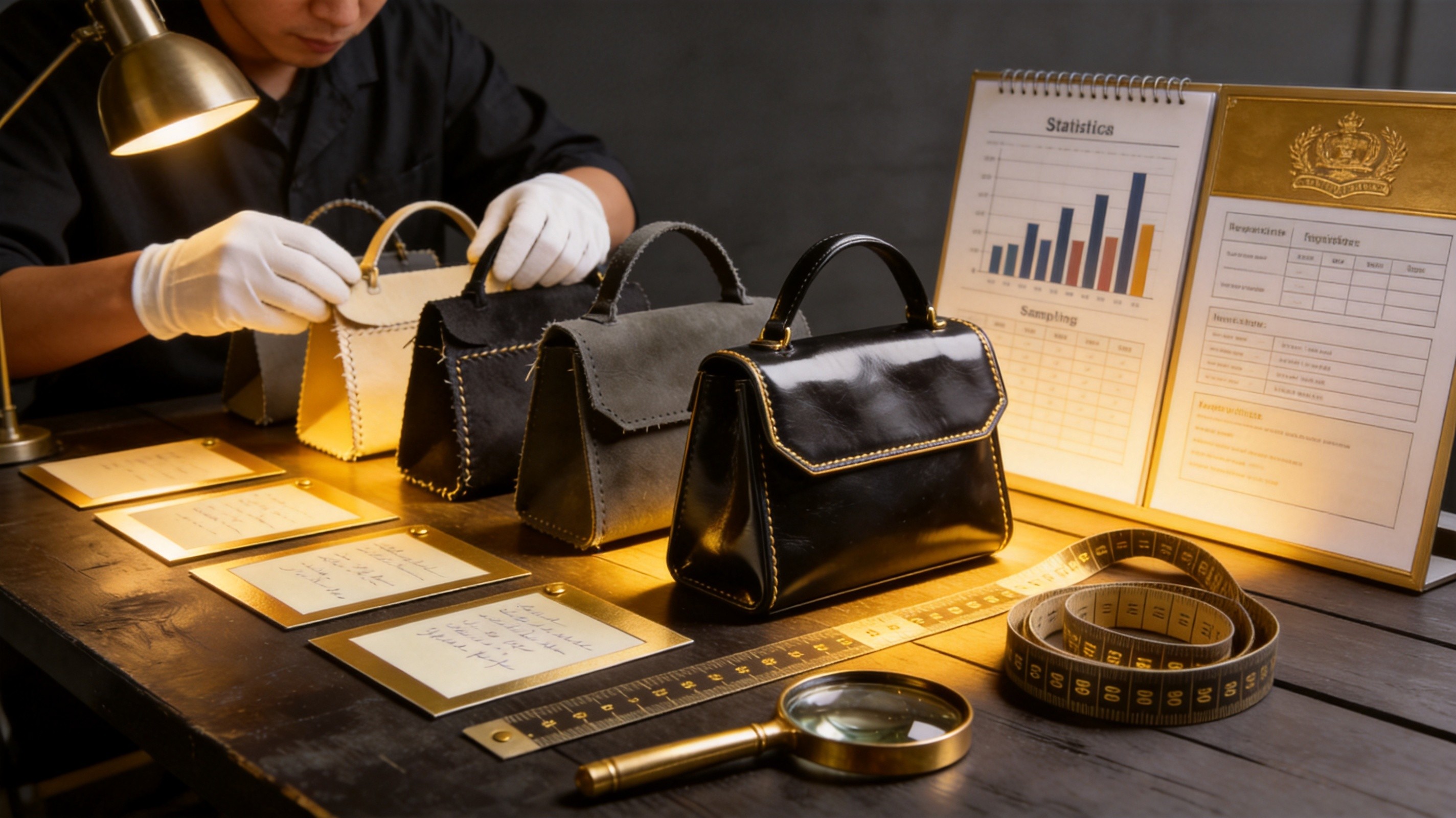
Private label customization allows creating products perfectly tailored to your customer base
Customization Freedom in Each Model
Customization is where private label's advantages become most visible. With private label, every element of the handbag is your decision: silhouette, dimensions, material, color, hardware finish, interior layout, branding placement, packaging, and even the scent of the tissue paper in the bag.
This level of customization allows you to create products specifically designed for your customer's needs. If your customers consistently request bags with laptop compartments, you can design styles that address this need. If they prefer gold hardware over silver, you specify that across your collection. These small customizations accumulate into a product line that feels bespoke and perfectly tailored to your market.
Wholesale brands offer no customization. You sell what they produce, in the colors and materials they select, with their branding and packaging. Your only differentiation is curation: which styles you choose to stock from their catalog. This limits your ability to stand out from other retailers carrying the same brands.
Time to Market: Speed Differences
Speed matters in fashion retail. The time between identifying a trend and having product in your store determines whether you capture demand at full margin or chase it with markdowns. This is where wholesale holds a clear advantage.
Wholesale handbags can typically be ordered and received within one to three weeks, depending on the brand's inventory availability. This allows boutiques to respond quickly to emerging trends, replenish bestsellers rapidly, and fill unexpected gaps in their assortment.
Private label production requires 60 to 90 days from order confirmation to delivery, including sample approval, production, quality inspection, and shipping. This longer timeline requires forward planning and trend forecasting. However, experienced boutique owners plan their collections seasons in advance, so the longer lead time becomes a non-issue with proper planning. For a detailed timeline, see our guide on seasonal buying for boutique inventory.
Quality Control Comparison
Quality is a critical differentiator for boutique handbags. Customers expect boutique-purchased bags to outperform mass-market alternatives in materials, construction, and durability. Both models can deliver quality, but the control mechanism differs significantly.
With private label, you set the quality standards and verify compliance through your inspection protocols. You specify material grade, stitching density, hardware quality, and finishing standards. You can conduct in-line inspections during production and final random inspections before shipment. This gives you complete control over the quality that reaches your customers.
With wholesale brands, quality depends entirely on the brand's own manufacturing standards and quality control processes. Some brands maintain excellent consistency; others vary between production batches. Your ability to influence quality is limited to choosing which brands to carry and providing feedback through your sales representative. Our guide on ensuring quality across bulk orders provides detailed quality control frameworks.
Marketing and Brand Story Opportunities
Private label creates powerful marketing opportunities that wholesale simply cannot match. Your handbags become extensions of your brand story, and every sale builds awareness and loyalty for your boutique's identity.
With private label, you can create compelling content around your design process, material sourcing, manufacturing craftsmanship, and the inspiration behind each collection. This content drives social media engagement, email marketing effectiveness, and press coverage. Customers connect with stories about how products are made and why they exist, and private label gives you authentic stories to tell.
Wholesale brands already have their own marketing narratives and brand stories. When you promote their products, you are essentially providing free advertising for the brand. While the brand's recognition may drive some foot traffic to your store, the loyalty and engagement accrue to the brand, not your boutique.
Private label brands create authentic marketing content that builds customer loyalty and drives sales
Scaling Considerations for Growing Boutiques
As your boutique grows, the dynamics between private label and wholesale shift. Early-stage boutiques with limited capital may benefit from wholesale's lower barriers to entry. But as sales volume increases and customer loyalty builds, private label becomes increasingly advantageous.
At higher volumes, private label's per-unit costs decrease through manufacturing efficiencies, while wholesale costs remain fixed or increase as brands raise prices. The margin gap widens in your favor. Additionally, private label gives you the ability to expand into new channels (online, wholesale to other retailers, pop-up shops) without territorial restrictions that wholesale brands often impose.
For boutiques planning to open additional locations or launch e-commerce, private label provides a unique product offering that cannot be replicated by competitors. This differentiation becomes increasingly valuable as you expand into new markets where brand recognition must be built from scratch.

A hybrid approach combining both models leverages the strengths of each sourcing strategy
Hybrid Approach: Combining Both Models Strategically
The most sophisticated boutique operators do not choose exclusively between private label and wholesale. Instead, they use both strategically, leveraging each model's strengths for different purposes within their assortment.
A common hybrid framework uses private label for proven best-selling categories where you have established customer demand and want maximum margin and exclusivity. Wholesale fills gaps, provides variety, and allows testing new styles or categories before committing to private label production. Seasonal trends might start as wholesale purchases to test customer response, with successful trends later translated into private label designs for the following season.
Recommended Hybrid Split
Allocate 60-70 percent of your handbag assortment to private label for core styles, and 30-40 percent to wholesale for variety, trend testing, and category filling. Adjust the ratio as your private label brand gains recognition and your cash flow supports larger production commitments.
Decision Framework: Which Model Fits Your Boutique
Use this framework to evaluate which model (or combination) aligns with your boutique's current situation and goals:
- Choose private label if: You want to build a brand, need higher margins, have $8,000+ for initial inventory, can plan 90+ days ahead, and want competitive differentiation
- Choose wholesale if: You are newly launched with limited capital, need immediate inventory, want to test market response, or prefer lower operational complexity
- Choose hybrid if: You have established customer demand data, want to balance margin with flexibility, and are ready to invest in brand building while maintaining assortment variety
The data consistently shows that boutiques with significant private label components outperform those relying solely on wholesale in long-term profitability, customer loyalty, and enterprise value. The initial investment is higher, but the returns compound over time, creating a sustainable competitive advantage that strengthens with each season.
Start Your Private Label Journey Today
Junyuan Bags specializes in helping boutiques build profitable private label handbag lines. From design to delivery, our team supports every step with 20+ years of manufacturing expertise.
WhatsApp: +86 17750020688 | Email: service@junyuanbags.com
MOQ: 200 pcs/style | Factory: 30,000 sqm, 300+ workers, Quanzhou, China
Frequently Asked Questions
What is the initial investment difference between private label and wholesale?
Private label requires $8,000 to $18,000 for your first year including samples, tooling, production, branding, and marketing. Wholesale requires $2,000 to $6,000 with no development costs. However, private label generates 60-75% gross margins versus 45-55% for wholesale, with compounding returns over time.
Can a boutique do both private label and wholesale?
Absolutely. Most successful boutiques use a hybrid model: 60-70% private label for core bestsellers and 30-40% wholesale for variety, trend testing, and category filling. This approach balances margin maximization with assortment flexibility.
How long does it take to build a recognizable private label brand?
Meaningful brand recognition typically takes 12 to 24 months of consistent selling. After 18 to 24 months, repeat customers begin seeking your brand by name. After 3 to 5 years, a well-executed private label can command prices equal to or exceeding national brands in your local market.
What MOQ do private label handbag factories typically require?
Established Chinese factories typically require 200 pieces per style per color. This translates to 400-800 total pieces for a two-style initial collection. The 200-piece MOQ from experienced factories represents the best balance of customization capability and per-unit pricing.
Which model offers better protection against online price competition?
Private label offers superior protection because your products are exclusive. Customers cannot find the same bag on Amazon or other online retailers. With wholesale, your products are available to hundreds of retailers, and customers frequently comparison shop online, eroding your margins.
Limitations and Scope of This Guide
This guide covers comparing private label vs wholesale profitability for boutiques, including margins, risk, branding, and long-term business implications. It is based on our experience as a handbag manufacturer in Quanzhou, China, serving brands worldwide since 2004. Key limitations to keep in mind:
- Profitability analysis is based on independent fashion boutiques in the US and European markets. Boutique economics in other regions may differ significantly.
- Private label typically offers higher margins but requires more upfront investment and longer development timelines. The 'better' choice depends on your boutique's resources and goals.
- This guide compares two models in isolation. Many successful boutiques combine both approaches—wholesale for breadth and private label for differentiation and margin.
For advice tailored to your specific situation, contact our team directly.