Table of Contents
- Why Price Negotiation Matters in Handbag Manufacturing
- Understanding Factory Cost Structures
- Preparation Steps Before Negotiating
- Key Pricing Factors: Materials, Labor, MOQ, Complexity
- Volume-Based Discount Strategies
- Payment Terms as Negotiation Leverage
- How to Request Detailed Price Breakdowns
- Common Pricing Mistakes Buyers Make
- Building Win-Win Long-Term Pricing Relationships
- When Price Isn't the Only Factor
- Red Flags: Too-Low Pricing Warnings
- Sample Negotiation Email Templates
- Timing Strategies for Better Pricing
- Multi-Style Order Pricing Tactics
- Final Negotiation Checklist
- Frequently Asked Questions
Price negotiation stands as one of the most critical skills for any brand owner sourcing handbags from Chinese factories. Get it wrong, and you either overpay — eroding your profit margins — or push so hard on cost that the factory cuts corners on materials and craftsmanship, damaging your brand reputation in the process.
This guide draws on over 20 years of manufacturing experience at our 30,000 square meter facility in Quanzhou, China, to give you a comprehensive framework for pricing negotiations that protect both your bottom line and your product quality. From understanding factory cost structures to mastering volume-based discounts, every section delivers actionable strategies you can apply immediately.
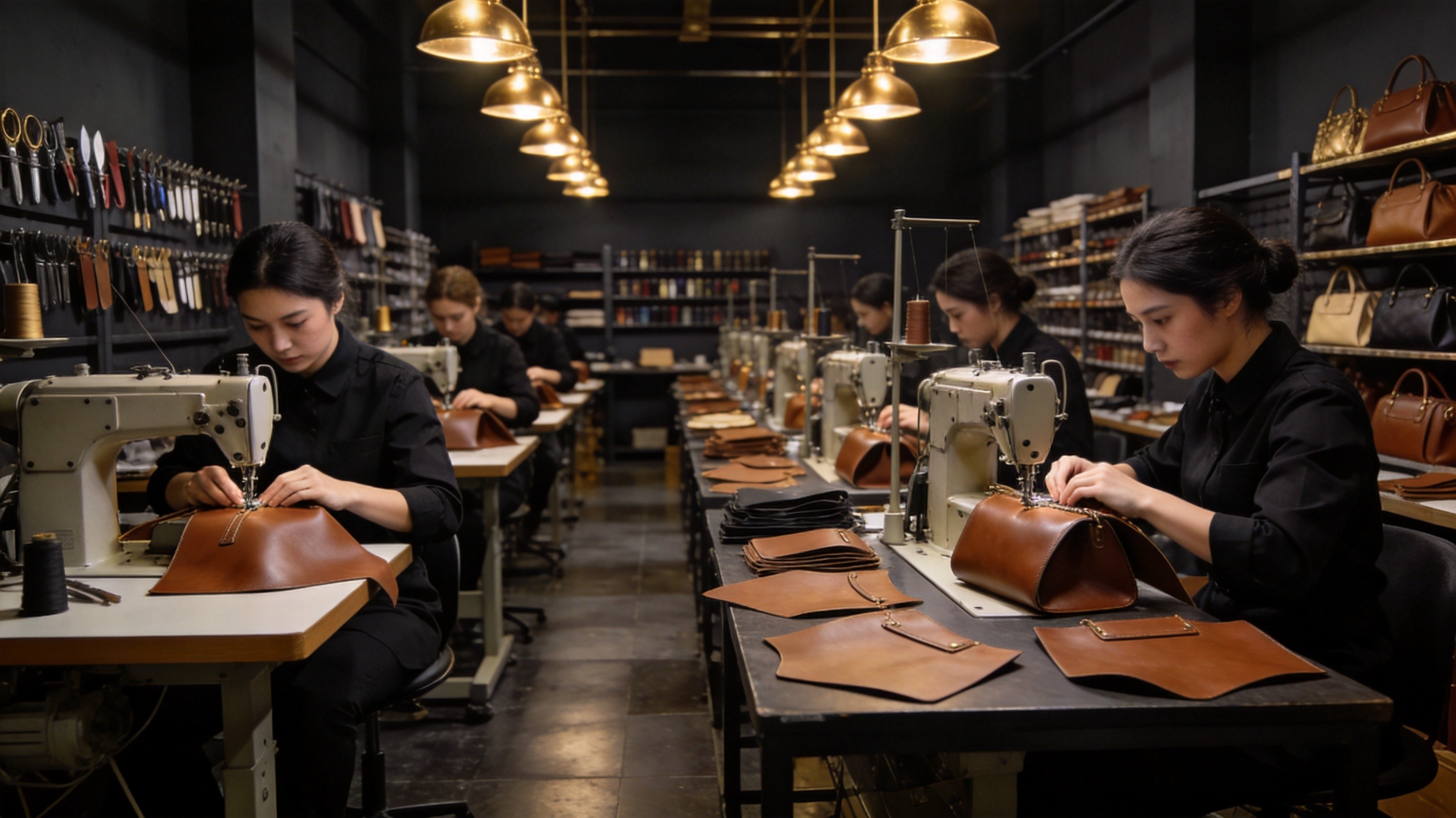
Understanding factory cost structures is the foundation of effective price negotiation
Why Price Negotiation Matters in Handbag Manufacturing
Handbag manufacturing pricing is not as straightforward as ordering widgets from a catalog. Each design involves unique material combinations, construction methods, hardware specifications, and finishing processes. This complexity creates significant room for pricing variation — and that variation is where skilled negotiation delivers results.
A typical handbag brand operates with 50-70% gross margins at retail. If your manufacturing cost shifts by even $2 per unit across a 5,000-piece production run, that represents $10,000 in additional profit or lost margin. Over multiple seasons and styles, effective negotiation becomes one of the most impactful business decisions you make.
The Stakes for Different Buyer Types
For emerging DTC brands, every dollar of manufacturing cost directly affects how long your runway lasts. Lower unit costs mean more marketing budget, more product development cycles, and more room for error as you build your brand.
For Amazon sellers, manufacturing cost determines your advertising budget ceiling and your ability to maintain competitive pricing while covering FBA fees, PPC costs, and platform commissions.
For boutique and wholesale brands, manufacturing pricing affects your wholesale margin structure, which cascades into retailer relationships and long-term distribution strategy.
Understanding Factory Cost Structures
Before you can negotiate effectively, you need to understand what drives factory pricing. A handbag's manufacturing cost breaks down into several distinct components, each offering different negotiation opportunities.
Material Costs (30-50% of Total)
Materials represent the largest cost component. This includes the primary material (genuine leather, PU, vegan leather, canvas), lining fabric, interlining, reinforcement materials, and thread. Material costs fluctuate based on global commodity prices, supply chain conditions, and order volume. Leather prices, for example, can vary 20-30% depending on grade, origin, and tanning method.
Labor Costs (20-35% of Total)
Labor costs depend on design complexity, the number of production steps, and the skill level required. A simple tote bag might take 45 minutes to construct, while a structured leather handbag with multiple compartments, piping, and custom hardware can require 3-4 hours of skilled work. Factories in Quanzhou benefit from a deep pool of experienced bag craftsmen, which helps maintain competitive labor costs without sacrificing quality.
Hardware and Trims (10-20% of Total)
Custom hardware — zippers, clasps, buckles, chain straps, logo plates — adds significant cost, especially for small orders where mold charges get distributed across fewer units. Standard hardware options dramatically reduce per-unit costs compared to fully custom pieces.
Overhead and Profit Margin (15-25%)
This covers factory rent, utilities, equipment depreciation, management salaries, quality control infrastructure, and the factory's profit margin. Reputable factories operating 30,000 sqm facilities with 300+ workers have baseline overhead that limits how low pricing can go without compromising operations.
| Cost Component | Typical Range | Negotiation Flexibility | Key Leverage Points |
|---|---|---|---|
| Materials | 30-50% | Medium | Material grade selection, bulk sourcing, alternative suppliers |
| Labor | 20-35% | Low-Medium | Design simplification, efficiency improvements, construction methods |
| Hardware/Trims | 10-20% | High | Standard vs custom, shared molds, alternative finishes |
| Overhead/Profit | 15-25% | Medium | Long-term commitments, volume guarantees, payment terms |
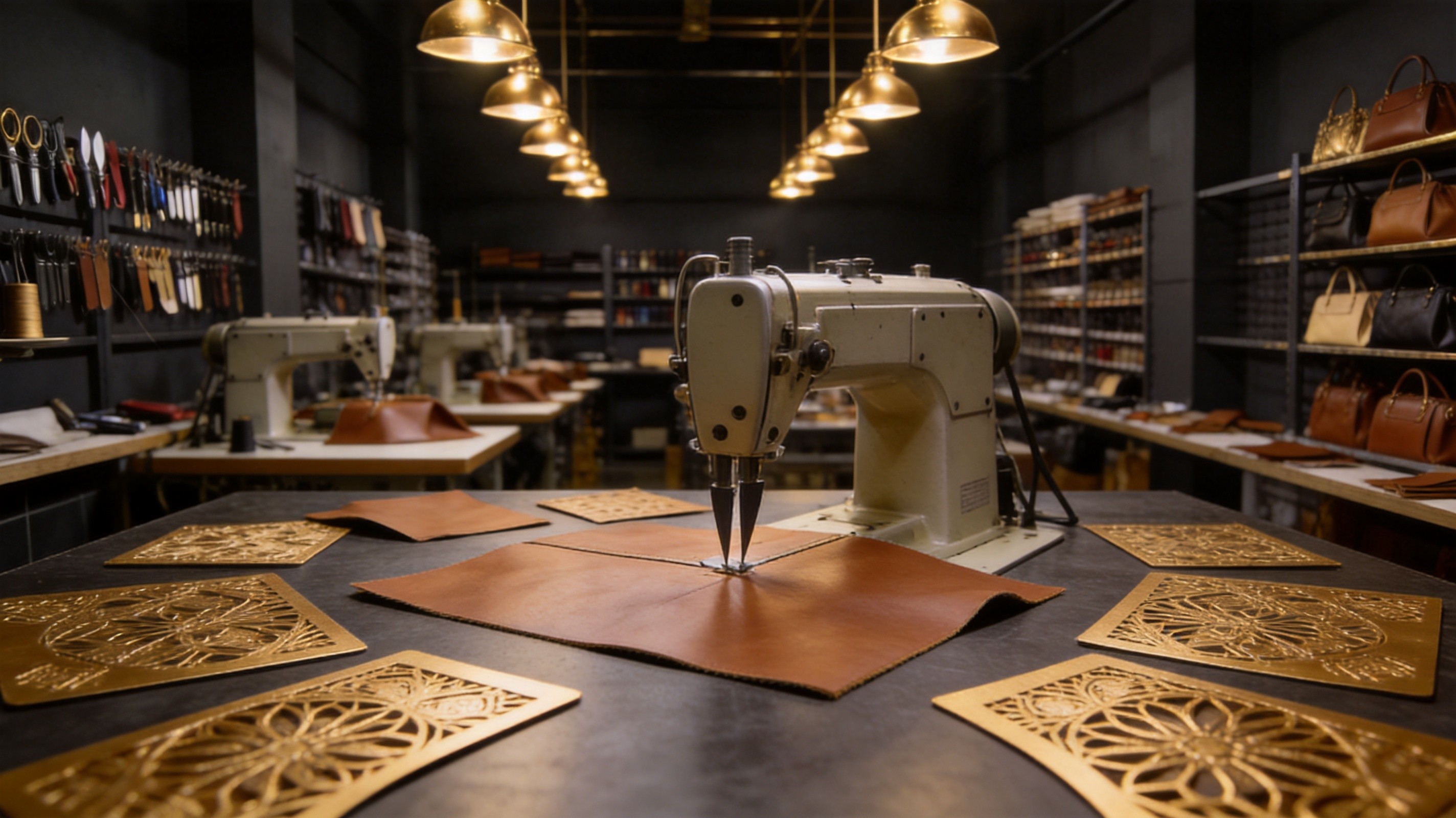
A well-organized factory floor reflects efficient operations that support competitive pricing
Preparation Steps Before Negotiating
Successful price negotiation begins long before you send your first email to a factory. Proper preparation gives you the knowledge and confidence to negotiate from a position of strength rather than desperation.
Research Market Pricing Benchmarks
Request quotes from at least 5-8 factories for the same specification. This gives you a pricing range and reveals which quotes are realistic versus inflated. For a standard PU crossbody bag with basic hardware, expect factory pricing between $8-18 depending on quality level. For genuine leather styles, expect $25-65 for mid-range leather and $60-150+ for premium full-grain leather.
Prepare Detailed Specifications
A complete tech pack is your most powerful negotiation tool. Factories cannot inflate pricing for ambiguous specifications because there is nowhere to hide additional costs. Your tech pack should include exact dimensions, material types and grades, hardware specifications, stitching requirements, interior configuration, and finishing details.
Know Your Numbers
Calculate your target manufacturing cost based on your retail price, desired margin, shipping costs, duties, and other overhead. If your retail price is $120 and you need a 60% gross margin after all landed costs, your maximum manufacturing cost per unit — including shipping and duties — might be $35. Knowing this figure prevents you from accepting quotes above your threshold or pushing for unrealistic prices that compromise quality.
Preparation Checklist
Before initiating price discussions, confirm you have: (1) Complete tech pack with specifications, (2) Quotes from 5+ factories, (3) Your maximum target cost calculated, (4) Material samples and cost references, (5) Volume projections for 12-24 months, and (6) A clear understanding of which quality elements are non-negotiable for your brand.
Key Pricing Factors: Materials, Labor, MOQ, Complexity
Understanding the four primary pricing factors helps you identify where cost savings are achievable and where cutting costs would damage product quality.
Material Selection Impact
Switching from full-grain leather to top-grain leather can reduce material costs by 25-35%. Moving from genuine leather to high-quality PU can cut costs by 50-70%. However, each material change affects the product's hand feel, durability, aging characteristics, and perceived value. The art of negotiation lies in finding the optimal material that meets your quality standards at the best price point.
Design Complexity Multipliers
Each additional compartment, zipper pocket, or decorative element adds labor time and construction complexity. A minimalist tote with one interior pocket might require 45 minutes of labor, while a structured satchel with three compartments, a zipper pocket, magnetic closure, and decorative stitching could require 2.5 hours. Simplifying design elements where they do not affect functionality or brand identity directly reduces manufacturing costs.
MOQ and Its Pricing Relationship
Order quantity has a direct, significant impact on unit pricing. The MOQ dynamics work because many costs — pattern making, material sourcing, machine setup, quality setup — remain relatively fixed regardless of order size. Spreading these fixed costs across more units reduces the per-unit price substantially.
| Order Quantity | Price Multiplier | Typical Discount | Best Suited For |
|---|---|---|---|
| 200 pieces/style | 1.25x - 1.40x | Base price | Emerging brands, test launches |
| 500 pieces/style | 1.10x - 1.20x | 8-12% off base | Growing DTC brands |
| 1,000 pieces/style | 1.0x (baseline) | 15-20% off 200-qty | Established brands, Amazon sellers |
| 3,000 pieces/style | 0.85x - 0.92x | 22-30% off 200-qty | Wholesale brands, retail chains |
| 5,000+ pieces/style | 0.75x - 0.85x | 30-40% off 200-qty | Major brands, large retailers |
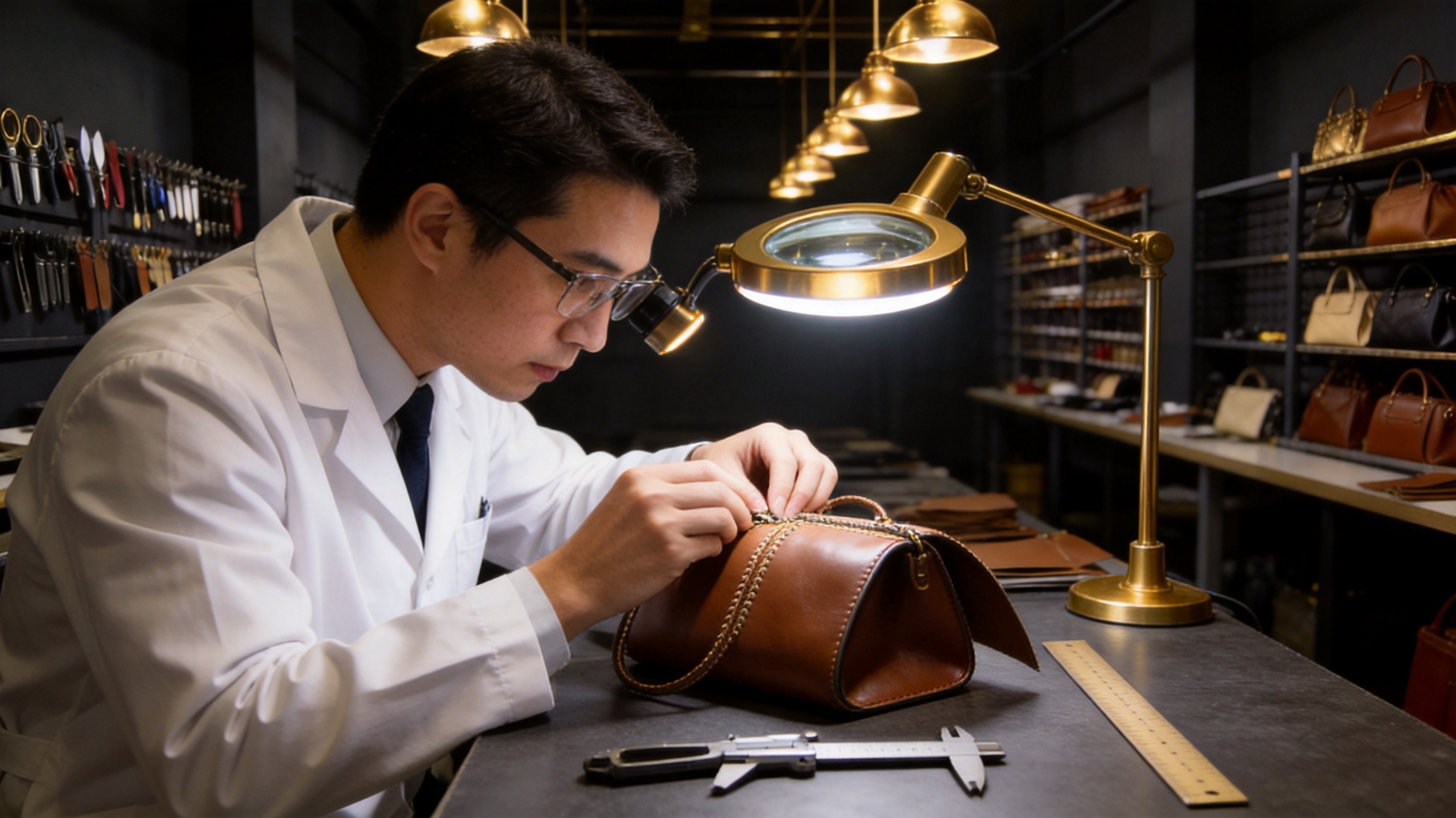
Material selection is the single largest factor in determining handbag manufacturing cost
Volume-Based Discount Strategies
Volume commitments represent your strongest negotiation lever. Factories value predictable, consistent orders because they enable better production planning, material purchasing, and workforce management.
Tiered Pricing Agreements
Negotiate a tiered pricing structure upfront that automatically applies discounts as your order quantities increase. This approach rewards growth without requiring renegotiation each time you scale up. For example, agree on pricing at 200-unit, 500-unit, 1,000-unit, and 3,000-unit tiers, with clear discount percentages at each level.
Annual Volume Commitments
Offering an annual volume commitment — even with orders split across multiple production runs — gives the factory confidence to offer better pricing. Committing to 5,000 units annually across four quarterly orders of 1,250 units each typically earns better pricing than placing a single 5,000-unit order with no future commitment.
Consolidated Style Ordering
If your brand offers multiple styles that share common materials or components, consolidate your material purchasing even if production runs are separate. Ordering 3,000 units of the same leather across five styles provides better material pricing than ordering 600 units of leather for each style individually.
Payment Terms as Negotiation Leverage
Payment terms directly affect a factory's cash flow and working capital requirements. Offering favorable payment conditions creates tangible value for the factory that can be exchanged for lower unit pricing.
Standard Payment Structures
The most common payment structure in Chinese handbag manufacturing is 30% deposit upon order confirmation, 70% balance before shipment or against bill of lading copy. This standard structure protects both parties but represents a significant cash flow commitment for the factory, especially for large orders.
Accelerated Payment Discounts
Offering to pay 50% deposit or even 100% upfront in exchange for a 3-5% price reduction benefits both parties. The factory gains working capital efficiency, and you capture meaningful cost savings. For a $30 bag ordered at 2,000 units, a 4% payment-term discount saves $2,400 per order.
Letter of Credit vs Wire Transfer
Letters of credit provide security but cost the factory banking fees and processing time. Offering wire transfer (T/T) instead of L/C for orders above $50,000 can save the factory 1-2% in banking costs — savings they can pass through to your pricing.
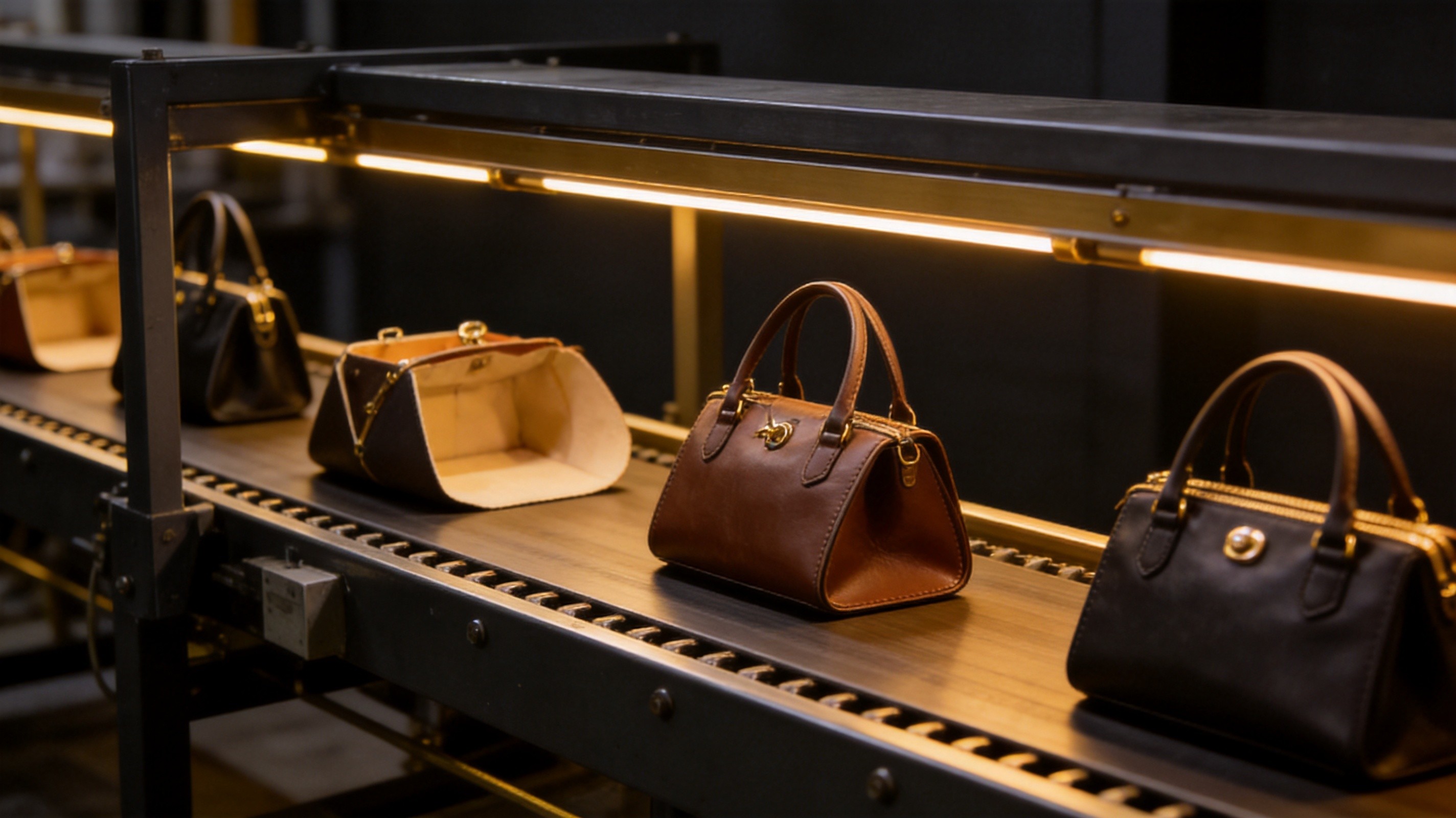
Strategic payment term offers create tangible value that can be exchanged for better unit pricing
How to Request Detailed Price Breakdowns
Never accept a single unit price without understanding what drives it. Requesting itemized cost breakdowns serves two purposes: it demonstrates your industry knowledge (discouraging inflated quotes), and it identifies specific areas where cost optimization is possible.
The Breakdown Request Framework
Ask each factory to provide pricing broken into: (1) Material cost per unit with material type and grade specified, (2) Labor cost per unit with estimated production time, (3) Hardware and trim costs itemized by component, (4) Packaging cost per unit, (5) Mold or tooling charges (amortized or one-time), and (6) Overhead and profit margin percentage.
Analyzing the Breakdown
Once you receive multiple breakdowns, compare them line by line. If Factory A quotes $28 and Factory B quotes $35 for the same bag, the breakdown reveals where the $7 difference lies. Perhaps Factory A sources leather at $8 per unit while Factory B pays $12. This insight tells you that material sourcing — not labor efficiency or profit margin — drives the price difference, and you can ask Factory B to optimize their material costs.
Pro Tip
Factories that resist providing cost breakdowns often have the most room for pricing adjustment. Transparency in costing signals a confident factory with competitive operations. Use the breakdown as a discussion tool, not a weapon — the goal is collaborative cost optimization, not adversarial price squeezing.
Common Pricing Mistakes Buyers Make
Even experienced buyers fall into pricing traps that undermine their negotiating position or damage the factory relationship. Recognizing these mistakes helps you avoid them.
Mistake #1: Focusing Only on Unit Price
A $25 bag from Factory A might cost more than a $28 bag from Factory B if Factory A has higher defect rates, longer lead times, or charges extra for packaging, labeling, and shipping preparation. Always calculate total landed cost — including defects, delays, rework, and all ancillary charges — rather than comparing base unit prices.
Mistake #2: Squeezing Too Hard
Pushing a factory below their sustainable cost level produces predictable results: material downgrades, skipped QC steps, rushed production, and diverted attention to more profitable clients. A 5-10% negotiation target is healthy. A 30%+ demand often backfires by degrading the very quality your brand depends on.
Mistake #3: Not Locking in Pricing for Repeat Orders
Some buyers negotiate an excellent price for the first order but fail to secure the same terms for reorders. Factories may increase pricing on reorders unless the agreed rate is contractually locked for a defined period or volume threshold.
Mistake #4: Ignoring Seasonal Pricing Variations
Chinese factories experience significant seasonal demand fluctuations. Ordering during peak season (August-October, ahead of holiday retail) carries premium pricing. Placing orders during slower periods (February-April, June-July) can yield 5-10% savings as factories seek to maintain production floor utilization.
Building Win-Win Long-Term Pricing Relationships
The most effective pricing strategy is not about extracting the lowest possible price from a factory. It is about building a partnership where both parties thrive — because thriving factories produce better products, prioritize your orders, and invest in your brand's success.
Transparent Cost Sharing
When raw material prices spike, work with your factory to find shared solutions rather than demanding they absorb the entire increase. Perhaps you split a 15% leather price increase 50/50, or agree to revisit pricing after three months when commodity prices stabilize. This approach builds trust and ensures the factory does not secretly cut materials to maintain your price.
Value-Added Negotiation
Instead of pushing only for lower unit prices, negotiate for added value at the same price point: complimentary sample development, free mold modifications, improved packaging, priority production scheduling, or dedicated QC resources. These additions carry real value for your brand but often cost the factory less than a direct price reduction.
Growth Partnership Commitments
Share your growth projections transparently. A factory that knows your plan to scale from 500 to 5,000 units over 18 months will invest in the relationship differently than one treating your order as a one-time transaction. This investment shows up in better pricing, priority scheduling, and proactive quality improvements.
When Price Isn't the Only Factor
Mature brand owners understand that manufacturing cost is just one variable in the total value equation. A slightly higher-priced factory that delivers consistent quality, meets deadlines, communicates proactively, and supports your brand growth often delivers better total value than the cheapest option.
Quality Cost Analysis
Calculate the true cost of quality failures. A 3% defect rate on a $25 bag means $750 in wasted units per 1,000 ordered — plus customer returns, reputation damage, and replacement shipping costs. A factory charging $27 with a 0.5% defect rate may deliver lower total cost than a $25 factory with 3% defects.
Speed-to-Market Value
For seasonal collections and trend-driven products, delivering to market two weeks earlier can mean significantly higher sell-through rates and fewer markdowns. Factories that reliably meet tight timelines deliver value that extends well beyond their unit pricing.
Red Flags: Too-Low Pricing Warnings
When a factory quotes significantly below market rate, treat it as a warning signal rather than a victory. Below-market pricing typically indicates one or more problematic practices.
Common Signs of Dangerous Low Pricing
- Quotes 25%+ below comparable factories — likely indicates material substitution or skipped quality processes
- Refuses to provide cost breakdowns — has nowhere to justify their pricing structure
- Agrees to any price without pushback — plans to compensate through hidden cost-cutting
- New factory with no track record — may be quoting unrealistically low to win initial orders
- Significant price drops after initial sampling — may switch to inferior materials for bulk production
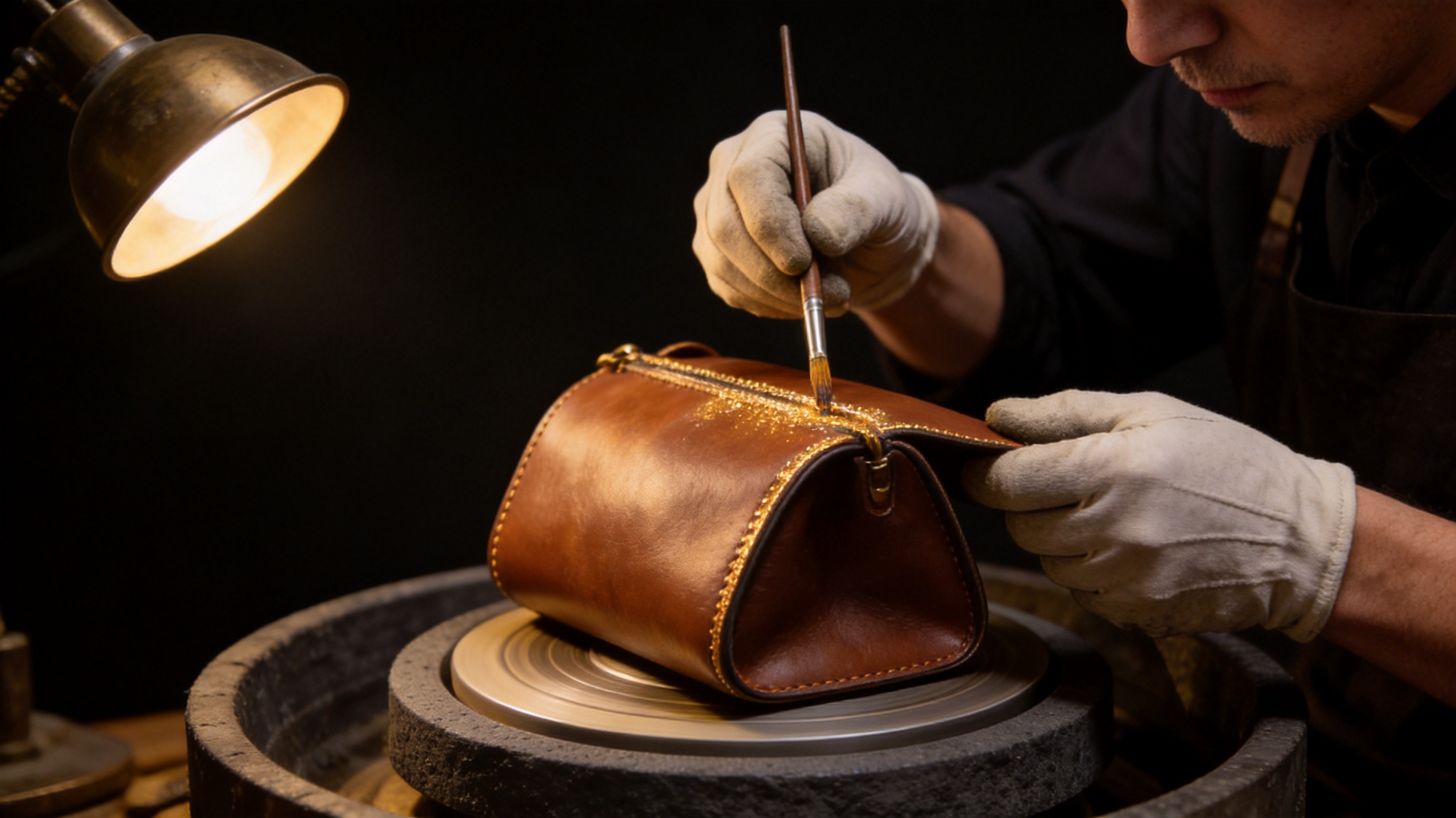
Suspiciously low pricing often results in hidden quality compromises that damage your brand
Sample Negotiation Email Templates
Having structured email templates for different negotiation scenarios helps you communicate professionally while maintaining your negotiating position.
Template #1: Initial Price Inquiry with Target Indication
Begin with appreciation for the quote, provide specific context about your brand volume and growth plans, indicate your target range based on market research, and request the factory's best pricing with clear specifications. This approach signals professionalism and market awareness.
Template #2: Counter-Offer After Receiving a Quote
Reference specific comparable quotes you have received (without revealing exact competitor pricing), acknowledge quality factors, propose a specific counter-offer with justification, and leave room for the factory to respond constructively. Avoid ultimatums in initial counter-offers.
Template #3: Volume-Based Discount Request
Present your volume commitment clearly, request a tiered pricing schedule, propose a pilot order at initial quantities with contractually agreed pricing for future larger orders, and emphasize the long-term partnership opportunity.
Timing Strategies for Better Pricing
When you negotiate matters almost as much as how you negotiate. Chinese manufacturing follows predictable seasonal and business cycles that create pricing opportunities for informed buyers.
Off-Season Ordering Advantages
Chinese New Year (January-February) and the summer months (July-August) represent lower-demand periods for handbag factories. Placing orders during these windows — when production capacity sits partially idle — gives you stronger negotiating leverage for 5-10% discounts or value-added concessions.
End-of-Quarter and End-of-Year Dynamics
Factories working to meet quarterly or annual targets may offer more favorable terms in the final weeks of a period. Aligning your order placement with these timelines can yield pricing benefits that are unavailable during peak production months.
Multi-Style Order Pricing Tactics
Brands launching multiple styles simultaneously have unique negotiating advantages that single-style buyers cannot access.
Shared Material Leverage
When three or more styles use the same leather or fabric, your total material purchase across all styles creates bulk pricing power. Negotiate material costs based on the aggregate volume rather than per-style quantities.
Production Efficiency Arguments
Multiple styles produced in the same production run allow the factory to optimize workflow, share setup costs, and maintain workforce continuity across styles. These efficiency gains should translate into lower per-style costs compared to ordering each style as a separate, standalone project.
Final Negotiation Checklist
Before finalizing any pricing agreement with your handbag factory, verify each item on this comprehensive checklist to ensure you have covered all bases.
| Checklist Item | Status | Notes |
|---|---|---|
| Received quotes from 5+ factories for same specs | ☐ | Compare apples to apples |
| Obtained detailed cost breakdown from preferred factory | ☐ | Materials, labor, hardware, overhead separate |
| Calculated maximum target cost based on retail margin | ☐ | Include all landed costs |
| Negotiated tiered pricing for future volume increases | ☐ | Lock in rates for 12+ months |
| Agreed on payment terms and any associated discounts | ☐ | Document in purchase agreement |
| Clarified mold, tooling, and sample costs | ☐ | One-time vs amortized charges |
| Confirmed pricing validity period | ☐ | Typically 30-90 days |
| Verified quality standards at negotiated price | ☐ | Sample approval binding for bulk |
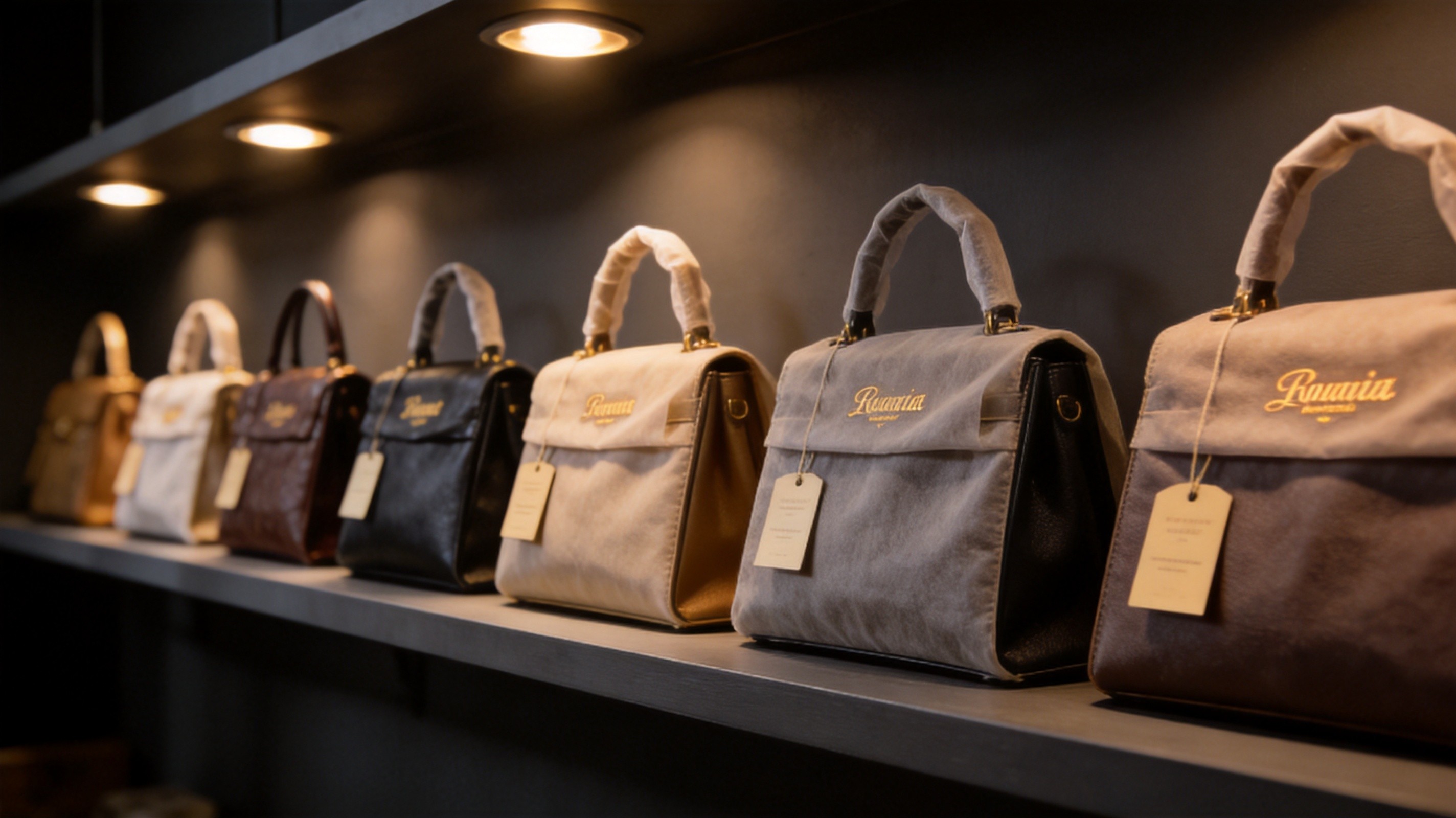
Strategic pricing negotiation balances cost savings with quality preservation for sustainable brand growth
For brands seeking a manufacturing partner that offers transparent pricing, flexible MOQ from 200 pieces per style, and genuine partnership on cost optimization, Purse Private Label brings over 20 years of manufacturing expertise to every negotiation. Our product range and solutions are structured to support brands at every growth stage with competitive, honest pricing.
Understanding the full cost structure of launching a private label purse line helps you negotiate more effectively by giving you context for what reasonable factory pricing looks like across all budget categories.
Ready to Discuss Pricing for Your Handbag Project?
Get a transparent, detailed quote within 24 hours. No hidden fees, no surprises.
📧 service@junyuanbags.com | 📱 +86 17750020688 | MOQ: 200 pcs/style
Frequently Asked Questions
How much can I negotiate down the price with a handbag factory?
Typical handbag factory price negotiations yield 5-15% reductions from initial quotes. Experienced buyers who provide detailed specifications, commit to larger volumes, and offer favorable payment terms can achieve 15-25% savings. The key is understanding the factory's actual cost structure rather than simply demanding lower prices.
What factors most affect handbag manufacturing pricing?
The four primary pricing factors are materials (30-50% of total cost), labor (20-35%), hardware and trims (10-20%), and overhead plus profit margin (15-25%). Material type, design complexity, order quantity, and customization level all significantly impact the final unit price.
Should I reveal my target price to the factory?
Sharing a realistic target price range can be effective if you have done thorough market research. Providing a range rather than a fixed number gives negotiation room. However, setting your target too low damages credibility and may cause the factory to cut corners on materials or quality to meet your price.
How do payment terms affect handbag factory pricing?
Payment terms directly influence pricing because they affect the factory's cash flow. Paying 100% upfront typically earns 3-5% discount versus standard 30/70 terms. Offering faster payment cycles or larger deposits provides the factory with working capital advantages that can be reflected in lower unit prices.
When should I walk away from a price negotiation?
Walk away when the factory refuses to provide a cost breakdown, when pricing is suspiciously below market rate (indicating quality compromises), when communication breaks down during negotiation, or when the factory cannot meet your quality standards at any reasonable price point. Protecting your brand reputation always takes priority over saving a few dollars per unit.
Limitations and Scope of This Guide
This guide covers strategic pricing negotiation with handbag factories, including preparation, tactics, volume leverage, and relationship management. It is based on our experience as a handbag manufacturer in Quanzhou, China, serving brands worldwide since 2004. Key limitations to keep in mind:
- Negotiation strategies are based on B2B manufacturing relationships in China. Cultural norms and business practices differ when negotiating with factories in other countries.
- Target price reductions mentioned (5-15%) are typical ranges achievable through legitimate negotiation. Demands beyond this may compromise quality or relationship.
- Pricing is one dimension of negotiation. Payment terms, lead times, MOQ flexibility, and quality commitments are equally important and often more valuable than unit price alone.
For advice tailored to your specific situation, contact our team directly.