Table of Contents
- What Are Modular Handbags?
- The Appeal of Convertible Designs
- Types of Modular Bag Systems
- Detachable Components: Straps, Pouches, Panels
- Hardware Requirements for Modular Designs
- Material Durability for Multi-Configuration Use
- Design Challenges in Modular Bags
- Manufacturing Considerations and Costs
- Consumer Research: Willingness to Pay for Modular
- Brand Case Studies in Modular Design
- How to Develop a Modular Collection with a Factory
- Patent and IP Considerations
- Frequently Asked Questions
Handbag design has traditionally followed a simple premise: one bag, one form, one function. You buy a shoulder bag, it remains a shoulder bag. You purchase a tote, it stays a tote. Modular design shatters this constraint entirely, introducing bags that transform — a shoulder bag that becomes a crossbody, a tote that converts to a backpack, a clutch that expands into a full-size carry-all.
For brand owners, modular design represents something rare in the handbag industry: a business model that generates repeat revenue from existing customers. A customer who buys a modular bag system today returns next month for a different colored strap, next quarter for an additional pouch, and next season for a new panel set. This repeat purchase cycle — almost nonexistent in traditional handbag sales — transforms the economics of brand ownership.
This comprehensive guide examines every aspect of modular handbag design — from the engineering principles and material requirements through manufacturing costs, consumer demand data, and the intellectual property landscape. For brand owners considering this category, the information here provides the foundation for informed product development decisions.

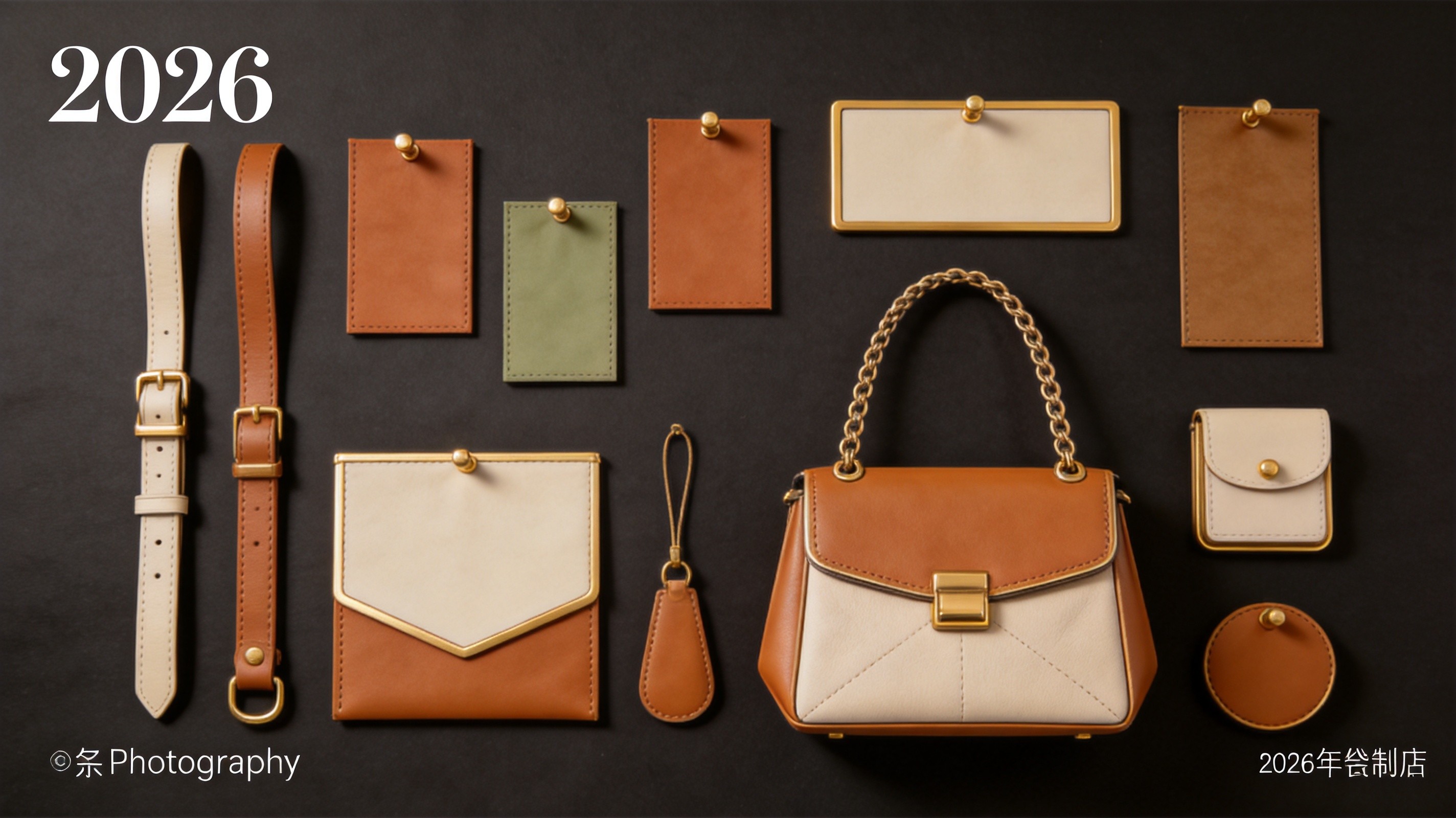
Modular bag systems allow customers to reconfigure a single bag across multiple styles and functions
What Are Modular Handbags?
A modular handbag incorporates designed connection points that allow components to be attached, detached, or rearranged by the user. The system typically includes a base bag body plus a set of interchangeable elements — most commonly straps, but increasingly including pouches, decorative panels, charms, and structural inserts.
The concept borrows from modular design in other industries — furniture that reconfigures, technology with swappable components, fashion with reversible garments. The core principle is the same: design for adaptability, allowing a single product to serve multiple needs across multiple contexts.
The most effective modular bag systems feel seamless in each configuration. The connection hardware should not look like an afterthought or compromise the bag's aesthetic in any mode. Achieving this integration — where the bag looks intentional whether configured as a shoulder bag, crossbody, or clutch — is the central design challenge of modular handbag development.
The Appeal of Convertible Designs
The consumer appeal of modular bags operates on several levels, each addressing different purchasing motivations.
Value Perception
A bag that serves three or four functions justifies a higher price than a single-function bag. Consumers rationalize the investment by calculating the cost-per-use across configurations. A $300 modular bag that replaces what would otherwise be three separate bags ($100 each) feels like a rational purchase even at a premium.
Personalization
Modular systems allow customers to express individuality through component combinations. Two people who buy the same base bag can create entirely different looks by selecting different straps, pouches, or panels. This personalization creates emotional connection — the bag feels uniquely theirs, not mass-produced.
Context Adaptability
Modern consumers navigate multiple contexts daily — work, gym, social events, travel. A modular bag adapts to each context without requiring multiple bags. The same base carries professional essentials with a structured leather strap, transitions to gym mode with a sporty crossbody strap, and becomes evening-appropriate with a chain strap and decorative panel.
Sustainability Alignment
The "buy less, use more" philosophy of modular design aligns with growing sustainability consciousness. Rather than purchasing multiple single-purpose bags, a consumer invests in one versatile system. Sustainability considerations increasingly influence material selection in modular design.

Modular bags adapt to multiple daily contexts — from work to social events — without requiring multiple bags
Types of Modular Bag Systems
Modular bag designs vary significantly in complexity and scope. Understanding the main system types helps brand owners decide which approach fits their market positioning.
| System Type | Description | Complexity | Price Range | Best For |
|---|---|---|---|---|
| Strap-Swap System | Base bag with interchangeable straps (leather, chain, woven, etc.) | Low | $100 – $300 | Entry-level modular; broadest appeal |
| Configuration System | Bag transforms between styles (tote to backpack, shoulder to clutch) | Medium | $200 – $500 | Function-focused consumers |
| Component System | Base body with add-on pouches, panels, and accessories | Medium-High | $250 – $600 | Personalization-focused consumers |
| Full Platform System | Comprehensive ecosystem with body panels, straps, inserts, charms | High | $300 – $800+ | Premium brands building ecosystems |
Detachable Components: Straps, Pouches, Panels
Straps
Straps are the most common modular component and the easiest entry point for brands exploring modular design. A well-designed strap system uses standardized attachment hardware (typically D-rings or O-rings with snap hooks or lobster clasps) that allows any strap in the collection to connect to any bag body.
Effective strap collections include options across materials (leather, chain, canvas, woven), widths (narrow for evening, wide for casual), lengths (adjustable for shoulder/crossbody), and colors. Each additional strap is a potential repeat purchase at $30–$80 retail.
Pouches
Interior and exterior pouches add organizational flexibility. Detachable interior pouches allow users to customize compartment layouts. Exterior pouches that clip or zip onto the bag body add capacity and change the bag's visual profile. Pouches are particularly effective as add-on accessories, priced at $25–$60 retail.
Panels
Swappable exterior panels are the most visually transformative modular element. A bag with a smooth leather front panel can become an entirely different product by attaching a quilted, woven, or printed panel. Panel systems require precise alignment and secure attachment mechanisms but offer the strongest personalization potential.
Hardware Requirements for Modular Designs
Hardware is the foundation of any modular bag system. The connection mechanisms must be strong enough to handle repeated attachment and removal while remaining visually integrated with the bag's design.
| Hardware Type | Function | Quality Standard | Cost Impact per Set |
|---|---|---|---|
| D-rings (stainless steel) | Strap attachment points | Rated for 15kg+ pull strength | $2 – $6 |
| Snap hooks / Lobster clasps | Strap-to-ring connection | Smooth operation after 10,000+ cycles | $1.50 – $4 each |
| Magnetic connectors | Panel and pouch attachment | N52 neodymium; 5kg+ hold strength | $3 – $8 per pair |
| Heavy-duty zippers | Detachable section boundaries | YKK Natulon or equivalent; 5,000+ cycles | $2 – $5 |
| Hidden magnetic plates | Flush panel attachment | Precise alignment within 1mm tolerance | $4 – $10 per set |
| Rotating buckles | Adjustable strap length | Smooth rotation; secure at all positions | $2 – $5 |
Hardware Finishing
In modular designs, hardware receives more visible attention because connection points are central to the design language. Finishes should resist wear from repeated contact — PVD (Physical Vapor Deposition) coating provides superior durability compared to standard electroplating. Brushed and matte finishes hide wear marks better than polished surfaces. See 2026 hardware trend analysis for current finish preferences.
Material Durability for Multi-Configuration Use
Modular bags face unique durability challenges. Connection points experience repeated stress from attachment and removal. Materials at connection zones must withstand friction, pressure, and flexing far beyond what static bag components endure.
Reinforcement at Connection Points
Every D-ring, magnetic plate, and zipper terminal must be reinforced with additional material layers or backing plates. Leather bags require reinforcing patches (typically 2–3mm thick) at all load-bearing attachment points. Fabric bags need bartack stitching or riveted reinforcement at stress zones.
Material Selection
The base bag body should use materials with high abrasion resistance at connection zones. Full-grain leather with a minimum 1.2mm thickness handles repeated hardware contact well. For fabric bags, ballistic nylon or reinforced canvas at attachment zones prevents premature wear. Straps — which bear the most dynamic stress — should be constructed with the highest-grade materials in the collection.

Hardware quality is the foundation of modular bag systems — connection points must withstand thousands of attachment cycles
Design Challenges in Modular Bags
Modular design introduces complexity that simple bags do not face. Acknowledging and addressing these challenges during development prevents customer frustration and product failures.
Aesthetic Cohesion Across Configurations
The most common failure in modular bag design is when connection hardware is visually intrusive. Exposed D-rings, visible magnetic plates, and obvious attachment mechanisms make a bag look engineered rather than designed. The goal is for hardware to be present but invisible — felt structurally but not seen aesthetically.
Weight Distribution
Adding modular components changes a bag's weight distribution and balance. A base bag that hangs perfectly may tilt or sag when additional pouches or panels are attached. Testing every configuration with realistic loads is essential before release.
User Experience Complexity
If converting between configurations requires more than 15–20 seconds or more than two steps, customers will not do it regularly. The best modular systems allow transformation with intuitive, one-handed operation. Complex systems should include clear instructions — ideally printed inside the bag or on a QR-linked guide.
Manufacturing Considerations and Costs
Producing modular bags requires higher manufacturing precision than conventional designs. The tolerance for misalignment is minimal — if D-rings are positioned even 2mm off spec, straps and panels will not align properly across configurations.
| Cost Component | Standard Bag | Modular Bag | Difference |
|---|---|---|---|
| Materials | $15 – $35 | $22 – $50 | +30–45% |
| Hardware | $3 – $8 | $10 – $25 | +150–200% |
| Labor (construction) | $8 – $18 | $12 – $28 | +40–60% |
| Quality control | $2 – $5 | $4 – $10 | +100% |
| Total production cost | $28 – $66 | $48 – $113 | +65–75% |
| Typical retail price | $80 – $200 | $150 – $450 | +80–125% |
The higher production cost is justified by higher retail pricing and the additional revenue from component add-ons. The critical metric is not production cost comparison but rather total revenue per customer over time — and modular systems consistently outperform static designs on this measure.
Consumer Research: Willingness to Pay for Modular
Consumer research on modular bags reveals encouraging data for brand owners considering this category:
- 62% of surveyed consumers said they would pay 25–50% more for a bag with interchangeable components versus a comparable non-modular bag
- 45% of modular bag owners purchased at least one additional component within 12 months
- Average additional spend by modular bag owners: $85–$150 per year on replacement and new components
- Top-requested add-ons: Alternative straps (68%), additional pouches (42%), decorative panels (35%), protective dust bags (28%)
- Brand loyalty rate: 72% for modular bag brands versus 45% for standard handbag brands
These numbers demonstrate that modular design does not just command higher initial prices — it builds the kind of repeat purchase behavior that drives long-term brand value.
Brand Case Studies in Modular Design
Several brands have built successful businesses around modular bag concepts, providing instructive examples for new entrants.
The Strap-Centric Model
Brands like Baggu and Cuyana built strong strap accessory businesses by offering diverse strap collections compatible with their base bags. The strategy works because straps are relatively inexpensive to produce, easy to photograph and market, and create immediate visual transformation. The initial bag sale becomes the entry point for an ongoing accessory revenue stream.
The Full Ecosystem Model
Premium brands like Loewe have experimented with comprehensive modular systems where the base bag functions as a platform for extensive customization. These systems require larger upfront investment in design and tooling but create stronger brand differentiation and higher customer lifetime value.
For emerging brands, the strap-centric model offers the best entry point. Start with a strong base design and standardized attachment system, then build the strap collection as your repeat-revenue engine. Develop detailed tech packs that specify modular attachment systems.

Starting with a strong base design and building strap collections creates the most accessible entry into modular bag design
How to Develop a Modular Collection with a Factory
Developing modular bags with a manufacturing partner requires clear communication about the system's functional requirements and quality standards.
Step 1: Define the System Architecture
Before approaching a factory, define exactly how your modular system works. Document every configuration, every connection point, every component interface. Create a system specification that serves as the master reference for all design and production work.
Step 2: Prototype Connection Hardware
Connection hardware is the critical path item. Prototype and test every connector type before finalizing the bag design. Test for strength (pull testing to at least 3x expected load), durability (cycle testing for 5,000+ attachment/removal cycles), and user experience (can users attach and detach components intuitively?).
Step 3: Develop Samples for Every Configuration
Request factory samples in every intended configuration — not just the primary configuration. Test each configuration for weight distribution, structural integrity, aesthetic quality, and user experience. The bag should look and function well in every mode, not just the default mode.
Step 4: Establish Interchangeability Standards
If your system promises that any strap fits any bag, this must be true across production runs. Establish tolerance specifications for connection point placement (typically ±0.5mm) and verify compliance during production quality control.
Select a factory with precision manufacturing capabilities — modular designs tolerate less variation than conventional bags. Facilities experienced with technical bags or performance accessories often have the precision mindset that modular bag production demands.
Patent and IP Considerations
Modular bag design occupies a space where functional innovation intersects with design aesthetics. Several patent and IP considerations require attention.
Existing Patents
Multiple patents exist covering specific modular bag mechanisms — magnetic attachment systems, strap connection mechanisms, and convertible bag structures. Before investing in a modular system, conduct a patent search to ensure your proposed mechanism does not infringe existing patents. A patent attorney specializing in fashion accessories can provide this clearance for $1,500–$3,000.
Protecting Your Innovation
If your modular system incorporates a genuinely novel connection mechanism or configuration method, consider filing for utility patent protection. Design patents can protect the ornamental appearance of unique hardware elements. Both should be filed before showing designs to potential manufacturing partners or launching publicly.
NDA Requirements
When sharing modular system designs with factories, always execute a comprehensive NDA before disclosing connection mechanisms or system architecture. Modular designs are easier to replicate than complex aesthetic designs because the functional innovation is often simpler to understand and reproduce.
The Modular Advantage
Modular bag design offers something that most handbag categories cannot: a built-in repeat revenue model. While traditional bag brands rely on customers purchasing entirely new bags, modular brands generate ongoing revenue from component add-ons, replacements, and seasonal accessory collections. This recurring revenue stream fundamentally changes the brand's financial profile and valuation.
Build Your Modular Bag System
Our engineering team specializes in precision modular hardware and connection systems. From prototype to production at scale. MOQ from 200 pieces per style.
📧 service@junyuanbags.com | 💬 WhatsApp: +86 17750020688
Precision manufacturing and quality control are essential for modular bag systems where every connection must perform perfectly

Modular bag accessories including interchangeable straps and components
Care and Repair of Modular Bags
Modular bags require specific care approaches that account for their connection hardware and multiple components. Understanding these requirements helps brands provide accurate customer guidance.
Hardware Maintenance
Connection hardware — D-rings, magnetic connectors, snap hooks — should be kept clean and free of debris that could interfere with attachment mechanisms. Periodic application of a small amount of lubricant to moving parts (snap hooks, swivels) maintains smooth operation. Hardware should be inspected regularly for wear, particularly at points where metal contacts metal during repeated attachment cycles.
Component Storage
Modular components should be stored separately when not in use to prevent scratching and tangling. Brands that provide dedicated storage solutions — component pouches, compartmentalized dust bags — add value while protecting the product. This also creates a packaging opportunity for branded accessories.
Scaling a Modular Product Line
Brands that find success with initial modular designs face the challenge of scaling the system — adding compatible components without disrupting the interchangeability that makes the system work.
Component Ecosystem Planning
Before launching, map the complete component ecosystem you intend to build. Every new strap, pouch, or panel must be compatible with every existing bag body. This compatibility requirement means that design changes to bag bodies must be carefully managed — a change to D-ring placement in a new production run could render existing straps incompatible.
Versioning Strategy
Some brands adopt a versioning approach where base bag bodies maintain consistent attachment specifications across production runs, while aesthetic details (color, material, decorative elements) update seasonally. This approach preserves backward compatibility while allowing visual refreshment.
Frequently Asked Questions
What is a modular handbag?
A modular handbag is a bag designed with interchangeable or detachable components that allow it to be reconfigured into multiple styles or functions. Common modular elements include detachable straps, removable pouches, swappable panels, and convertible closures.
Are modular handbags more expensive to manufacture?
Modular handbags typically cost 15–40% more to manufacture, primarily due to additional hardware and more complex construction. The higher cost is offset by higher retail pricing (25–50% premium) and additional revenue from selling replacement accessories like straps and pouches.
What hardware is needed for modular bag designs?
Key hardware includes D-rings for strap attachment, magnetic connectors for panel swapping, heavy-duty zippers for detachable pouches, snap hooks for strap connections, and hidden magnetic plates for seamless panel attachment. All hardware must withstand repeated attachment and removal cycles.
Do consumers buy additional modular components?
Yes. 35–55% of modular bag owners purchase at least one additional component within the first year. Most popular add-ons are alternative straps ($30–$80), additional pouches ($25–$60), and decorative panels ($20–$50). This repeat rate significantly exceeds typical accessory add-on rates.
Continue Reading
- East-West Bag Silhouettes: The 2026 Trend Every Brand Needs
- How AI Is Changing Handbag Design and Manufacturing
- Handbag Trends 2026: What Styles Will Sell Next Season
- Our OEM/ODM Services
- Explore Products
Limitations and Scope of This Guide
This guide covers modular design in handbags where function meets fashion, including detachable components, convertible styles, and manufacturing considerations. It is based on our experience as a handbag manufacturer in Quanzhou, China, serving brands worldwide since 2004. Key limitations to keep in mind:
- Modular designs require more complex engineering and hardware than standard bags. Development costs and lead times are typically 20-40% higher than fixed-design equivalents.
- Durability of connection points (zippers, magnets, clips) is critical in modular designs. Failure at connection points is the most common quality issue.
- This guide focuses on fashion modular handbags. Technical modular systems (tactical, travel, camera bags) follow different design priorities and standards.
For advice tailored to your specific situation, contact our team directly.