Table of Contents
- Importance of Quality Hardware
- Types of Zippers
- YKK vs Generic Zippers
- Buckle Types and Uses
- Turn-Lock Closures
- Magnetic Snap Closures
- D-Rings and O-Rings
- Custom Hardware Options
- Hardware Finishes and Platings
- Durability Testing Standards
- Cost Considerations
- Sourcing Custom Hardware from Factories
- Frequently Asked Questions
Hardware represents the jewelry of a handbag. It catches the eye, communicates quality before a customer ever touches the leather, and endures thousands of mechanical cycles throughout the product's life. A bag with excellent leather and construction but poor hardware will fail in the customer's hands within months — generating returns, negative reviews, and brand damage. Conversely, premium hardware elevates even simple bag designs into objects of perceived luxury.
For brand owners specifying hardware for private label production, the decisions are numerous: zipper type and brand, closure mechanism, finish color, material composition, logo customization, and testing requirements. This guide provides the comprehensive technical knowledge needed to make these decisions with confidence.
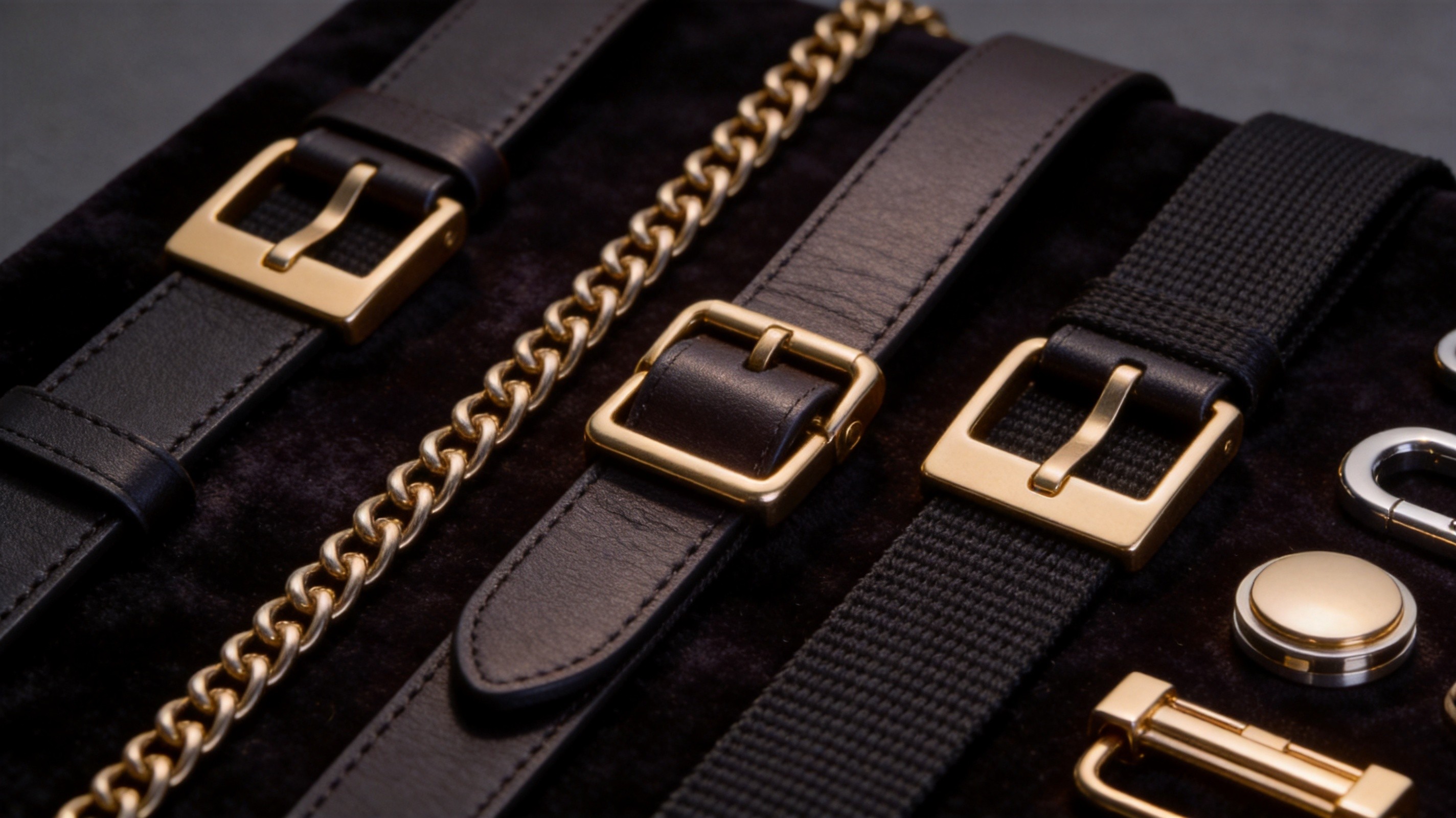
Premium hardware serves as the defining detail that elevates handbag design from functional to luxurious
Importance of Quality Hardware
Hardware quality affects every dimension of handbag performance — aesthetic, functional, and commercial.
First Impressions
Customer research shows that hardware is the second attribute evaluated (after color) when a buyer examines a handbag in person. The weight, finish, smoothness of operation, and visual consistency of hardware pieces create an immediate quality signal. Lightweight, poorly finished hardware communicates cheapness regardless of how premium the leather may be.
Functional Longevity
Hardware components are the most mechanically stressed parts of any handbag. Zippers are opened and closed hundreds of times per month. Clasps bear the load of the bag's entire contents. Magnetic snaps must maintain strength over years. When hardware fails, the bag fails — regardless of leather and stitching condition.
Brand Identity
Custom hardware — engraved logo buttons, branded zipper pulls, signature-shaped clasps — creates distinctive brand identity that customers recognize from a distance. Think of Chanel's interlocking CC turn-lock, Hermès's H-clasp, or Gucci's double-G hardware. These details become brand assets that competitors cannot replicate and customers use to identify your products.
Types of Zippers
Zippers are the most complex hardware component in handbag construction, with multiple subtypes serving different applications.
Coil Zippers
Coil zippers use polyester or nylon coils sewn into the zipper tape. They are lightweight, flexible, and work well for curved openings and interior pockets. Coil zippers are the most common type in handbags, used for main compartment closures on soft-structured bags and interior organization pockets.
Metal Zippers
Metal zippers feature individually stamped metal teeth (typically brass, aluminum, or nickel silver). They offer a premium appearance and feel, with a satisfying weight and sound during operation. Metal zippers are specified for luxury bags where the zipper is a visible design element — they function as both closure and decorative detail.
Vislon (Molded Plastic) Zippers
Vislon zippers have molded plastic teeth, typically in polyester. They are water-resistant, lightweight, and available in a wide range of colors. They work well for sporty or casual bag styles and offer good value at moderate price points.
Invisible Zippers
Invisible zippers have teeth hidden behind the tape, creating a seamless appearance when installed. They are used primarily in dressy or formal bag designs where the zipper should not be visible as a design element.
| Zipper Type | Best Application | Cost Range | Feel/Quality Signal |
|---|---|---|---|
| Coil (Nylon) | Interior pockets, soft bags | $0.15–0.50 | Functional, neutral |
| Metal | Luxury bags, visible closures | $0.80–3.00 | Premium, substantial |
| Vislon | Casual, sporty bags | $0.20–0.60 | Modern, casual |
| Invisible | Formal, evening bags | $0.30–1.00 | Elegant, discreet |
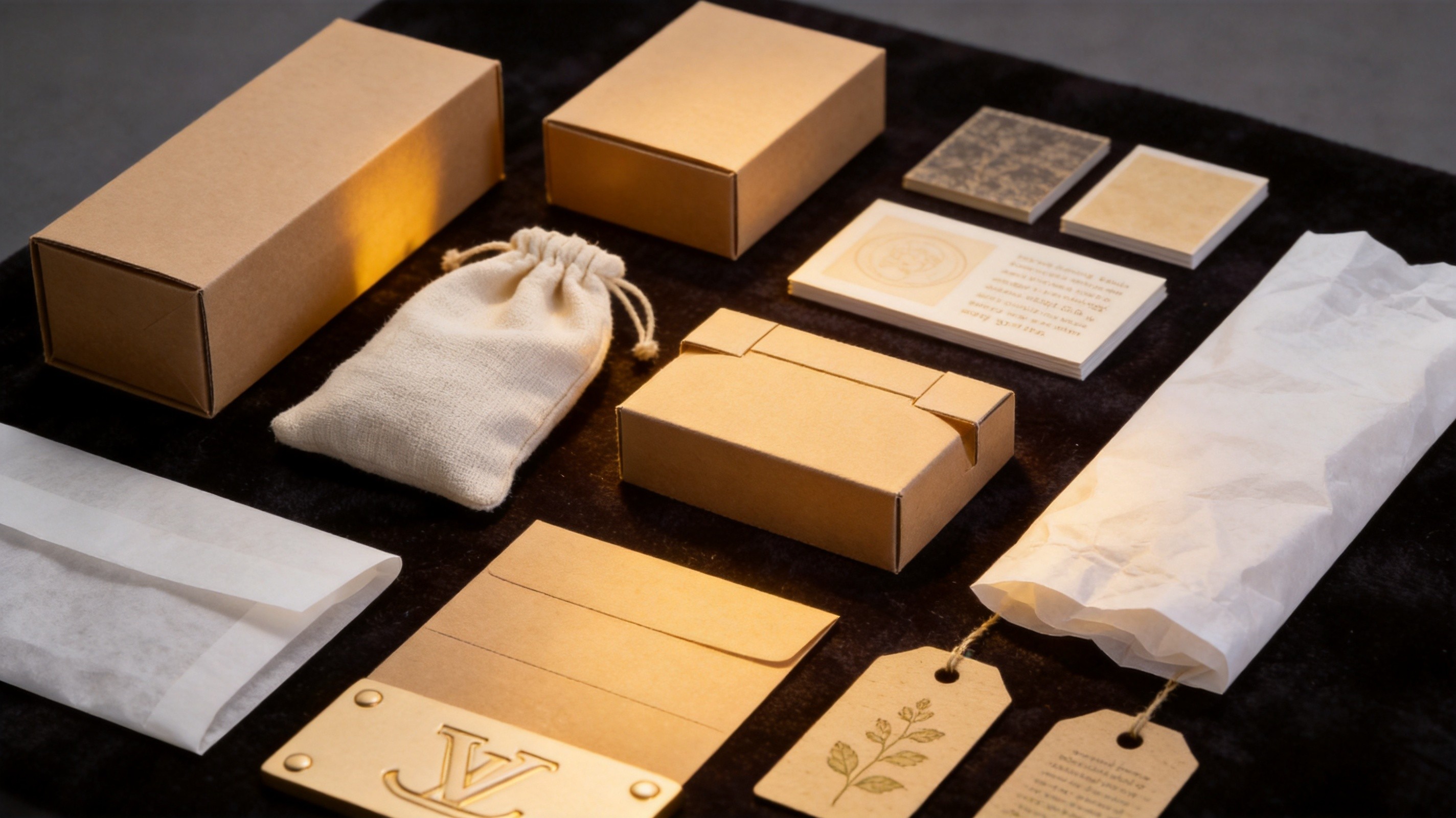
Metal zippers serve as both functional closure and decorative element on premium handbags
YKK vs Generic Zippers
The zipper brand decision has outsized impact on product reliability and customer satisfaction.
YKK Quality Advantages
YKK zippers are tested to withstand 10,000+ open/close cycles (their premium lines exceed 25,000 cycles). Their manufacturing tolerances ensure consistent tooth alignment, smooth slider operation, and reliable end-stop integrity. The company maintains ISO 9001 certification across all factories and provides comprehensive test documentation.
Alternative Premium Brands
YKK is not the only premium option. Lampo (Italy), riri (Switzerland), and Opti (Hong Kong/UK) all produce zippers meeting luxury brand standards. Some brands prefer riri for their metal zippers' exceptional finish quality, while Lampo offers Italian-made zippers that align with "Made in Italy" brand narratives.
When Generic Zippers Are Acceptable
For interior pocket zippers, non-visible closures, or budget-tier products, generic zippers from reputable manufacturers can provide acceptable quality at 30–50% lower cost. The key is specifying minimum performance requirements regardless of brand: zipper cycle testing (minimum 5,000 cycles), pull strength (minimum 60N for main closures), and slider retention testing.
Buckle Types and Uses
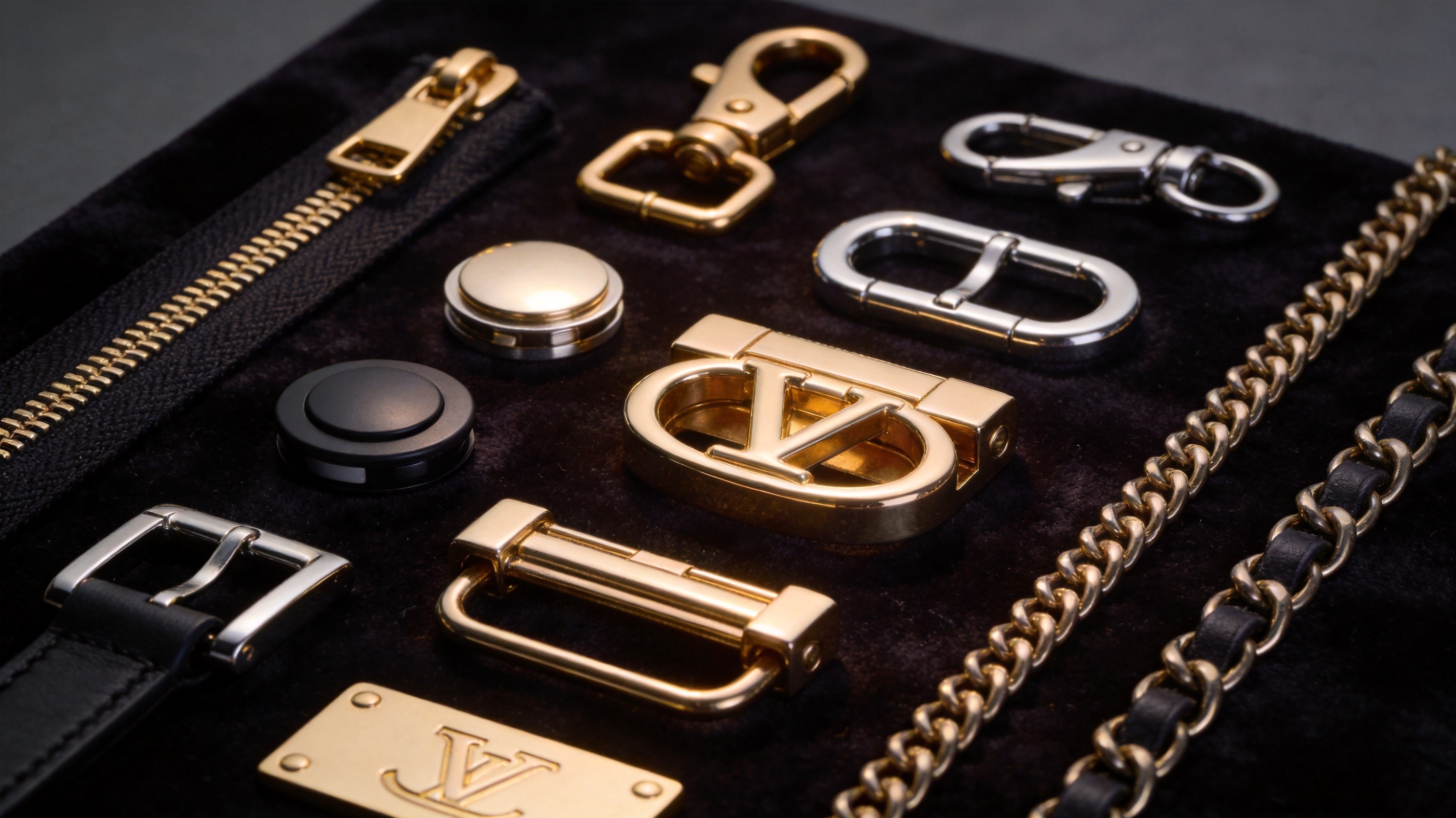
Turn-lock closures and decorative buckles serve as both functional elements and brand-signature hardware
Buckles serve both functional and decorative roles in handbag design, from strap adjustment to main closure mechanisms.
Square and Rectangular Buckles
The most common buckle form, used for strap adjustments and decorative flap closures. Available in every metal finish, they range from minimal 10mm designs for delicate chains to oversized 50mm+ statement pieces for bold fashion bags.
D-Ring Buckles
Semi-circular hardware that serves as strap attachment points and decorative elements. D-rings are among the most versatile hardware pieces — they enable detachable straps, create attachment points for bag charms, and serve as decorative accents on bag bodies.
Slide Buckles
Allow continuous strap length adjustment without predefined holes. Commonly used on crossbody and messenger bags where the wearer wants to customize strap drop length. Slide buckles must be sized precisely to match the strap width and thickness for proper grip.
Side-Release Buckles
Quick-release buckles (often plastic or cast metal) that allow strap detachment without unthreading. Used on sporty, casual, and travel-oriented bags where convenience is a design priority.
Turn-Lock Closures
Turn-lock closures are among the most iconic and recognizable hardware elements in luxury handbag design. The mechanism — a rotating lock that engages with a catch plate — provides secure closure with a satisfying mechanical action.
Design Variations
Turn-locks range from the classic rectangular shape (inspired by heritage luxury brands) to circular, oval, and custom-shaped designs. The lock plate can be engraved with logos, monograms, or decorative patterns. Many brands make the turn-lock their signature hardware element — a recognizable brand identifier visible from across a room.
Construction Quality Factors
A quality turn-lock should operate with smooth, consistent rotational resistance — neither too loose (feeling flimsy) nor too tight (difficult to use). The engagement between the lock and catch plate should be precise, with no play or rattle when locked. Weight and finish consistency between units in the same production run indicate manufacturing quality.
Magnetic Snap Closures
Magnetic snaps provide effortless closure for handbags, using embedded magnets to hold bag flaps or openings shut. They are among the most commonly used closure types due to their simplicity and user-friendly operation.
Types
Magnetic closures come in round, rectangular, and strip configurations. Strength varies by size and magnet grade — standard bag snaps use neodymium magnets rated for 2–5 kg of pull force. Premium closures use multiple magnet arrays for stronger hold on heavier bags.
Installation Requirements
Magnetic snaps require precise placement during bag construction. The male and female halves must align within 2mm tolerance for reliable engagement. The magnet housing must be fully enclosed in leather or fabric to prevent the magnets from contacting the bag's contents (which can damage magnetic-strip cards and electronics).
D-Rings and O-Rings
These fundamental hardware pieces serve critical structural and aesthetic functions across virtually every handbag style.
Structural Applications
D-rings and O-rings serve as strap attachment points, handle connectors, and load-bearing elements. For these applications, material strength is paramount. Specify solid brass or stainless steel for structural rings — plated zinc alloy can crack under sustained load, particularly in larger sizes or heavier bags.
Decorative Applications
Beyond their structural role, rings serve as attachment points for bag charms, key holders, and decorative elements. They contribute to the overall hardware aesthetic and should be finish-matched to other hardware on the bag.
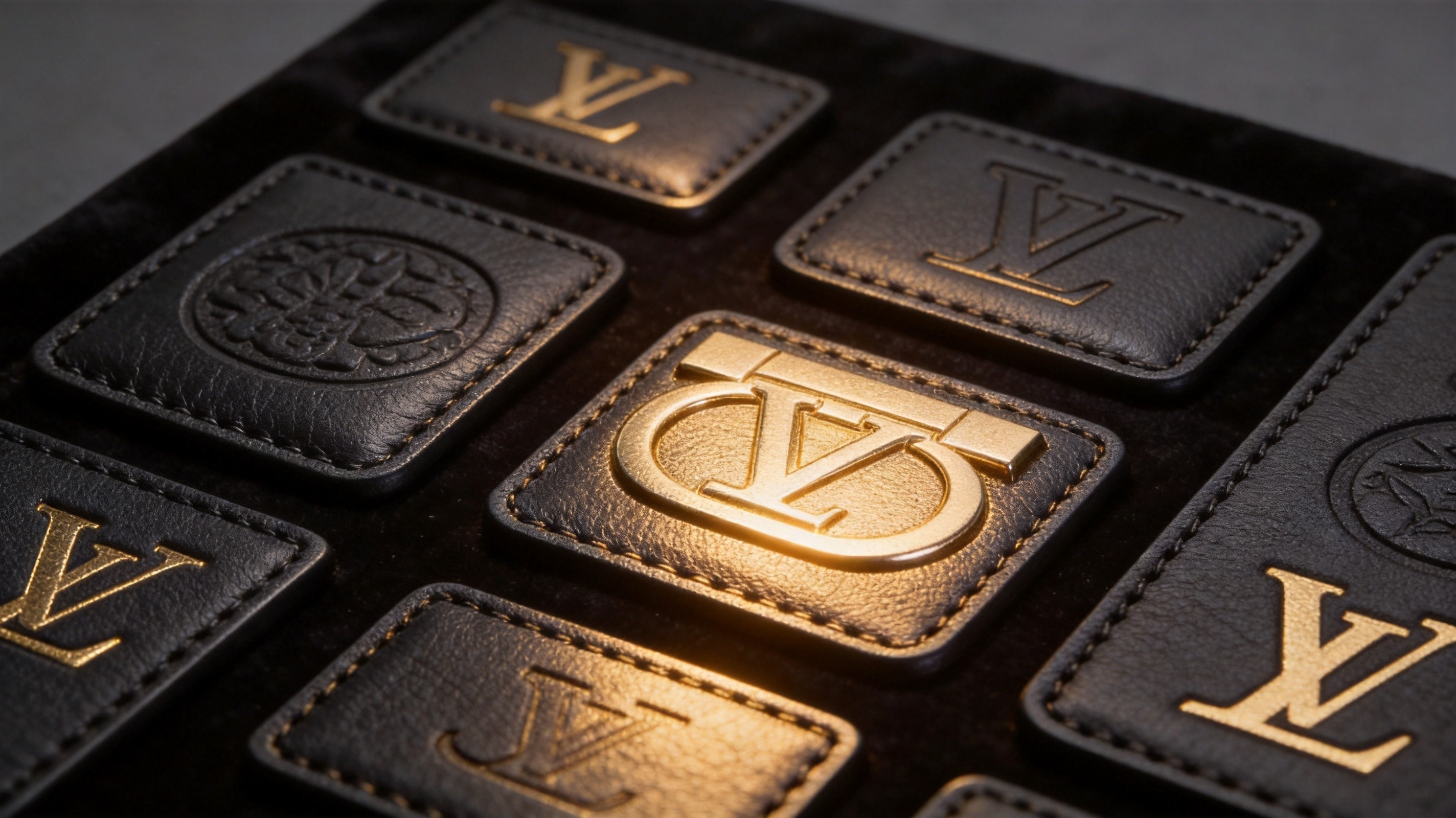
D-rings and O-rings combine structural function with decorative design language on premium bags
Custom Hardware Options
Custom logo-embossed hardware transforms standard bags into distinctive brand statements
Custom hardware transforms your bags from generic products into distinctive brand statements. The investment in custom tooling pays dividends in brand recognition and perceived value.
Logo-Embossed Buttons and Rivets
The simplest form of custom hardware — stamping your logo onto buttons, rivets, and feet. Custom molds start at approximately $200–400 per design, with per-piece costs only marginally higher than generic equivalents once the mold is created. Minimum orders typically start at 1,000 pieces per design.
Custom Zipper Pulls
Custom zipper pulls in brand-specific shapes, materials, or with logo engraving create an identifiable detail. Cast metal pulls, leather tabs with embossed logos, and custom-shaped metal charms are common approaches.
Bespoke Closure Designs
The highest investment but greatest brand differentiation comes from fully custom closure designs — unique turn-lock shapes, proprietary clasp mechanisms, or signature hardware elements designed specifically for your brand. Tooling costs range from $500–2,000 per design, with lead times of 30–45 days for mold creation. See our services page for custom hardware development support.
Hardware Finishes and Platings
The finish applied to metal hardware determines its color, texture, durability, and allergen properties. Understanding finish options is essential for specifying hardware that meets both aesthetic and quality requirements.
| Finish Type | Appearance | Durability | Cost | Nickel Content |
|---|---|---|---|---|
| Gold Plating | Bright, warm gold | Moderate (48–96 hrs salt spray) | $$ | Often contains nickel |
| Antique Brass | Aged, warm bronze | Good (hand-applied) | $$ | Usually nickel-free |
| Silver/Nickel | Cool, bright silver | Moderate | $ | Contains nickel (allergy risk) |
| Gunmetal | Dark, modern gray | Good | $$ | Varies |
| PVD Gold | Rich, durable gold | Excellent (500+ hrs salt spray) | $$$$ | Nickel-free |
| Rose Gold PVD | Warm pink-copper | Excellent | $$$$ | Nickel-free |
| Brushed Stainless | Modern, satin silver | Excellent (inherent) | $$$ | Nickel-free |
| Matte Black | Modern, stealth | Good (PVD or paint) | $$–$$$ | Varies |
Finish Selection Considerations
For European market products, ensure all hardware meets REACH nickel release requirements (≤0.5 µg/cm²/week for skin-contact components). PVD finishes inherently comply. For premium positioning, PVD coatings justify their higher cost through superior durability and customer perception of quality. Our product team can provide finish samples for your review.
Durability Testing Standards
Specifying testing requirements in your purchase order prevents hardware failures from reaching your customers.
Essential Tests
- Salt Spray Test (ASTM B117): Evaluates corrosion resistance. Premium hardware should achieve 200+ hours (basic plating) or 500+ hours (PVD) without visible corrosion.
- Zipper Cycle Test (BS 3627): Measures operational lifespan. Main closures should achieve 5,000+ cycles minimum; premium zippers 10,000+.
- Pull Strength Test: Measures force required to break closure engagement. Main bag closures should withstand 80–120N minimum.
- Color Fastness (ISO 105-X12): Tests whether hardware finish transfers color to leather or fabric during use. Critical for dark-finished hardware on light-colored bags.
- Adhesion Test (ASTM B571): Evaluates coating bond to base metal. Prevents peeling and blistering during product life.
Cost Considerations
Hardware quality inspection before assembly prevents costly defects from reaching finished products
Hardware costs vary dramatically based on material, customization, finish, and order volume. Understanding the cost structure helps you make informed trade-off decisions.
| Component | Generic | Premium Branded | Custom |
|---|---|---|---|
| Zipper (main) | $0.20–0.50 | $0.80–3.00 | $1.50–5.00 |
| Turn-lock closure | $0.50–1.50 | $2.00–5.00 | $3.00–10.00 |
| Magnetic snap | $0.10–0.30 | $0.30–0.80 | $0.50–1.50 |
| D-ring (pair) | $0.15–0.40 | $0.40–1.00 | $0.60–2.00 |
| Buckle | $0.30–1.00 | $1.00–4.00 | $2.00–8.00 |
| Feet (set of 4) | $0.20–0.50 | $0.50–1.50 | $0.80–3.00 |
| Custom mold cost | N/A | N/A | $200–2,000/design |
Hardware typically represents 8–15% of total bag production cost. Investing in quality hardware yields disproportionate returns in perceived quality and customer satisfaction.
Sourcing Custom Hardware from Factories
Sourcing hardware for private label production requires careful supplier management to ensure quality consistency, timely delivery, and accurate branding.
Integrated vs Independent Sourcing
Most bag factories maintain relationships with hardware suppliers and can source components as part of the production package. This simplifies logistics but may limit your access to premium hardware brands or custom development. For complex custom hardware programs, working directly with specialized hardware manufacturers (often based in Wenzhou, Dongguan, or Guangzhou in China) alongside your bag factory can yield better results.
Quality Control Points
- Request pre-production hardware samples for approval before bulk production
- Specify finish samples (physical standards) not just Pantone references for metal
- Include hardware testing requirements in your purchase order specifications
- Inspect hardware before installation — replace defective pieces at this stage is far cheaper than after assembly
For guidance on complete product specification development, visit our contact page to discuss your project with our production team.
Pro Tip for Brand Owners
Always order 5–10% excess hardware for each production run. Hardware defects, installation damage, and QC rejections inevitably require replacement pieces. Having matching hardware from the same production batch prevents color-mismatch issues if replacements are needed from a different batch.
Hardware Material Composition and Properties
The base material of bag hardware determines its weight, durability, corrosion resistance, and cost. Understanding material properties helps brand owners make informed specifications:
| Base Material | Weight | Corrosion Resistance | Cost Level | Common Applications |
|---|---|---|---|---|
| Zinc Alloy (Zamak) | Heavy | Moderate | Low-Medium | Turn-locks, buckles, decorative pieces |
| Brass | Heavy | High | Medium-High | Premium zippers, D-rings, clasps |
| Stainless Steel | Heavy | Very High | High | Chain straps, structural hardware |
| Aluminum | Light | High | Medium | Buckles, rings, lightweight closures |
| Iron (with plating) | Heavy | Low (without plating) | Low | Budget zippers, decorative elements |
| Plastic/POM | Very Light | High | Very Low | Casual bags, backpack zippers |
Zinc alloy remains the most popular choice for custom hardware because it can be die-cast into complex shapes at relatively low tooling costs. Brass is preferred for high-end lines where the hardware must match the premium quality of the leather. Stainless steel is specified when maximum corrosion resistance is required, such as for bags marketed for coastal or tropical climates.
Aluminum hardware has gained popularity in the "lightweight luxury" segment, where every gram matters. While aluminum cannot achieve the same mirror-polish as brass or steel, brushed and anodized aluminum finishes offer a distinctive modern aesthetic that appeals to contemporary luxury consumers.
Anti-Corrosion Treatments and Salt Spray Testing
Hardware corrosion is one of the most common customer complaints for bag brands. Specifying appropriate anti-corrosion treatments during the production phase prevents costly returns and reputation damage:
Electroplating: The most common surface treatment, depositing a thin layer of gold, silver, nickel, or chrome onto the base metal. Plating thickness is measured in microns (μm), with luxury hardware typically specified at 0.3-0.5μm for gold and 0.5-1.0μm for nickel. Thicker plating provides better corrosion resistance but increases cost and can affect the dimensional precision of moving parts.
PVD (Physical Vapor Deposition): A premium alternative to electroplating that creates a harder, more uniform coating through vacuum deposition. PVD coatings are typically 0.1-0.3μm thick but offer superior adhesion and abrasion resistance compared to electroplating. Rose gold and gunmetal finishes are most commonly achieved through PVD. The process is more expensive but produces a noticeably higher-quality surface that resists chipping and peeling.
E-Coating (Electrophoretic Deposition): A clear or tinted lacquer applied electrochemically over plated hardware to provide an additional protective barrier. E-coating extends the life of gold and rose gold finishes by 2-3x, as these softer platings are particularly susceptible to wear. This treatment should be standard for all luxury bag hardware.
Salt Spray Testing: The industry-standard test for corrosion resistance (ASTM B117). Hardware samples are exposed to a saltwater mist in a controlled chamber, and the hours until visible corrosion appear are recorded. Premium bag hardware should achieve a minimum of 48 hours for standard quality and 96+ hours for luxury-grade. Request salt spray test certificates from your hardware supplier for every production batch.
For brands targeting markets in coastal regions or humid climates, specifying 96-hour salt spray performance should be non-negotiable. The additional cost per unit is minimal ($0.05-0.15) compared to the cost of handling corrosion-related returns and negative reviews.
Trending Hardware Styles for 2026-2027
Hardware trends evolve more slowly than fashion trends, but shifts in consumer preference create opportunities for brands that stay ahead of the curve. Current and emerging hardware trends for the premium segment include:
Oversized Hardware: Proportionally larger turn-locks, buckles, and chain links continue to gain traction, particularly on structured totes and crossbody bags. This trend reflects a broader shift toward bold, statement-making accessories. Oversized hardware also serves a functional purpose, making bags easier to open and close for users with limited dexterity.
Mixed Metal Finishes: Combining two or more metal finishes within a single bag design—such as brushed gold buckles with matte black D-rings—creates visual depth and modern sophistication. This approach allows brands to differentiate their designs without dramatically altering the overall silhouette.
Minimalist Concealed Hardware: At the opposite end of the spectrum, some luxury brands are moving toward hidden or integrated hardware that maintains clean exterior lines. Magnetic closures concealed within leather flaps, invisible zippers, and flush-mounted rings appeal to consumers who prefer understated elegance.
Vintage-Aged Finishes: Antique brass, distressed gold, and oxidized silver finishes continue to perform well, particularly in the heritage and artisan brand segments. These finishes develop additional patina over time, reinforcing the narrative of craftsmanship and authenticity.
When selecting hardware styles for your collection, consider the overall brand aesthetic and target demographic. Material selection for the bag body should harmonize with the hardware finish—warm leather tones pair naturally with gold and brass, while cool-toned materials and vegan leathers often complement silver and gunmetal hardware.
Need Custom Hardware for Your Bag Collection?
Our team manages hardware sourcing, custom development, and quality control for private label brands. From YKK zippers to fully bespoke closures, we handle the complete process. MOQ starts at 200 pcs/style.
Email: service@junyuanbags.com | WhatsApp: +86 17750020688
Request Hardware SamplesFrequently Asked Questions
What is the difference between YKK and generic zippers?
YKK zippers are tested to 10,000+ cycles with superior consistency and warranty backing. Generic zippers cost 30–50% less but show failure rates of 3–8% versus YKK's below 1%. For premium handbag brands, YKK or equivalent (Lampo, riri, Opti) zippers are strongly recommended.
How do I specify custom hardware?
Custom hardware requires technical drawings, material specification, finish specification, logo artwork, and pull test requirements. Custom molds cost $200–800 per design with MOQ of 1,000–5,000 pieces per SKU. Lead time for custom hardware is 25–40 days.
What hardware finish is most durable?
PVD coating provides the best durability (500+ hours salt spray testing) with excellent scratch resistance and nickel-free composition. Stainless steel with brushed finish is also inherently durable without additional coating. Basic electroplating achieves only 48–96 hours salt spray resistance.
What are common hardware quality issues?
The most common issues are color inconsistency, coating peeling, zipper teeth misalignment, magnet strength loss, sharp edges, and excessive nickel content causing allergies. Specifying testing standards in your purchase order prevents most problems.
What is the cost impact of hardware on bag production?
Hardware represents 8–15% of total production cost. A basic bag spends $2–5 total on hardware; a premium bag with custom branded hardware can spend $15–40+. Hardware investment delivers disproportionate returns in perceived quality and brand identity.
Continue Exploring
Further reading: Thread and Stitching Quality Standards, Color Matching and Pantone Guide, Leather Grade Guide, and Lining Material Selection. Visit our about page or solutions page for more.
Limitations and Scope of This Guide
This guide covers comprehensive hardware guide covering zippers, buckles, and closures for private label bags, including types, quality, sourcing, and customization. It is based on our experience as a handbag manufacturer in Quanzhou, China, serving brands worldwide since 2004. Key limitations to keep in mind:
- Hardware specifications and brand comparisons (YKK, Riri, Lamo) reflect the most commonly specified options. Specialty hardware suppliers may offer different capabilities.
- Finish durability testing (salt spray, abrasion) results depend on the specific plating process. Budget finishes will underperform compared to premium options.
- Custom hardware development requires mold investment and has higher MOQs. This guide focuses on both stock and custom options but emphasizes the cost-benefit tradeoffs.
For advice tailored to your specific situation, contact our team directly.