Table of Contents
- Why Scaling Production Is Challenging
- Assessing When You Are Ready to Scale
- Factory Capacity Evaluation
- Negotiating Volume Increases
- Adjusting Quality Standards for Scale
- Supply Chain and Material Sourcing at Scale
- Production Planning and Timeline Management
- Quality Control Systems for Large Orders
- Cash Flow and Payment Term Adjustments
- Risk Management During Scale-Up
- Common Scaling Mistakes to Avoid
- Case Study: 200 to 10,000 Units Journey
- Scaling Milestones and Decision Points
- Choosing a Factory That Scales with You
- Frequently Asked Questions
Scaling handbag production from an initial 200-unit run to 10,000 units is not simply a matter of ordering more of the same. Each 10x increase in volume introduces new challenges — material sourcing logistics, quality control complexity, cash flow demands, production planning requirements, and supply chain coordination — that did not exist at smaller volumes.
This guide provides a comprehensive roadmap for navigating each stage of production scaling, based on our experience helping brands grow from startup quantities to enterprise volumes at our 30,000 sqm facility in Quanzhou. Every milestone, challenge, and solution reflects real experiences from brands that have successfully made this journey.
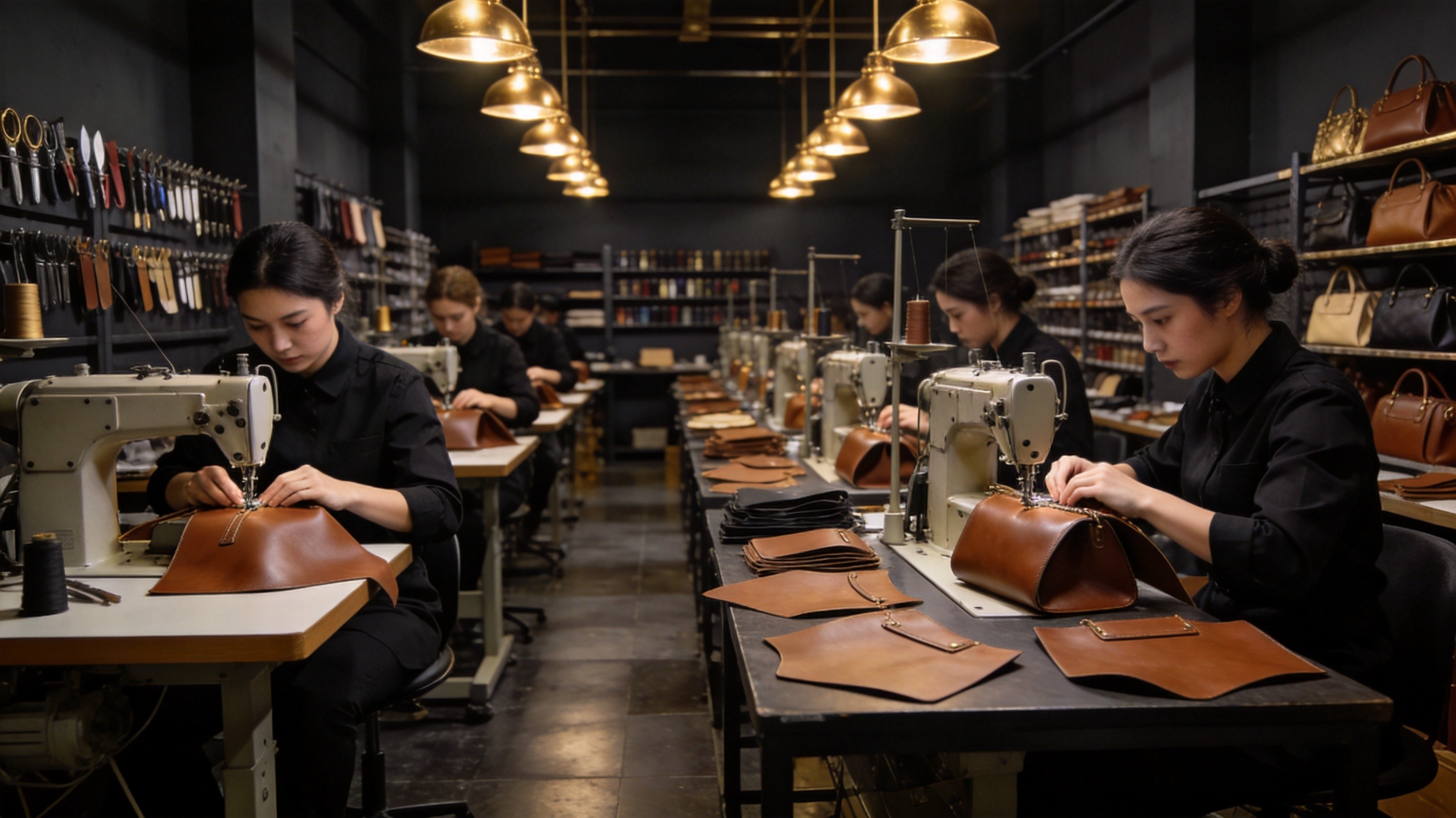
Scaling production requires systematic upgrades to quality control, supply chain management, and planning processes
Why Scaling Production Is Challenging
Production scaling introduces complexity that grows non-linearly with volume. Understanding these challenges prepares you to address them proactively rather than reactively.
The Complexity Multiplier
A 200-unit order might involve 50 rolls of leather, a single hardware supplier, and one production line running for two weeks. A 10,000-unit order might require coordinating material deliveries from eight suppliers, running three production lines simultaneously across four weeks, and managing quality consistency across 50+ production workers. The coordination challenge grows exponentially, not linearly.
Quality Consistency at Volume
Maintaining consistent quality across 200 units produced by a single skilled worker is relatively straightforward. Maintaining that same consistency across 10,000 units produced by multiple workers on multiple lines over multiple weeks requires formalized quality systems, standardized work instructions, and systematic inspection protocols.
Material Supply Chain Pressure
Sourcing materials for 200 units often means purchasing from retail or small-wholesale suppliers. At 10,000 units, you need wholesale or direct-from-tannery sourcing, forward purchasing commitments, and contingency plans for material shortages or quality issues in specific batches.
Assessing When You Are Ready to Scale
Scaling prematurely — before demand justifies the investment — creates cash flow crises and excess inventory. Scaling too slowly — after demand has proven sustainable — means missed revenue opportunities and potential stockouts.
Demand Signals That Indicate Scaling Readiness
- Consistent sell-through above 60% within your target sales window
- Repeat orders that sell out faster than initial production runs
- Waitlists or stockout complaints from customers
- Retail or wholesale inquiries requiring quantities beyond your current capacity
- Unit economics that improve at volume — lower per-unit cost supporting better margins or competitive pricing
Financial Readiness Indicators
Beyond demand signals, confirm your financial capacity. Scaling to 10,000 units at $25 per unit requires $250,000 in production costs, with 30% deposit ($75,000) needed upfront. Add shipping, duties, warehousing, and marketing costs — total working capital needs typically range from $150,000 to $300,000 depending on your sales cycle timing.
| Scaling Stage | Order Volume | Typical Investment | Key Requirements |
|---|---|---|---|
| Startup | 200-500 units | $5,000-15,000 | Market validation, product-market fit |
| Early Growth | 500-2,000 units | $15,000-60,000 | Proven demand, repeat customers |
| Growth | 2,000-5,000 units | $60,000-150,000 | Retail partnerships, consistent sell-through |
| Scale | 5,000-10,000 units | $150,000-300,000 | Established channels, financing in place |
| Enterprise | 10,000+ units | $300,000+ | Multiple channels, enterprise financing |
Factory Capacity Evaluation
Your current factory may have been ideal for 200-unit orders but inadequate for 10,000-unit runs. Evaluating factory capacity at scale requires looking beyond stated monthly output.
Capacity Metrics That Matter
Ask your factory about: actual current capacity utilization (if they are running at 90% capacity, they cannot absorb your growth), dedicated line availability (can they assign specific production lines to your orders at scale?), workforce scalability (can they hire and train additional workers for your volume?), and material supply chain relationships (do they have wholesale relationships that provide preferential pricing at volume?).
When to Consider a New Factory Partner
If your current factory cannot accommodate your growth, you face a difficult decision: stay at limited volume with a trusted partner, or transition to a larger factory with more capacity. A 30,000 sqm facility with 300+ workers offers the capacity headroom for substantial growth without the quality risks of an overextended smaller factory.
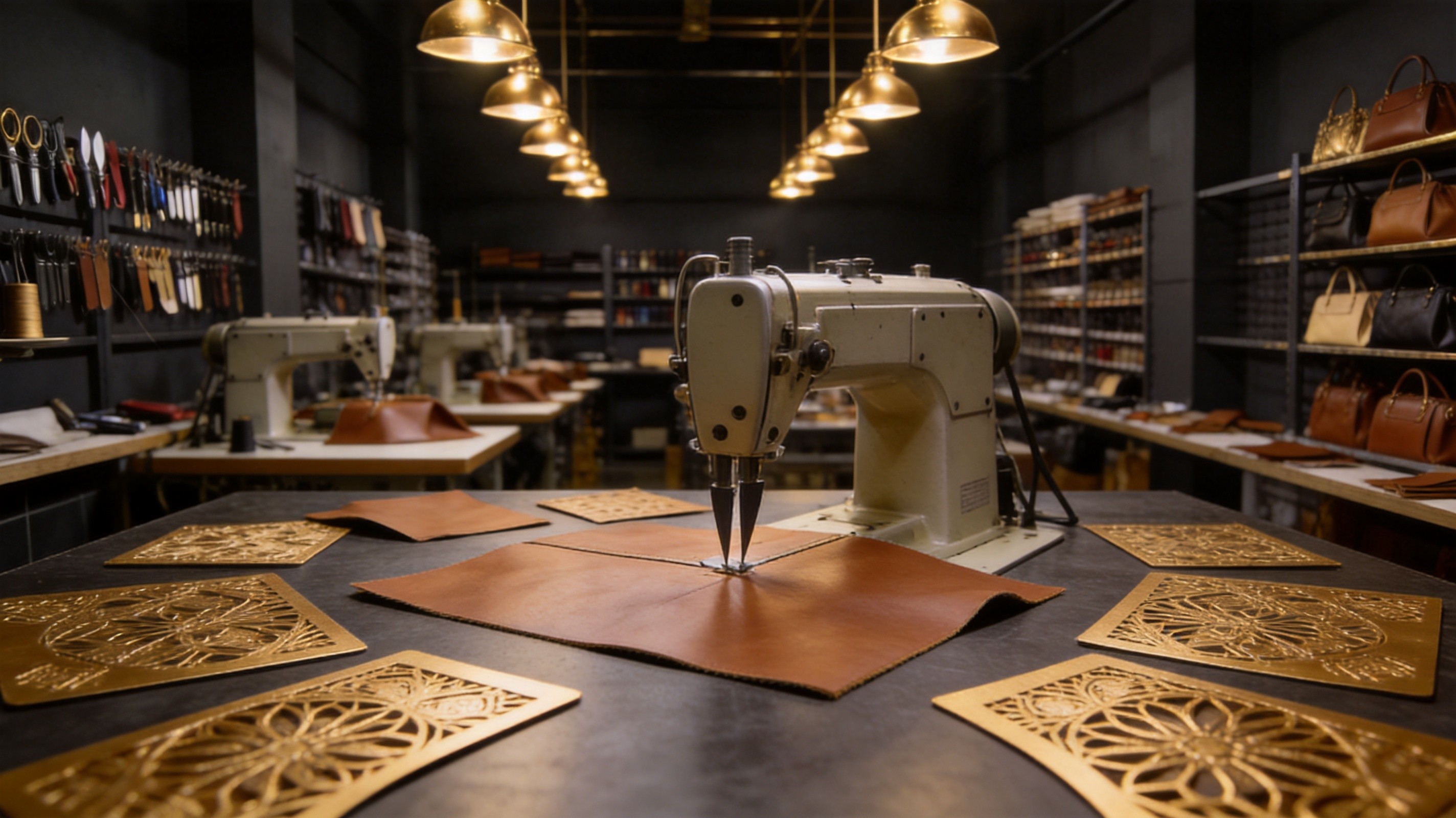
A factory with adequate space, workforce, and equipment capacity is essential for reliable scaling
Negotiating Volume Increases
Larger volumes create negotiation leverage that did not exist at startup quantities. Use this leverage strategically to improve your unit economics.
Tiered Pricing Structure
Lock in a tiered pricing schedule that automatically reduces unit cost as your volumes increase. At 200 units, you might pay $28 per bag. At 1,000 units, the same bag might cost $22. At 5,000 units, $18. Having these tiers pre-negotiated eliminates renegotiation at each order and provides predictable cost planning.
Payment Term Evolution
As your order volumes grow and your track record strengthens, negotiate improved payment terms. Moving from 30/70 to 20/80 or even 10/90 improves your cash flow position significantly at scale. A 10% deposit on a $250,000 order ($25,000) is far more manageable than 30% ($75,000).
For detailed negotiation strategies, see our comprehensive pricing negotiation guide.
Adjusting Quality Standards for Scale
Quality standards must evolve as production scales. The informal quality management that works at 200 units becomes inadequate — and potentially dangerous — at 10,000 units.
From Visual Inspection to Statistical QC
At 200 units, a senior quality manager can visually inspect every piece. At 10,000 units, this approach is impractical. Implement AQL (Acceptable Quality Limit) sampling protocols that provide statistical confidence in quality without inspecting every unit. An AQL of 2.5 for major defects and 4.0 for minor defects is standard for handbags.
Standardized Work Instructions
At scale, multiple workers produce your product. Each must follow identical processes. Create visual work instructions — photos and diagrams showing each construction step — posted at every workstation. Standardized instructions eliminate worker-to-worker variation that causes quality inconsistency.
Supply Chain and Material Sourcing at Scale
Material sourcing at 10,000 units operates fundamentally differently than at 200 units. The supply chain must become more structured, more diversified, and more resilient.
Material Volume Planning
For 10,000 leather handbags, you need approximately 15,000-20,000 square feet of leather (accounting for cutting waste and quality rejection). This volume requires direct-from-tannery purchasing rather than distributor purchasing, with 2-4 week lead times for material preparation. Plan material orders 6-8 weeks before production start.
Supplier Diversification
At 200 units, a single material supplier is sufficient. At 10,000 units, a single-supplier dependency creates unacceptable risk. Maintain at least two qualified suppliers for every critical material. If your primary leather supplier experiences a quality issue or delay, your backup supplier can maintain production continuity.
Production Planning and Timeline Management
Production timelines lengthen and complexity increases at scale. Planning must account for material procurement, production scheduling, quality checkpoints, and shipping logistics.
Realistic Timeline Expectations
| Phase | 200 Units | 2,000 Units | 10,000 Units |
|---|---|---|---|
| Material Sourcing | 1-2 weeks | 2-3 weeks | 4-6 weeks |
| Production | 2-3 weeks | 4-5 weeks | 6-8 weeks |
| Quality Control | 2-3 days | 1 week | 2-3 weeks |
| Shipping | 2-4 weeks | 3-5 weeks | 4-6 weeks |
| Total Lead Time | 7-10 weeks | 10-14 weeks | 16-23 weeks |
Staggered Production Approach
For large orders, consider staggered production — producing and shipping in batches of 2,000-3,000 units rather than waiting for all 10,000 units to complete. This approach improves cash flow by enabling earlier sales revenue and reduces inventory holding costs.
Quality Control Systems for Large Orders
Quality control at scale requires systems, not just skilled inspectors. Build a QC infrastructure that maintains consistency across large production runs.
Multi-Stage QC Protocol
- Pre-Production QC — verify all materials against specifications before cutting begins
- In-Process QC — inspect at key construction milestones (after cutting, after assembly, after finishing)
- Final QC — AQL sampling inspection of finished goods before packing
- Pre-Shipment Audit — comprehensive check of packaging, labeling, and documentation
For detailed QC guidance, see our red flags guide and factory audit checklist.
Cash Flow and Payment Term Adjustments
Cash flow management becomes critical at scale. A 10,000-unit order ties up significantly more capital for longer periods than startup orders.
Cash Flow Planning Template
| Cash Flow Event | Timing | Amount (10K units @ $25) | Cumulative Outflow |
|---|---|---|---|
| Production deposit (30%) | Week 0 | $75,000 | $75,000 |
| Material prepayment | Week 2 | $20,000 | $95,000 |
| Production balance (70%) | Week 10 | $175,000 | $270,000 |
| Shipping and logistics | Week 12 | $25,000 | $295,000 |
| Duties and customs | Week 16 | $30,000 | $325,000 |
| First revenue (if 50% sold) | Week 20 | +$375,000 | +$50,000 net |
Financing Strategies
Consider purchase order financing, inventory financing, or revenue-based lending to bridge the cash flow gap between production payment and sales revenue. Many alternative lenders specialize in e-commerce and DTC brand financing, providing capital specifically for inventory purchases against confirmed purchase orders.
Risk Management During Scale-Up
Larger orders carry larger risks. A defect rate that represents a manageable loss at 200 units becomes a crisis at 10,000 units. Building risk mitigation into your scaling plan protects against costly surprises.
Risk Categories and Mitigation
- Quality risk — mitigate through multi-stage QC, AQL sampling, and pre-shipment inspection
- Timeline risk — mitigate through buffer time in planning, staggered production, and backup supplier relationships
- Material risk — mitigate through supplier diversification, forward purchasing, and material testing before production
- Financial risk — mitigate through staged payments, staggered production, and confirmed sales commitments before ordering
- Market risk — mitigate through demand validation at smaller volumes before committing to large orders
Common Scaling Mistakes to Avoid
Mistake #1: Jumping to 10,000 Without Validating at 2,000
Each volume step validates different assumptions. At 2,000 units, you validate that demand persists beyond early adopters. At 5,000, you validate that your sales channels can absorb larger inventory. Skipping intermediate steps means discovering demand gaps after committing capital to volumes the market cannot support.
Mistake #2: Ignoring the Cash Flow Gap
The 16-20 week gap between production deposit and first revenue catches many scaling brands by surprise. Plan your financing before you need it — not after you have already committed to the order.
Mistake #3: Not Updating Quality Systems
Quality systems designed for 200 units fail at 10,000 units. Implement formal QC protocols before you need them — not after the first large-order quality crisis.
Case Study: 200 to 10,000 Units Journey
A DTC handbag brand's scaling journey illustrates how systematic volume growth works in practice.
Phase 1: 200 Units (Months 1-3)
Initial order of 200 crossbody bags in three colors. Validated product-market fit with 78% sell-through within 8 weeks. Unit cost: $28. Revenue: $18,720 at $95 retail.
Phase 2: 1,000 Units (Months 4-8)
Expanded to five styles in 1,000-unit quantities. Negotiated unit cost down to $22 based on volume commitment. Added Amazon as a sales channel. Achieved 65% sell-through in 10 weeks. Revenue: $57,000.
Phase 3: 5,000 Units (Months 9-15)
Scaled to 5,000 units across eight styles. Secured wholesale accounts with three boutique chains. Unit cost: $18. Implemented formal AQL quality inspection. Revenue: $237,500.
Phase 4: 10,000 Units (Months 16-24)
Enterprise-scale production of 10,000 units across twelve styles. Unit cost: $15.50 through negotiated volume pricing. Staggered production in three batches. Secured purchase order financing for working capital. Revenue: $570,000 at blended $57 average selling price.

Systematic volume growth builds sustainable brand economics through improving unit costs and expanding distribution
Scaling Milestones and Decision Points
Each volume milestone presents a decision point about whether to continue scaling, consolidate at current volume, or adjust strategy.
Key Decision Framework
At each scaling milestone, evaluate: (1) Is sell-through rate improving or declining? (2) Can current sales channels absorb more inventory? (3) Is the unit cost reduction sufficient to justify the additional complexity? (4) Do you have the financing to support the next volume level? (5) Can your factory accommodate growth without quality degradation? If four or more answers are positive, proceed to the next scale level.
Choosing a Factory That Scales with You
Not every factory can grow with your brand. Selecting a partner with adequate capacity, scalable systems, and willingness to invest in your growth is one of the most important decisions you make.
For brands planning to scale from startup quantities to enterprise volumes, Purse Private Label offers the manufacturing infrastructure — 30,000 sqm facility, 300+ workers, and 20+ years of experience — to support your growth at every stage. Our manufacturing services are designed to accommodate the full spectrum from 200-piece test runs to 50,000+ unit enterprise orders.
Understanding MOQ dynamics helps you plan your scaling path with realistic expectations about minimum quantities and pricing at each volume level.
Ready to Scale Your Handbag Production?
Our 30,000 sqm factory supports brands from 200 to 50,000+ units. Let's plan your growth.
📧 service@junyuanbags.com | 📱 +86 17750020688 | MOQ: 200 pcs/style
Frequently Asked Questions
When should I consider scaling my handbag production from 200 to higher volumes?
Consider scaling when you have consistent sell-through rates above 60%, repeat orders that sell out within your target timeframe, customer demand exceeding your current supply, and retail or wholesale partnerships requiring larger quantities.
Can my current factory handle 10,000 units if they started with 200?
Not necessarily. A factory suited for 200-piece orders may lack the equipment, workforce, or material sourcing infrastructure for 10,000-unit runs. Look for factories with at least 3x your target capacity headroom.
How does quality control change when scaling production volume?
Quality control must become more systematic. At 10,000 units, you need formalized AQL inspection protocols, multiple QC checkpoints, dedicated QC personnel, and documented quality standards that replace informal visual inspection.
How much working capital do I need to scale from 200 to 10,000 units?
Scaling to 10,000 units at $25 per unit requires approximately $250,000 in production costs. Most brands need $150,000-$300,000 in working capital to execute a 10,000-unit production run including deposits, shipping, duties, and warehousing.
Limitations and Scope of This Guide
This guide covers scaling production from 200 to 10,000 units with your handbag factory, covering production planning, quality maintenance, and supply chain growth. It is based on our experience as a handbag manufacturer in Quanzhou, China, serving brands worldwide since 2004. Key limitations to keep in mind:
- Scaling timelines assume a cooperative factory relationship with available capacity. Factories at maximum utilization may not accommodate rapid volume increases.
- Quality control systems must scale proportionally with volume. The QC approaches that work for 200 units may not be sufficient at 10,000 units.
- Pricing at different volume tiers is illustrative. Actual pricing depends on materials, complexity, factory location, and negotiation dynamics.
For advice tailored to your specific situation, contact our team directly.